In a significant step towards market stability and investor protection, South Korea’s brokerage industry has committed to implementing stricter rules for single-stock leveraged exchange-traded funds (ETFs). This decision follows growing concerns that these popular financial products have been amplifying market volatility.
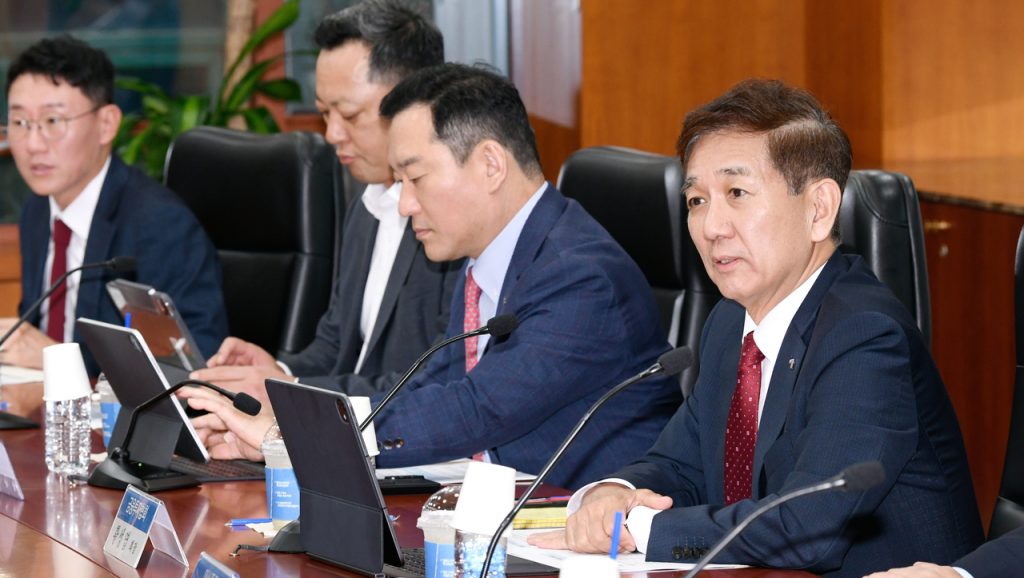
The Korea Financial Investment Association (KOFIA) convened an emergency meeting on Tuesday, gathering CEOs from major brokerages. The primary focus was to review the market conditions surrounding leveraged ETFs, particularly those tracking tech giants Samsung Electronics and SK Hynix, and to forge industry-wide measures to safeguard investors.
A core agreement reached by the firms is to substantially increase the minimum deposit requirement for retail investors, aiming to curb excessive leverage. A proposal under active consideration suggests raising this threshold from 10 million won to 50 million won (approximately $6,700 to $33,500). Additionally, the industry pledged to introduce more personalized risk warnings, tailored to individual investors’ age and portfolio profiles, and to expand investor education programs to ensure a comprehensive understanding of the products’ complex structures and inherent risks.
Launched on May 27, the 2x leveraged ETFs tracking Samsung Electronics and SK Hynix were initially introduced with the goal of repatriating domestic capital from overseas markets. However, the unexpected strength of retail demand has ignited concerns that these funds are significantly contributing to heightened volatility within the Kospi.
While brokerages and asset managers have consistently disclosed product risks, issued investment warnings, and maintained prudent marketing strategies, industry leaders now recognize the critical need for further safeguards. This acknowledgment stems from demand for these leveraged products far exceeding initial expectations.
Crucial details regarding the implementation of these new measures, including their effective date and whether the higher deposit requirements will apply to existing investors, are still being finalized.
Addressing another facet of market stability, the industry also agreed to more evenly distribute rebalancing and hedging trades throughout the trading day. This strategic change aims to alleviate the concentrated buying and selling pressures that typically intensify near the market close, which have been a source of volatility.
This initiative directly responds to escalating concerns over the sheer volume of end-of-day rebalancing activities. Estimates from the Korea Capital Market Institute indicate that these ETFs have generated daily rebalancing trades ranging between 700 billion won and a substantial 2.1 trillion won since their introduction in May.
Whang Song-youp, chairman of the Korea Financial Investment Association, conveyed optimism regarding the industry’s proactive stance. “By further strengthening each firm’s investor protection efforts and supplementing some regulations, we can foster a market environment that investors can trust,” he stated.
While the proposals garnered broad support, some industry officials advocate for even more stringent controls. One official suggested, “Deposits should exclusively be in cash. Currently, stock holdings also count toward the requirement, which undermines the core purpose of raising the threshold.” Another emphasized the necessity for regulators to “bolster investor education and prohibit asset managers from advertising or promoting single-stock leveraged products altogether.”