
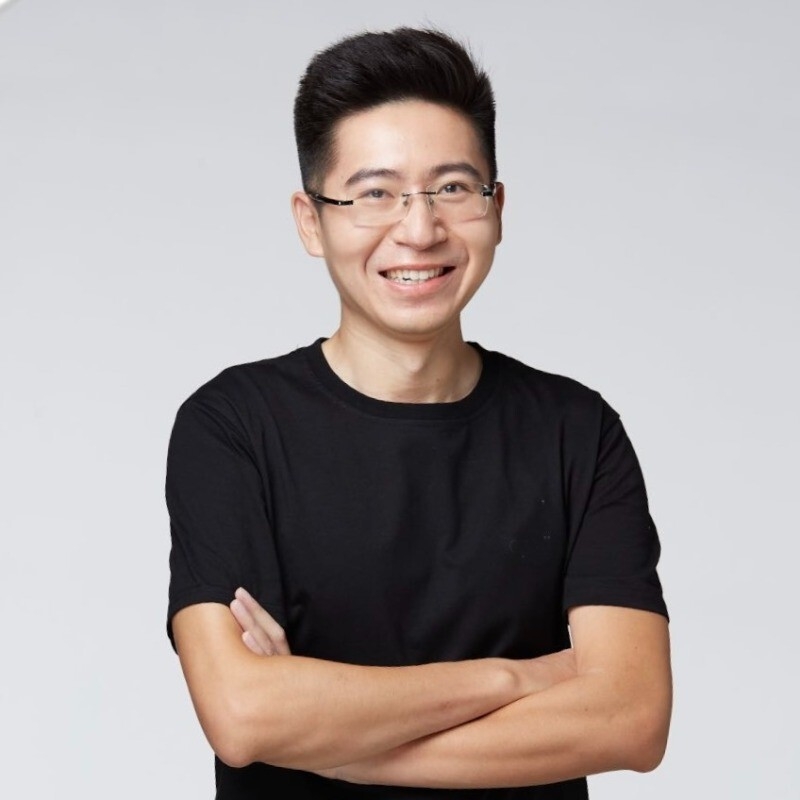
CEO Ang Li: ‘Autonomous Computers’ Beyond Chatbots Unlocks New AI Opportunity
Korea’s next significant artificial intelligence breakthrough may extend far beyond advancements in chips, smartphones, or dedicated devices. The true opportunity could lie in transforming these devices into functional “bodies” for sophisticated AI agents capable of operating computers and executing tasks autonomously on behalf of users.
For Ang Li, CEO and co-founder of California-based AI agent startup Simular and a former Google DeepMind researcher, the current paradigm shift in AI is profound. It’s not merely an evolution from one chatbot to another; it’s a fundamental transition from reactive AI that responds to user commands to proactive AI that can independently utilize computers to accomplish complex workflows.
“The critical question is, will humans still need to directly interact with computers if AI becomes so incredibly capable in the future?” Li posed during a recent interview with The Korea Herald in Seoul. “A traditional chatbot primarily addresses a singular aspect, like conversational interaction. But what about the broader scope of computer use – typing, navigating with a mouse, or using a keyboard? These actions can, and should, also be automated by intelligent AI.”
“This is precisely the challenge we are tackling, and we refer to our solution as autonomous computers,” he explained.
Simular, established in 2023 by Li and fellow former Google DeepMind researchers, has successfully secured approximately $27 million in funding to date. Key investors include prominent firms such as Felicis, NVentures, South Park Commons, and Samsung NEXT.
Their flagship product, Sai, is an always-on AI agent engineered for comprehensive computer use automation. Moving beyond simple text generation, Sai automates intricate workflows by directly controlling both local and cloud-based computing environments. This involves actions such as clicking, typing, navigating applications, and running terminals and code. The core objective is to elevate AI from mere conversation to decisive, actionable execution.
While Simular has not yet announced a dedicated Korean office or an official local commercial rollout, Li emphasized Korea’s strategic importance as a long-term market and a potential partner ecosystem for the innovative startup.
“In the long term, absolutely,” Li affirmed when questioned about establishing business operations in Korea or collaborating with Korean partners. “It’s not a simple yes or no; it’s more about timing – identifying the optimal moment to enter the Korean market.”
As an emerging startup, Li noted that Simular must judiciously allocate its resources. Nevertheless, he suggested that market entry into Korea could accelerate significantly with the right strategic partnership.
“It could unfold much faster than our initial projections,” he stated. “It’s unequivocally a yes. The determining factor is finding the precise moment.”
Simular already possesses a valuable Korean connection through Samsung NEXT, which participated in the company’s seed funding round. Li highlighted that Samsung NEXT, the venture capital and innovation arm of Samsung Electronics, has been instrumental in helping Simular gain deeper insights into Korea’s dynamic technology ecosystem and its distinct business culture.
“Samsung NEXT actively facilitates introductions to key industry players. This has been incredibly beneficial for me to better understand effective collaboration strategies with Korean companies,” Li commented.
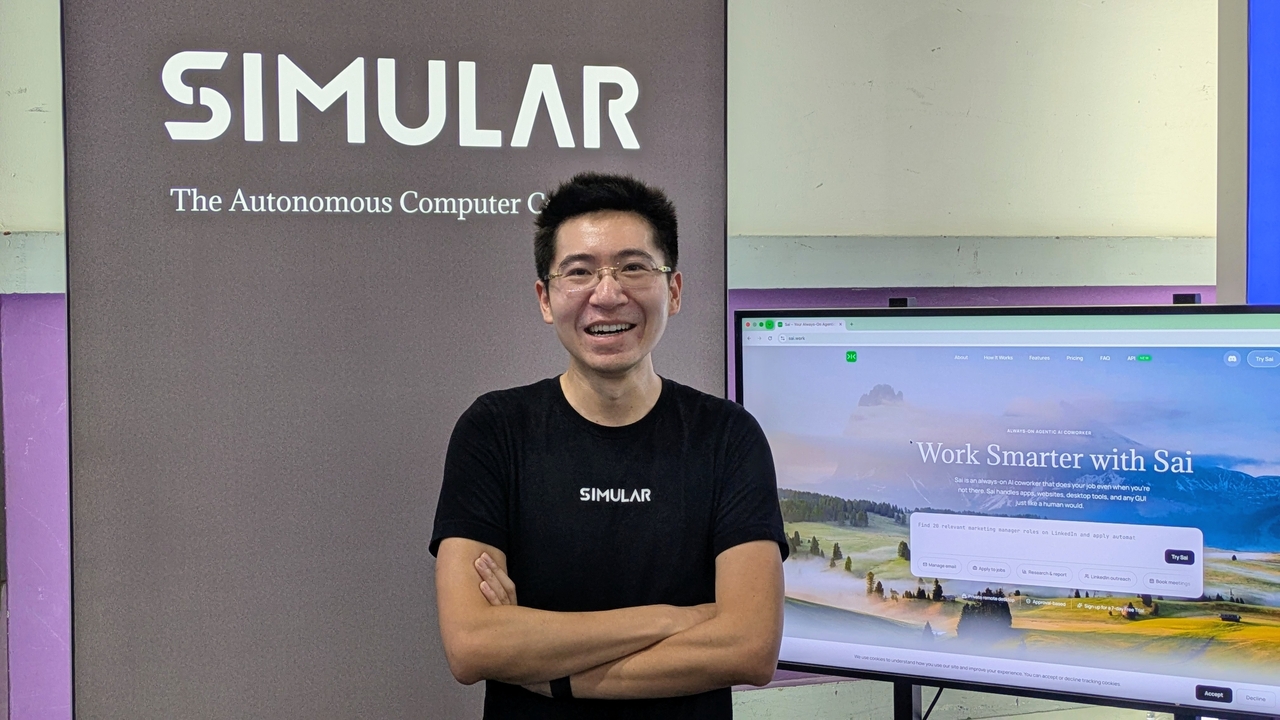
Further demonstrating its commitment, Simular also hosted a public event on Friday in collaboration with the Artificial Intelligence Institute at Seoul National University. The event showcased the company’s latest technology advancements and detailed its research roadmap, featuring presentations from members of its esteemed research and engineering teams.
Li’s interest in Korea extends beyond market entry considerations. He perceives the nation’s robust strengths in semiconductors, memory, smartphones, displays, home appliances, and automobiles as directly pertinent to the burgeoning AI agent era.
“Initially, we’re developing the intelligence layer, which is entirely software-based,” Li explained. “However, as these AI agents become more tangible, it means the agent requires a physical ‘body’ to operate within.”
“Fundamentally, intelligence necessitates a body,” he articulated. “And Korean companies possess an immense advantage here – their unparalleled capability in hardware manufacturing. So, hardware essentially represents that crucial ‘body’ for AI.”
This synergy holds immense implications for global technology leaders such as Samsung Electronics, LG Electronics, and Hyundai Motor, all of whom boast extensive global device footprints. If AI agents begin to seamlessly operate across a myriad of platforms – from PCs and smartphones to cars and connected smart appliances – these products transcend their role as mere hardware endpoints. They evolve into dynamic environments where AI agents can fluidly execute a vast array of tasks.
Li noted that while the industry has primarily focused on GPUs in recent years, the emergence of computer-use AI agents highlights a broader, foundational infrastructure challenge.
“For the past few years, the conversation has largely revolved around GPUs,” he observed. “However, as we develop these advanced AI agents, we’ve identified significant bottlenecks in CPU and memory performance as well. This is precisely where Korea’s strengths truly shine.”
For Simular, this makes Korea far more than just a market to monitor: it stands out as one of the few global locations where the essential hardware infrastructure for agent-driven computing is already robustly established, awaiting the integration of the right software layer and strategic partners.


