
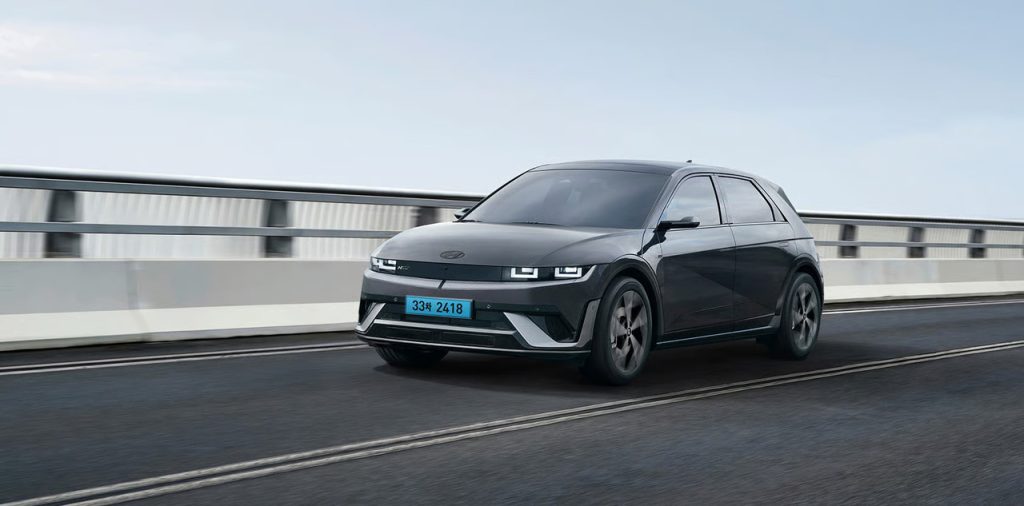
Hyundai Motor Group has demonstrated the most rapid expansion among the world’s top 10 electric vehicle (EV) manufacturers during the initial five months of the year. This impressive growth occurred even as Chinese automakers maintained their market dominance, despite a noticeable weakening of domestic demand within China.
According to the latest data released by market intelligence firm SNE Research on Tuesday, Hyundai secured the seventh position globally for EV sales. The company reported 303,000 electric vehicle deliveries between January and May, marking a substantial 24.3 percent increase from the previous year. This growth rate significantly outpaced the global EV market’s modest 3.5 percent expansion over the identical period.
The strong performance of the South Korean automaker can be attributed to a resurgence in demand across European markets and robust growth in Asian regions outside of China. These factors successfully counterbalanced a broader slowdown in China’s crucial EV market and softer consumer demand observed in North America.
Despite Hyundai’s remarkable momentum and strong EV sales, Chinese manufacturers collectively continued to lead the global rankings. Six out of the world’s top 10 electric vehicle makers were Chinese firms, underscoring their persistent influence in the automotive industry.
BYD retained its leading position globally with 1.157 million deliveries, although the company experienced a 21.5 percent decrease in sales compared to the previous year, primarily due to subdued domestic demand. Geely held the second spot, delivering 779,000 units, a 3.9 percent decline. The remaining companies comprising the top 10 list included prominent players like Tesla, Volkswagen, SAIC Motor, Changan, Chery, Leapmotor, and BMW.
Overall, global EV deliveries reached a total of 7.754 million units during the January-May period, reflecting the dynamic state of the electric vehicle market.
China remained the world’s largest individual EV market, accounting for 4.163 million deliveries. However, sales in China decreased by 10.4 percent, leading to a reduction in its share of global EV demand from 62.0 percent a year ago to 53.7 percent. In stark contrast, the European EV market saw significant expansion, growing by 27.5 percent to 1.988 million units. This growth was bolstered by the introduction of new electric models and ongoing initiatives to promote vehicle electrification. North America, conversely, recorded the most significant regional decline, with EV deliveries plummeting by 27.6 percent to 517,000 units amid policy uncertainties and weaker consumer sentiment.
The most substantial growth was recorded in Asian markets excluding China, where electric vehicle sales surged by an impressive 75.0 percent, reaching 747,000 units. Other emerging markets worldwide more than doubled their EV sales, climbing by an extraordinary 139.4 percent to 339,000 units.
“The global electric vehicle market is increasingly characterized by regionalization,” stated SNE Research in their analysis. “Future competition will hinge on factors such as China’s domestic market recovery, evolving policy landscapes in North America, and the sustainability of strong demand in Europe and Asian markets outside of China. Automakers that possess diversified overseas operations are likely to be better positioned for success compared to those heavily reliant on the Chinese market.”


