JPMorgan has significantly raised its 12-month target for South Korea’s benchmark Kospi index, reaffirming the nation as its top equity market across Asia. This optimistic outlook is driven by strong expectations that robust AI-driven earnings will overcome persistent foreign selling pressure and market volatility within the Korean stock market.
The global financial institution increased its base-case Kospi target to 12,500, a substantial hike from its previous target of 10,000 set in May. Furthermore, JPMorgan analysts established a bull-case target of 15,000, reflecting extreme upside potential, alongside a more conservative bear-case target of 8,000.
In a detailed report released on Thursday, JPMorgan strategists advised investors to strategically increase their exposure to the Korean market during pullbacks and maintain maximum allocation. Their rationale hinges on several key growth drivers: formidable AI-driven earnings, broader industrial expansion, anticipated gains within the financial sector, and supportive corporate-governance reforms designed to enhance shareholder value.
“We maintain our strong bullish directional stance on Korea equities, despite the ongoing challenges posed by forced foreign selling and heightened market volatility,” JPMorgan strategists affirmed. They also noted that these pressures are likely to continue influencing the market dynamics.
This bullish assessment from JPMorgan underscores the escalating strategic importance of South Korea’s memory-chip sector to the nation’s overall economy. The bank highlighted that the profits generated by AI-linked chipmakers are now substantial enough to significantly impact corporate income, household wealth, and government tax revenues, illustrating a profound economic ripple effect.
JPMorgan emphasized that Korea remains one of the most compelling equity-market opportunities for investors seeking exposure to the robust global AI cycle. The bank’s analysts continue to project a “higher-for-longer” memory cycle, bolstered by the exceptional pricing power of Korean technology firms. This has made South Korean technology earnings highly sensitive and responsive to increasing global AI data-center spending.
Despite the prevailing optimism, the bank cautioned that the current rally could experience sharp pullbacks. This risk is primarily linked to any weakening confidence in the AI trade, citing potential concerns over pricing strategies, intensifying Chinese competition, evolving export controls, and the supply of new equity and debt instruments.
The structure of the market itself is also contributing to pronounced swings. JPMorgan noted that leveraged exchange-traded funds (ETFs) focused on Korean equities have expanded significantly, now holding approximately $50 billion in assets. This substantial growth amplifies market movements through futures, options, and cash-market activities, consequently driving implied volatility sharply higher.
Persistent foreign selling remains a significant drag on the South Korean market. JPMorgan estimated that overseas investors have divested approximately $95 billion in Korean equities this year. More than 90 percent of these outflows are concentrated in the two dominant memory-chip manufacturers. The bank explained that these major stocks have grown so large that some emerging-market investors are reaching their mandate limits, compelling them to sell holdings even during market rallies.
This consistent selling pressure has also exerted downward pressure on the Korean won. However, JPMorgan indicated that potential interest rate hikes by the Bank of Korea and seasonal tax-related flows anticipated in August could offer some much-needed support to the currency.
Crucially, domestic investors have played a pivotal role in absorbing a significant portion of the foreign selling. JPMorgan estimates that Korean individual investors purchased approximately $80 billion of local equities this year, including substantial ETF inflows. The bank projects that this robust retail demand may continue, as households repatriate funds from overseas stocks and property investment opportunities remain constrained domestically.
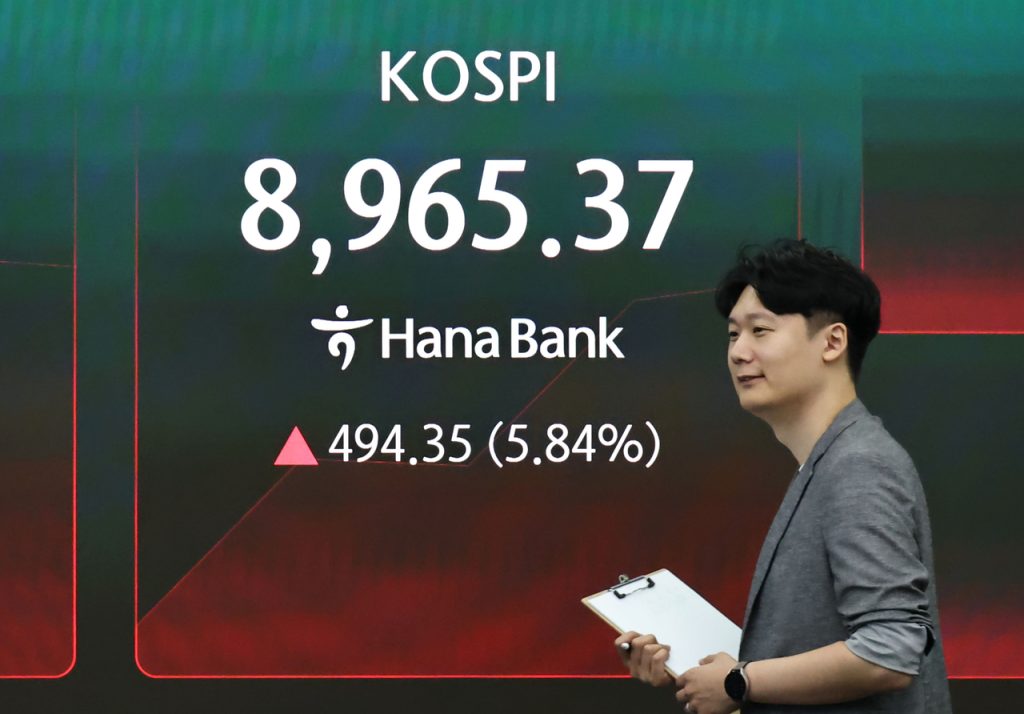
JPMorgan’s latest upgrade reinforces a growing trend of bullish calls from leading global investment banks, signaling sustained confidence in Korean equities. This positive sentiment persists despite the Kospi’s notable sharp swings following its breach of the 9,000 mark last week. Other major foreign brokerages, including Goldman Sachs and Morgan Stanley, have also recently revised their Kospi targets upward, citing South Korea’s strong AI earnings momentum as a primary catalyst for continued market gains. Goldman Sachs recently raised its Kospi target to 12,000, while Morgan Stanley lifted its target to 10,500, underscoring the widespread bullish outlook.
jwc