
Industry leaders say global funding, M&A, innovation will be critical to Korea’s next phase of growth
SAN DIEGO – South Korea’s biotechnology sector has rapidly emerged as one of Asia’s most dynamic innovation ecosystems, yet industry experts emphasize that securing global capital and adopting flexible business models are crucial for the nation to truly establish itself as a global biotech powerhouse.
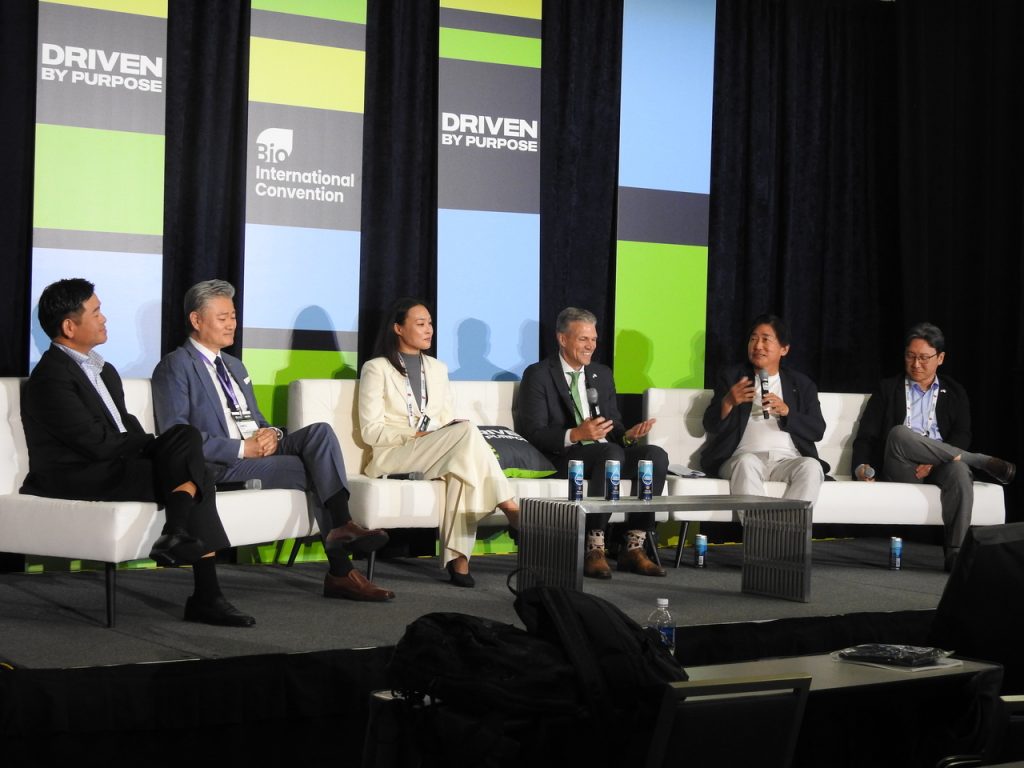
“Korea is already a significant innovation hub for biotechnology,” stated Hwang Jurie, director of public and international affairs at the Korea Biotechnology Industry Organization (KoreaBIO), during a panel discussion titled “Korea Rising: Don’t Be Late to Asia’s Next Innovation Hub.” This landmark session, part of the BIO International Convention in San Diego on Tuesday, marked the first time a Korea-specific focus was featured at the world’s largest biotechnology gathering.
“We currently boast over 3,000 drug pipelines, positioning us among the world’s largest biotech ecosystems and the highest on a per-capita basis,” Hwang highlighted.
While panelists acknowledged Korea’s prowess in developing innovative first-in-class therapies and its agile entry into emerging therapeutic niches, propelling its global progress, a significant and persistent challenge remains: access to sufficient capital.
Lambert Kuk, chief investment officer at KB Investment, pointed out that the distinct corporate governance structures between Korean and US companies often complicate direct international investment. Korean enterprise founders typically retain substantial control, whereas US venture investors are accustomed to exerting greater influence through board participation.
“For those truly seeking investment from a financial investor in the US, establishing a US subsidiary is the most straightforward solution,” Kuk advised.
The discussion underscored that Korea must evolve beyond mere licensing agreements, exploring more diverse company structures, fostering mergers and acquisitions (M&A), and embracing advanced forms of open innovation, including external collaborations for novel ideas, cutting-edge technologies, and intellectual property development.
Lee Chae-joon, CEO of Ildong Pharmaceutical, articulated the survival pressures facing Korea’s traditional pharmaceutical companies, driven by increasing generic drug price cuts and evolving regulatory landscapes within the domestic market.
“Ultimately, open innovation will be our lifeline,” Lee remarked. “While some stakeholders here are collaborators, they are also competitors in the global arena. As a global business development strategist, I believe we must be exceptionally clear and exhaustive in our approach to open innovation.”
James Choi, Samsung Biologics’ chief marketing officer overseeing sales support, project management, and global public affairs, extended an invitation for global investors to personally witness Korea’s biotech offerings.
“You would be profoundly impressed by the innovation and the comprehensive ecosystem that has been developed,” Choi asserted. “During the recent pandemic, we maintained a globalized supply chain with no shortages, thanks to robust local and international supply networks. There’s an immense amount of innovation and progress underway that I strongly encourage Western companies seriously considering investment in Korea to experience firsthand for a week or two.”
hwkan


