South Korea’s Industry Minister Kim Jung-kwan Details Broad EU Steel Quota Agreement, Urges New Approaches for Chip Investment, Tax Revenue, and Corporate Profit-Sharing
South Korea has announced significant progress in negotiations with the European Union regarding steel tariff-rate quotas (TRQs). Industry Minister Kim Jung-kwan confirmed that a “broad agreement” has been reached, raising optimism that Korean steel exporters may face a smaller reduction in their allocation compared to the EU’s overall planned cut.
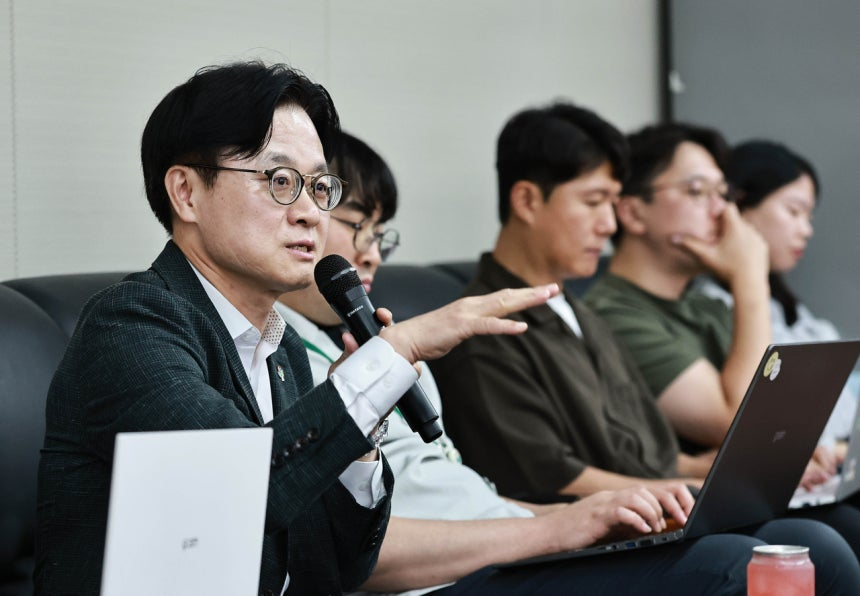
During a comprehensive briefing held in Sejong on Monday, Minister Kim also addressed critical issues impacting South Korea’s economic landscape, including corporate bonus disputes, leveraging chip-related tax revenue, the competitive Canada submarine tender, and the potential for new semiconductor production facilities.
Progress on EU Steel Tariff-Rate Quotas
Minister Kim highlighted the consensus achieved with the EU on steel TRQs as a major outcome of his recent diplomatic visits to Kazakhstan, Europe, and the Middle East. “Korea’s current quota stands at approximately 2.58 million metric tons, and we have secured an understanding that Korea’s allocation will not be subjected to the full 46 percent reduction, even as the EU lowers its overall import ceiling,” Kim stated, though he refrained from disclosing a specific revised figure.
The European Union is set to implement a substantial cut in its duty-free steel import quota, decreasing it by about 46 percent from 33.82 million tons to 18.35 million tons, effective July 1. This measure is intended to bolster the EU’s domestic steel industry, with tariffs on imports exceeding the quota doubling from 25 percent to 50 percent.
Kim clarified that Seoul did not offer any special concessions to the EU in return, emphasizing that the EU’s original measure was perceived as violating existing free trade agreements. Trade Minister Yeo Han-koo and other senior trade officials have been instrumental in leading negotiations with Brussels to secure the most favorable quota for Korean steelmakers. The South Korean government plans to unveil support measures for its steel industry concurrent with the EU’s finalization of its quota decision, expected in late June or early July.
The EU represents a vital market for South Korean steel, ranking as its second-largest export destination. In 2025, the bloc accounted for 3.24 million tons of Korea’s total 28.25 million tons in steel exports.
International Opportunities and Strategic Engagements
Addressing talks with Washington concerning the inaugural project under their strategic investment framework, Minister Kim adopted a cautious stance, indicating that the necessary procedural steps are still in progress.
Regarding overseas business prospects, Kim noted that Korean companies operating in the Middle East have expressed readiness to participate in reconstruction projects as opportunities emerge. However, he underscored Seoul’s continued caution regarding engagement with Iran, citing ongoing risks from financial sanctions, EU restrictions, and stalled discussions with the United States.
On Canada’s procurement of next-generation submarines, where Korean shipbuilders are competing against German counterparts, Kim expressed “hopeful expectations” for a favorable outcome. “In terms of the competitiveness of our submarine technology and the comprehensive industrial package we offer, I believe South Korea holds an advantage,” he asserted. Nevertheless, he acknowledged a potential disadvantage if Canada prioritizes close cooperation with NATO member nations. Kim mentioned awareness of speculation regarding a potential split order between Germany and Korea or a delay in the decision until July, but confirmed no official notification had been received.
Shaping Domestic Policy for the Semiconductor Boom
Domestically, Minister Kim emphasized the critical need for South Korea to modernize its policy framework to effectively manage the broader implications of the surging semiconductor industry, ranging from corporate bonuses and tax revenue to future chip production sites.
Revisiting Corporate Profit-Sharing and Bonuses
On the topic of corporate profit-sharing, Kim challenged conventional approaches that primarily frame bonuses as a labor dispute issue. He argued that shareholders and investors are often overlooked in such discussions. “I do not think it is right to say that bonuses should become a subject of labor disputes,” Kim stated, advocating for a more inclusive perspective.
“When it comes to operating profit, the participants are not only management and labor unions. There are also investors,” he explained. “Investors come in knowing they may take losses, while workers enter under the basic premise that wages are guaranteed. The level of risk is completely different.” Kim underscored that domestic and foreign investors and shareholders currently have “no room” to participate in these discussions, necessitating an “institutional supplement.”
Strategic Use of Excess Tax Revenue
When questioned about the appropriate use of excess tax revenue generated by the booming chip industry, Kim refrained from providing specific details. Instead, he called for the development of long-term strategic tools to bolster national resource security. “One of our chronic problems is that fiscal and budget decisions are made on a short-term clock,” he lamented. “We need to prepare long-term measures to strengthen resource security, whether through excess tax revenue, a dedicated fund, or a special account.”
Future Semiconductor Production Sites
Minister Kim also suggested that South Korea may require additional chip production sites to accommodate expanding global demand. He declined to comment on ongoing speculation that regions such as Gwangju and South Jeolla Province are being considered for new facilities.
“Existing investment projects should be carried out as quickly as possible,” Kim urged. “There are also views that those projects alone may not be enough, and I think a new site may be necessary to meet future demand.”