South Korean Tech Giants Samsung, SK, LG Embrace Generative AI for Workplace Transformation
South Korea’s leading conglomerates, including Samsung, SK, and LG, are rapidly expanding the integration of advanced artificial intelligence tools within their workplaces. This pivotal move signifies a strategic departure from earlier concerns regarding potential technology leaks, instead focusing on a widespread initiative to fundamentally transform employee operations and enhance productivity.
In a coordinated effort towards comprehensive AI transformation, Samsung, SK, and LG have significantly scaled up generative AI training programs for both executives and employees. Their aim is to integrate cutting-edge models like ChatGPT, Claude, Google Gemini, and Microsoft Copilot into daily workflows, thereby driving a group-wide advancement in AI capabilities.
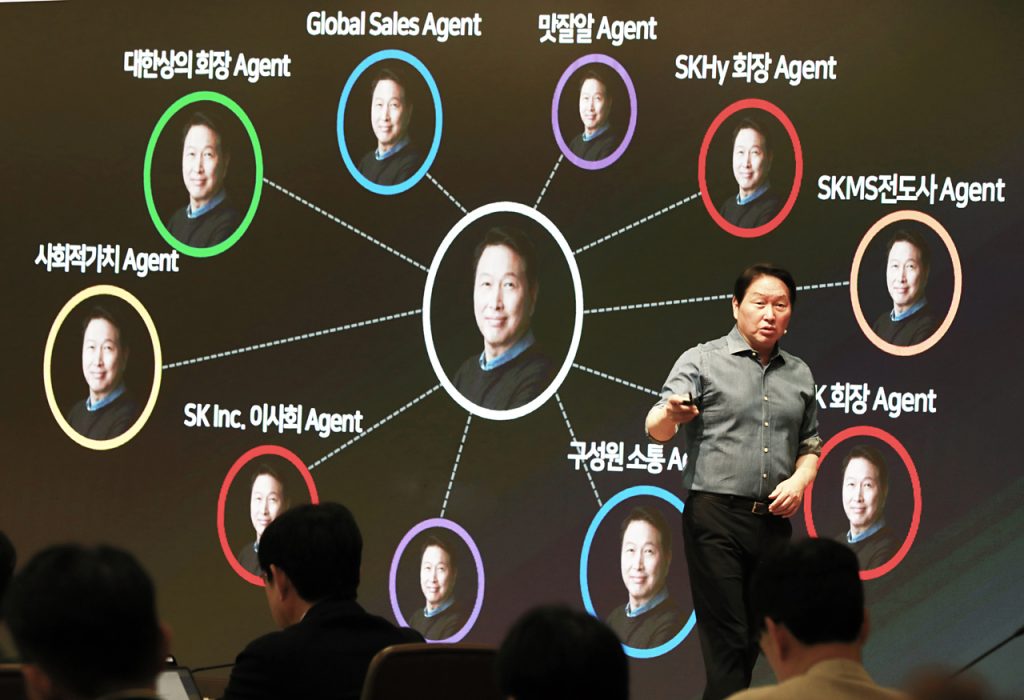
“It is time to enter AI transformation at full speed, in all directions,” declared SK Group Chairman Chey Tae-won during the recent 2026 New Icheon Forum. Emphasizing the urgent need for comprehensive AI integration, Chairman Chey highlighted, “More than 90 percent of our members are already using AI. However, we require AI that transcends personal applications to strategically connect individual contributions with the performance of the entire organization.” He then proposed an ambitious initiative: the introduction of “one agent per person” across the diverse SK Group.
Further illustrating his vision for an AI-driven enterprise, Chey revealed plans to deploy multiple AI agents designed to facilitate communication with executives and employees throughout SK’s various companies. “I will not create just one agent, but countless agents to communicate with management and members of each company,” he stated. “Dozens of chairman avatars will go into each company, listen, work with other agents and communicate.” This innovative approach aims to foster a more connected and efficient corporate ecosystem through advanced AI communication.
Beyond leveraging external AI models, SK Group actively utilizes its robust internal technologies. These include SK Telecom’s proprietary large language model (LLM), “AX,” its collaborative platform “A.Dot Biz Co-Work,” and SK hynix’s specialized generative AI platform, “GaiA,” all designed to enhance operational efficiency and innovation within the conglomerate.
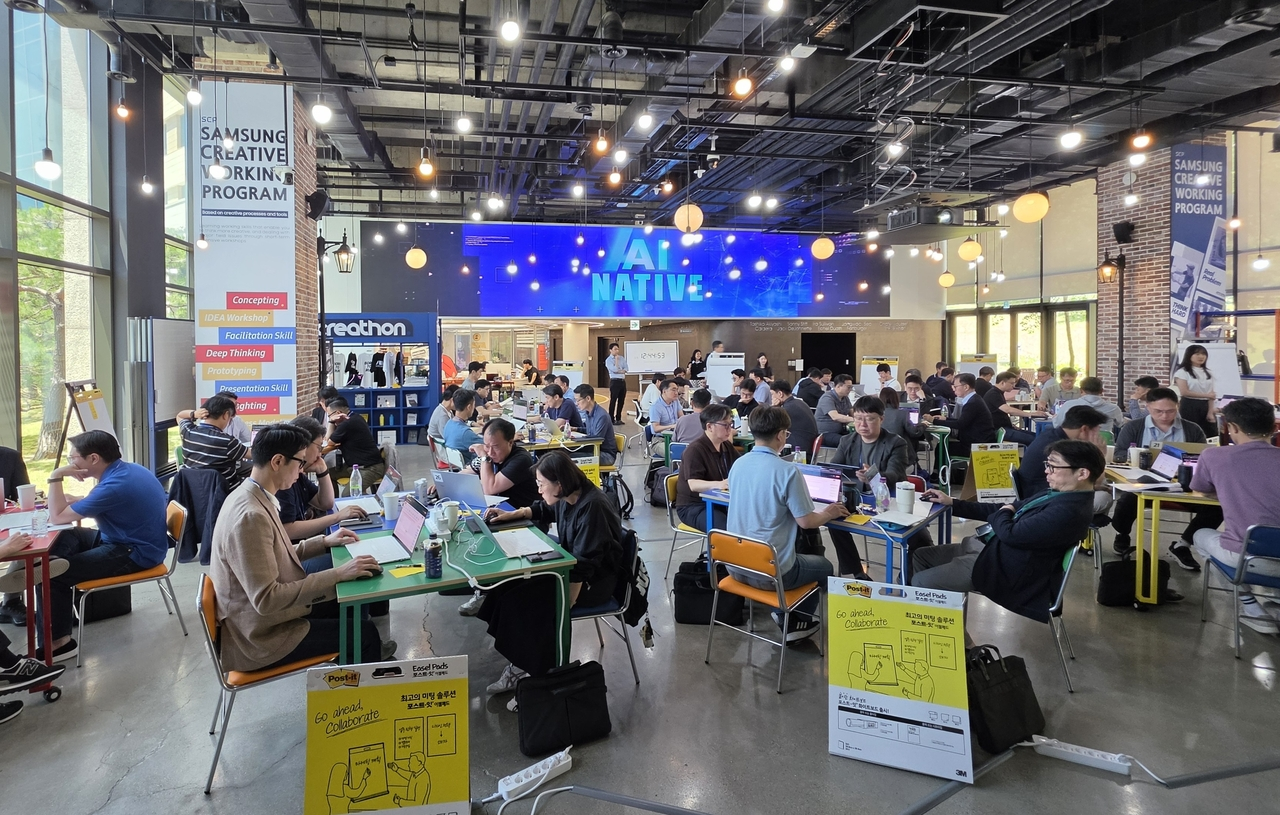
Samsung Group has similarly initiated a comprehensive artificial intelligence strategy across all its affiliates. This bold move now permits employees to leverage external generative AI tools, including industry leaders like ChatGPT, Google Gemini, and Claude, as the global conglomerate aims to fundamentally overhaul its operational framework.
Specifically, Samsung Electronics’ Device eXperience division has authorized the use of ChatGPT, Claude, and Gemini Enterprise for various work tasks. Its critical Device Solutions division, which manages the pivotal chip business, currently utilizes Claude and is preparing for the imminent adoption of ChatGPT this month, followed by Gemini later in the year.
This widespread adoption represents a significant strategic pivot for the tech giant. Notably, Samsung had previously prohibited external generative AI tools in 2023 following an incident where an employee inadvertently uploaded sensitive source code to ChatGPT. In response, the company proactively developed its proprietary generative AI model, Samsung Gauss, and established dedicated internal organizations to spearhead AI-driven productivity gains.
Further underscoring this commitment, Samsung Electronics is poised to host its global strategy meeting from Tuesday to Thursday. During this crucial event, leaders of major overseas operations are anticipated to deliberate on advanced AX (AI Experience) strategies tailored for each regional unit, a key agenda item. Moreover, Samsung is conducting an intensive AX Boot Camp for presidents of all affiliated companies. The conglomerate aims to deliver hands-on AI training to approximately 2,300 executives and ensure comprehensive AI education for all its employees by year-end.
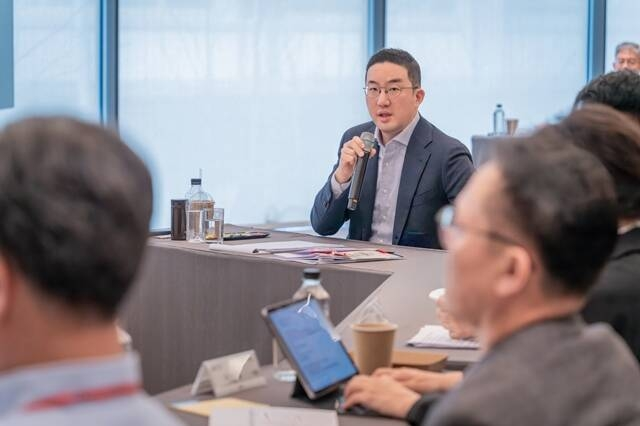
LG Group likewise views comprehensive AI transformation as a mission-critical imperative, directly linking it to the conglomerate’s long-term survival and competitiveness. This perspective has fueled a multi-year endeavor to fundamentally reorient the entire organization around advanced AI capabilities.
During a pivotal presidents’ meeting in March, LG Group Chairman Koo Kwang-mo issued a powerful call to action, urging affiliate CEOs to aggressively lead an accelerated AX (AI Experience) push. He emphasized the undeniable necessity for structural innovation to effectively navigate an increasingly volatile and unpredictable global market, unequivocally defining AX as a primary source of future competitive advantage.
To facilitate this ambitious transformation, LG has implemented a robust three-stage AI transformation training program, initiated early this year, targeting CEOs of all affiliates (including Chairman Koo) and senior executives. Following the successful completion of the first stage, which centered on enhancing individual productivity through AI, the group commenced the rollout of the second stage last month, designed to empower executives to strategically apply AI at a broader corporate level.
Looking ahead, beginning next month, executives overseeing business operations will participate in specialized AI training under the thematic banner “AI for customers.” This program is meticulously crafted to equip them with the expertise to develop cutting-edge, AI-based commercialization strategies that directly benefit consumers.
Given its formidable internal AI foundation, anchored by its proprietary hyperscale AI model, Exaone, LG affiliates are adopting a notably more cautious and strategic approach to integrating external AI technologies.
An industry official remarked, “While LG CNS has diversified its AI options through strategic partnerships with both OpenAI and Anthropic, LG Group maintains a profound commitment to leveraging its own advanced AI model, Exaone.” The official added, “Although the group may explore ChatGPT adoption, any broader implementation will likely be carefully evaluated against specific business requirements and its overarching internal AI strategy.”