Mirae Asset Misses Out on SpaceX IPO Shares, Leaving Korean Asset Managers Empty-Handed
As **SpaceX** made its highly anticipated **public market debut** in a record-setting launch Friday, **South Korea** found itself largely sidelined. Despite being the sole domestic member of the underwriting syndicate, **Mirae Asset Securities failed to secure any share allocation**, leaving **Korean investors** without direct exposure to the landmark **initial public offering (IPO)**.
The pioneering rocket-maker celebrated a triumphant **Nasdaq launch**, with its shares closing at $161 on Friday, a significant 19 percent surge from its **IPO price** of $135. This success propelled its market capitalization beyond $2.1 trillion by the close of trading.
“**Mirae Asset Securities** received no allocable shares during the lead underwriter’s final allocation process, which consequently prevented us from allotting any stock to our clients,” the brokerage confirmed on Saturday.
A prior Wednesday filing with the US Securities and Exchange Commission (SEC) had indicated **SpaceX** allocated 2.31 million Class A shares to **Mirae Asset Securities**. However, the brokerage clarified that this figure did not signify a guaranteed allocation for direct sale to **investors**.
“The figure noted in the SEC filing pertained to our underwriting commitment as a syndicate member, which is distinct from the final allocation of shares available for public sale,” the firm elaborated.
**Industry sources** suggest that **Goldman Sachs**, acting as the lead left underwriter, likely reallocated shares to address stronger-than-expected demand primarily from large **institutional investors**.
In the wake of the unsuccessful allocation, **Mirae Asset Securities** promptly **refunded all subscription deposits in full** to the **investors** who had participated in the offering.
This incident followed a clear demonstration of strong demand among **Korean investors** earlier in the month, when **Mirae Asset Securities’** $500 million offering of **SpaceX shares** sold out within minutes of subscriptions opening.
The initial offering was exclusively available to registered professional investors, notably including **asset managers** intending to incorporate the highly sought-after shares into their **US space-focused exchange-traded funds (ETFs)**.
For instance, **Korea Investment Management**, a prominent local asset manager, had planned to integrate the **SpaceX stock** into its Ace US Space Tech Active ETF at the **IPO price** of $135, leveraging allocations expected via **Mirae Asset Securities**. This unforeseen allocation failure now necessitates a significant revision of their investment strategies.
**Korea Investment Management** acknowledged on Saturday that the **allocation failure** underscores “the unique and often unpredictable nature” of the **US IPO market**.
Despite the initial setback, the asset manager confirmed it subsequently gained **exposure to SpaceX** through open-market purchases once trading commenced, though the exact size of its position was not disclosed.
**Mirae Asset Global Investments**, an affiliate of **Mirae Asset Securities**, similarly faced challenges in securing early **SpaceX exposure** for its **ETFs**.
Instead, this asset manager intends to incorporate **SpaceX** into its Tiger US Space Tech ETF two trading days post-listing, aligning with the passive fund’s established index-tracking methodology. Other **space-themed ETFs** are anticipated to follow a similar integration approach.
Effectively shut out of direct **SpaceX IPO participation**, **Korean retail investors** and **asset managers** are now widely expected to acquire **exposure to SpaceX shares** primarily through purchases in the **secondary market**.
“Given **SpaceX’s** undeniable prominence within the **aerospace sector**, it would be challenging for **asset managers** to exclude the stock from their **ETFs**, irrespective of its current valuation,” stated an official from a local asset management firm.
“It’s highly probable they will incrementally increase their holdings over time. The primary concern, however, remains the potential impact on profitability,” the official added.
As **Korea** persistently seeks greater **exposure to SpaceX**, the nation’s **local financial markets** are consequently experiencing sustained **capital outflow pressure**.
Although the recent rally in **chip stocks** and the broader **Korean stock market** has shown signs of cooling this month, largely due to intensifying global investor interest in the **SpaceX IPO**, these **capital outflows** may persist as the newly listed company’s market momentum remains robust.
“Considering **SpaceX’s sheer scale** and market impact, it possesses the potential to continue disrupting market liquidity in the near term,” commented **Kim Jong-min**, an analyst at **Samsung Securities**. He further suggested that **local chip stocks** could become attractive targets for tactical **profit-taking** as post-listing purchases of **SpaceX shares** continue.
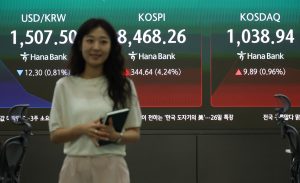
This significant **liquidity drain** directly exerts downward pressure on the **Korean won**, as **investors** actively convert the local currency into US dollars (greenbacks) to finance their substantial **SpaceX equity purchases**.
**Reuters** reported earlier on Wednesday that an estimated **$1.5 billion in dollar demand**, largely stemming from **Korean participation in the SpaceX IPO**, had already contributed to downward pressure on the **won**, helping push the currency to a **17-year low** earlier this month.
While that report indicated the immediate dollar-buying demand linked to the **IPO** might be nearing its final stages, sustained and fervent **investor interest in SpaceX** could potentially prolong the demand for US dollars, thereby maintaining persistent pressure on the **Korean won**.
**Authorities** in **Korea** are reportedly anticipating that the **won** will eventually stabilize and return to trading levels consistent with underlying **economic fundamentals**.
“The near-term outlook for the **won** undeniably remains challenging to predict, but we expect supply and demand dynamics to gradually realign with the nation’s economic fundamentals over time,” commented a knowledgeable foreign exchange market official.
silverstar