
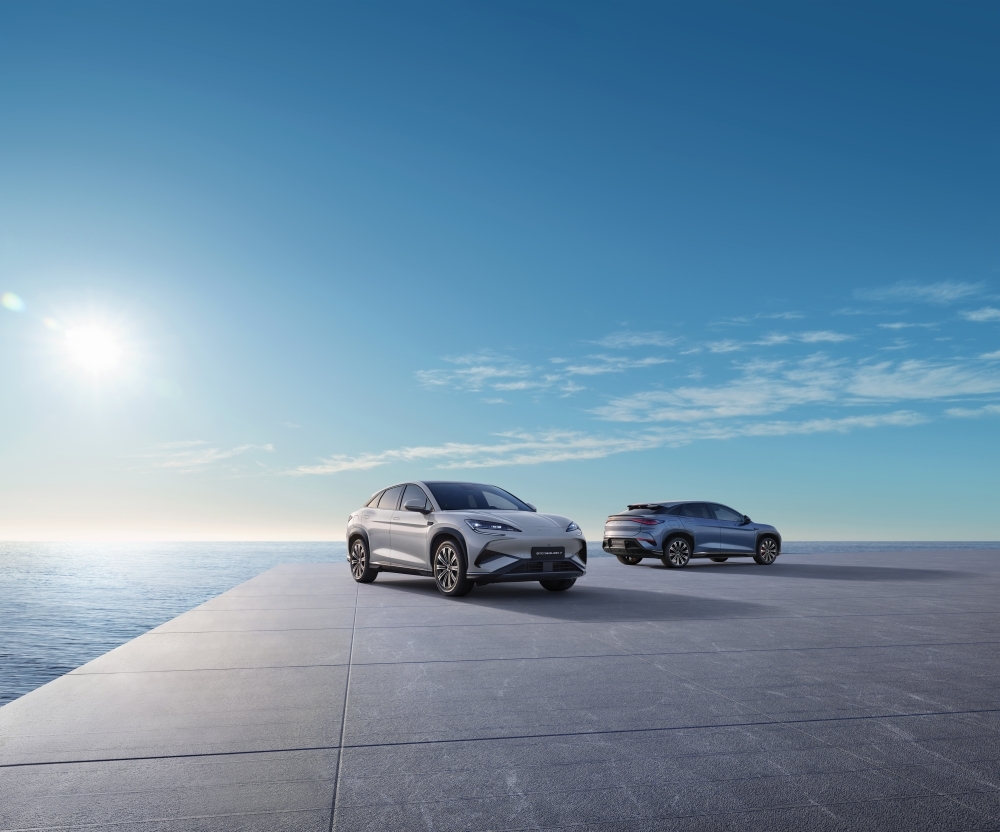
Chinese automakers are making significant strides in the South Korean imported vehicle market, achieving a historic milestone in April by securing third place and surpassing Japanese brands for the very first time.
Data released by the Korea Automobile Importers & Distributors Association (KAIDA) for April revealed new vehicle registrations: 16,385 units from Europe, 13,611 from the US, 2,023 from China, and 1,974 from Japan. This marked a pivotal shift in the competitive South Korean import car landscape.
For the first time ever, Chinese-made vehicles outsold their Japanese counterparts in South Korea’s highly competitive imported car market, capturing a 6 percent market share compared to Japan’s 5.8 percent.
This remarkable surge was almost entirely driven by the leading Chinese EV maker, BYD, which sold an impressive 2,023 vehicles in April alone. This figure notably exceeded the combined sales of established Japanese luxury brands Lexus (1,079 units), Toyota (829 units), and Honda (66 units).
BYD’s strong performance positioned it as the fourth-ranked imported brand for the second consecutive month in March and April. This success has been significantly bolstered by the ongoing electric vehicle subsidies provided by the Korean government, making Chinese EVs a more attractive option for local consumers.
Industry experts attribute the escalating presence of Chinese vehicles in South Korea to a rapidly increasing demand for electric vehicles. This includes the popularity of Chinese-made versions of models like Tesla’s Model Y, which have resonated with local buyers.
Amid persistently high fuel prices, which amplify interest in EVs, Chinese brands are increasingly capturing consumer attention. Their appeal stems from competitive affordability, advanced software-defined vehicle capabilities, and cutting-edge autonomous driving technology, particularly attracting younger, tech-savvy consumers.
This growing trend also indicates a gradual softening of consumer resistance toward Chinese-made vehicles within one of the world’s most discerning and competitive import car markets, suggesting a shift in perception and trust.
The competitive landscape is poised to intensify further as more prominent Chinese EV brands prepare for their entry into South Korea. Zeekr, the premium electric vehicle marque under China’s second-largest EV manufacturer, Geely Automobile, recently inaugurated its first showroom in Seoul’s upscale Gangnam district. Additionally, other major carmakers such as Chery Automobile and Xpeng are actively preparing to launch their innovative models in the South Korean market in the near future.
This aggressive expansion by Chinese car brands contrasts sharply with the recent retreat of some Japanese carmakers. Honda, for instance, announced in April its decision to discontinue automobile sales in South Korea after more than two decades of operation.
Following Honda’s exit, Toyota and Lexus remain the sole Japanese brands actively competing in the South Korean market. Industry observers are closely monitoring whether Chinese brands can effectively capitalize on this shifting dynamic, fill the emerging gap, and further solidify their growing market share.
sahn


