
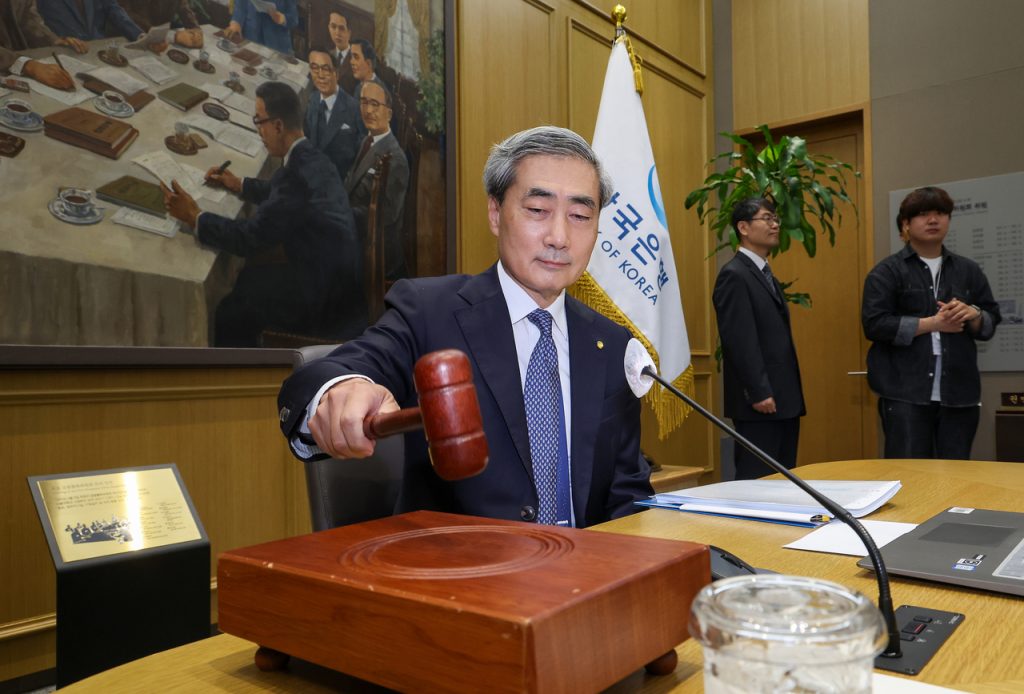
South Korea’s central bank opted to keep its benchmark interest rate unchanged on Thursday. This cautious decision by the Bank of Korea was primarily driven by persistent geopolitical uncertainty in the Middle East, which continues to heighten risks of inflation and potential currency weakness for the South Korean economy.
In a move widely anticipated by market analysts, the Monetary Policy Board of the Bank of Korea officially held the key rate steady at 2.5 percent during its latest rate-setting meeting held in Seoul. Notably, this pivotal monetary policy gathering marked the first to be chaired by the new BOK Governor, Shin Hyun-song, who assumed his position last month.
This decision extends the central bank’s period of holding the benchmark rate to an eighth consecutive meeting. Despite this pause, the Bank of Korea continues to operate within a broader monetary easing cycle aimed at supporting economic growth.
The BOK initiated its monetary easing phase in October 2024, subsequently cutting the benchmark interest rate by a cumulative 100 basis points from an initial 3.5 percent. However, after reaching the current 2.5 percent, the key rate has remained consistently unchanged since July 2025, indicating a strategic pause in further rate adjustments.


