
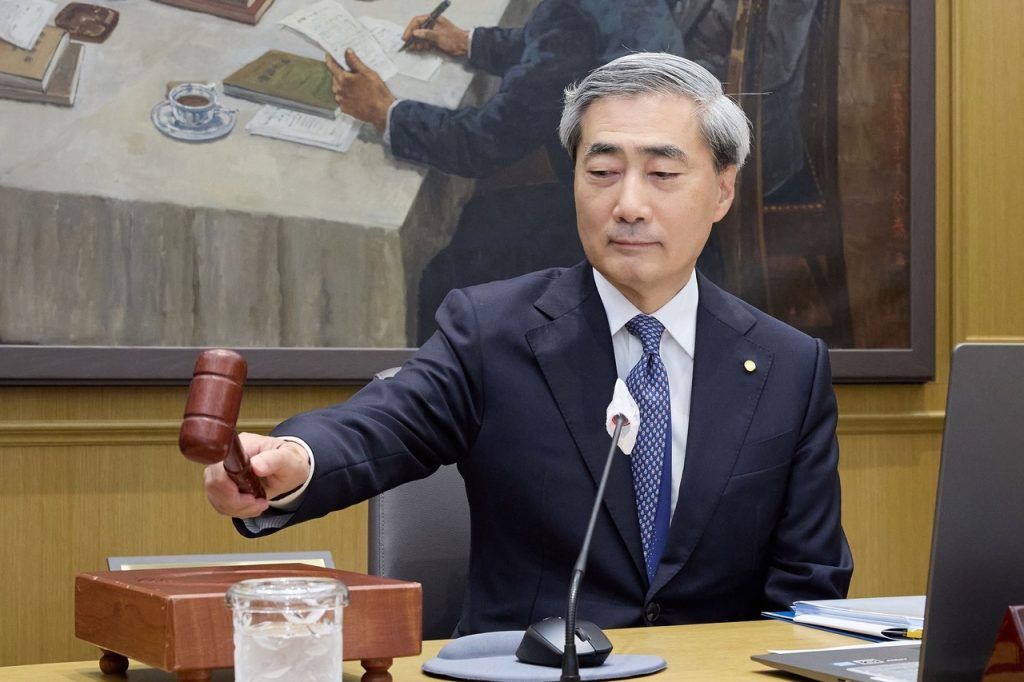
South Korea’s central bank, the Bank of Korea (BOK), maintained its benchmark interest rate on Thursday, a move widely seen as signaling an imminent shift towards a tighter monetary policy stance.
The BOK’s Monetary Policy Board voted to hold the benchmark rate at 2.5 percent, extending a period of rate stability that has been ongoing since May 2025. This decision follows a prior easing cycle by the central bank.
This significant rate-setting meeting was the first to be chaired by the new BOK Governor, Shin Hyun-song, who assumed his role in late April.
Persistent inflationary pressures continue to challenge the South Korean economy, largely driven by escalating oil prices amid ongoing Middle East conflict. This persistent inflation has solidified the central bank’s hawkish monetary policy stance.
In April, consumer prices surged by 2.6 percent year-on-year, significantly surpassing the BOK’s 2 percent inflation target. This acceleration from March’s 2.2 percent further highlights rising price instability.
Even excluding volatile food and energy costs, core inflation remained elevated at 2.2 percent year-on-year in both March and April, consistently staying above the central bank’s target.
Adding further complexity, the sustained weakness of the Korean won against the US dollar has exerted additional pressure on the BOK. In recent weeks, the won has notably depreciated, trading above the crucial 1,500-per-dollar mark—a level reminiscent of past financial crises.
Amid these challenges, the central bank revised upward its economic growth forecast for South Korea to 2.6 percent, an increase of 0.6 percentage points from its prior projection of 2 percent. This earlier forecast was issued on February 26, predating the outbreak of the Iran war.
silverstar


