Samsung Electronics Wage Pact Ends Strike Threat, But Bonus Gaps Fuel Internal Tensions and Shareholder Backlash
Samsung Electronics successfully concluded weeks of intensive negotiations with its labor unions, signing the 2026 wage agreement on Wednesday. This crucial development saw union members approve a last-minute bonus deal, effectively averting a potentially disruptive strike by the tech giant’s workforce.
However, the newly ratified agreement is already facing scrutiny, predicted to intensify internal backlash regarding significant bonus disparities between semiconductor and non-semiconductor division employees, alongside growing shareholder opposition over the structure of profit-linked payouts.
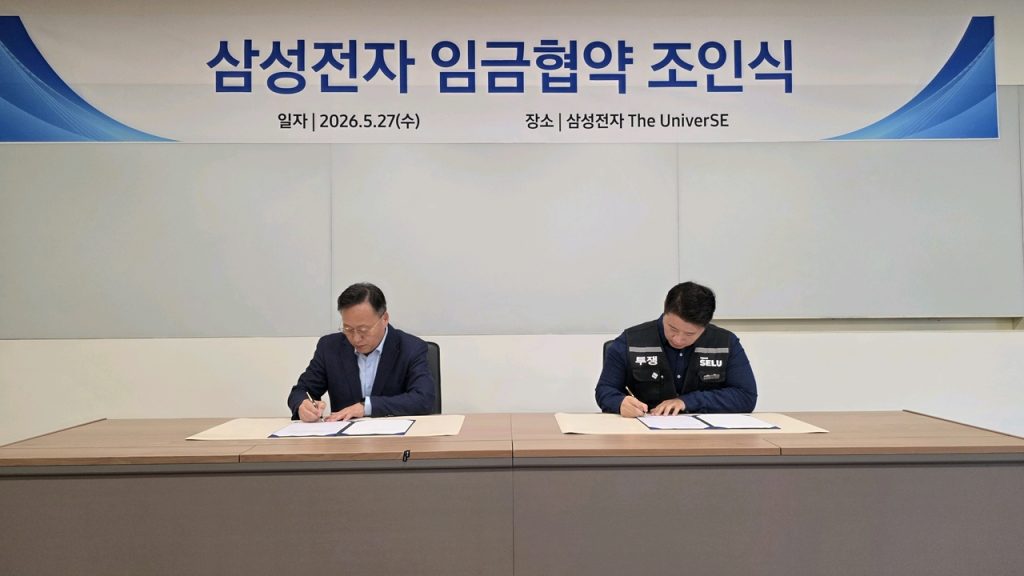
The official signing ceremony took place at Samsung’s state-of-the-art employee training center in Giheung, following a critical union vote conducted from May 22 until Wednesday morning. The comprehensive deal secured a 73.7 percent approval rating among the 62,616 union members who participated, with an impressive 95.5 percent turnout rate from the 65,593 eligible members, as reported by the unions.
“We view this wage agreement as a crucial starting point for fostering collaboration between labor and management, ultimately strengthening our global competitiveness,” stated Samsung Electronics Vice President Yeo Myeong-gu during the signing ceremony.
Choi Seung-ho, who chairs the largest Samsung Electronics Labor Union, acknowledged that while the negotiations presented “some regrets,” both parties ultimately achieved a meaningful agreement.
“Our commitment remains to continuously improve working conditions and vigorously protect the rights and interests of all Samsung employees,” Choi affirmed.
Following the finalization of the deal, Samsung’s top executives released a joint public apology, acknowledging the concerns it had generated among the public, shareholders, customers, and their dedicated employees.
In a commitment to reassess the company’s labor relations and overarching management practices, the executives announced the creation of a 5 trillion won ($3.3 billion) fund. This significant investment, to be disbursed over the next five years, aims to support shared growth, foster a healthier business ecosystem, and drive future talent development initiatives.
“Specific areas under consideration for this fund include robust support for second- and third-tier suppliers, an industrial accident fund, inclusive financial services for vulnerable groups and small merchants, advanced AI talent programs, and crucial youth education initiatives,” the executives elaborated.
Samsung further clarified that the precise details of these initiatives will be determined subsequent to thorough discussions by its board and compliance committee. The company noted that employees, including union representatives, have already agreed to actively participate in these processes.
Under the agreement, Samsung is establishing a special management bonus specifically for its high-performing semiconductor division. This bonus will be directly funded by 10.5 percent of that division’s operating profit. Additionally, the company is set to revise its long-standing excess profit incentive (OPI), traditionally capped at 50 percent of annual salary. Moving forward, the OPI pool will be calculated based on 10 percent of total operating profit, shifting away from the previous economic value added metric.
Despite the agreement, internal friction is intensifying among employees due to the pronounced disparities in anticipated bonus payouts.
Illustrating these concerns, union estimates suggest that if Samsung Electronics achieves approximately 300 trillion won in operating profit this year, employees within the highly successful memory business could potentially receive total compensation upwards of 600 million won. This figure includes both the newly introduced special bonus (paid in company shares) and the regular OPI. In stark contrast, employees in the foundry and System LSI businesses are projected to receive payouts closer to the 200 million won mark.
The disparity becomes even more pronounced for employees in the DX division, responsible for Samsung’s prominent smartphone, home appliance, and TV product lines. These employees are only anticipated to receive compensation in the range of several million won, unequivocally highlighting a severe compensation gap within the global technology leader.
This palpable backlash was clearly evident during the union vote itself. Within the National Samsung Electronics Union – a smaller but significant union primarily representing employees from non-chip businesses – only 1,536 out of 7,283 voters (a mere 21.1 percent) cast their ballots in favor of the bonus deal, indicating widespread disapproval among this segment.
Such widespread discontent prompted an empathetic internal message from Roh Tae-moon, the esteemed Samsung Electronics president and head of the crucial DX division. In his address, he directly acknowledged the deep frustration felt by employees following the recent wage negotiations.
“I understand that many of you felt alienated, deprived, and profoundly disappointed with the company during the recent wage negotiations and their ultimate outcome,” Roh conveyed in a direct message to DX employees on Wednesday.
Expressing both regret and a strong sense of responsibility for the current situation, Roh pledged an intensified focus on rigorously restoring the DX division’s competitiveness and fostering sustained growth.
“I am committed to a direct and thorough examination of necessary changes within each business unit, identifying areas where we must focus more boldly and address the most urgent on-the-ground challenges,” Roh stated decisively. He continued, “We will meticulously reexamine our cost structure, streamline business operations, enhance product competitiveness, and optimize our execution system, one by one, to build a robust foundation for sustainable mid-to long-term growth.”
Further complicating the situation, the Samsung Electronics Donghaeng Labor Union, a third union predominantly representing DX employees, announced its intention to pursue legal action. Their decision stems from being controversially excluded from the recent wage agreement vote.
The Donghaeng union had previously withdrawn from the joint bargaining group, citing concerns that the perspectives of DX workers were not adequately represented in the negotiations. Since then, its membership has surged dramatically from approximately 2,600 to around 13,000, a clear indicator of the intensifying backlash among non-chip employees.
The escalating backlash is now extending beyond Samsung’s internal workforce, with significant shareholder opposition rapidly building against elements of the new agreement.
The influential Korea Shareholder Movement Headquarters declared on Wednesday that the profit-linked bonus plan potentially infringes upon the Commercial Act. They contend that allocating a fixed portion of pre-tax operating profit for employee bonuses effectively constitutes a disguised dividend, distributed without the requisite shareholder approval.
Consequently, the group announced its firm intention to file a lawsuit specifically aimed at invalidating the controversial bonus-sharing portion of the newly signed agreement.