
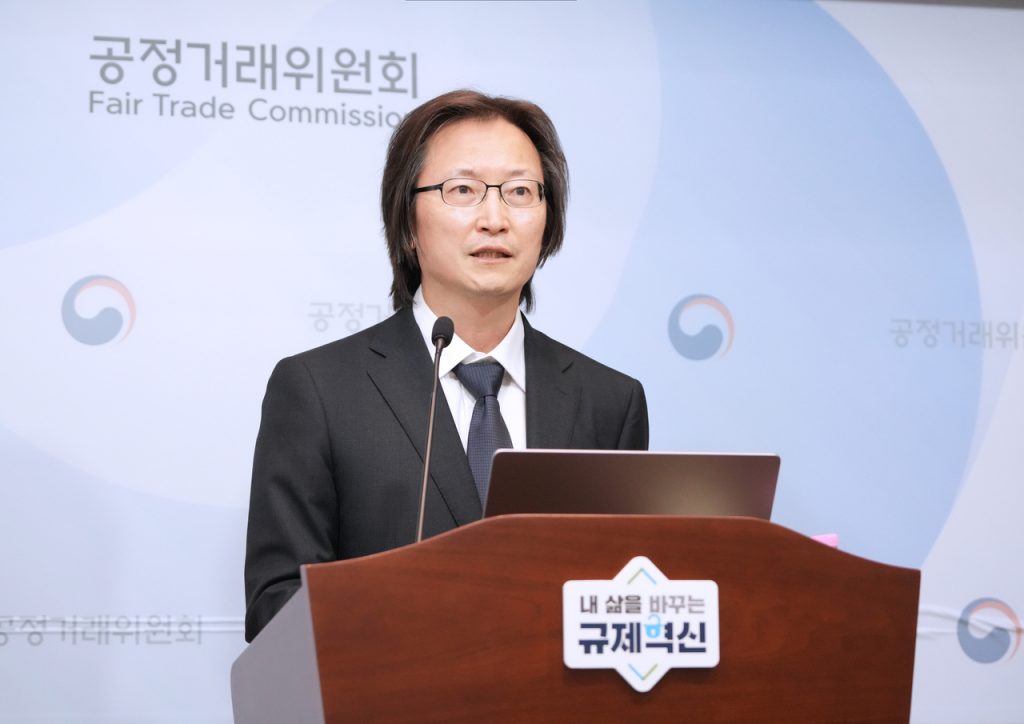
Watchdog Chief Signals Major Shift in Antitrust Enforcement: From Legal Arguments to Data-Driven Insights
SEJONG — The Korea Fair Trade Commission (KFTC) is poised for one of its most significant organizational expansions in years, signaling a more robust and data-driven approach to antitrust enforcement under the current administration, KFTC Chair Ju Biung-ghi announced Tuesday.
This strategic overhaul will see the KFTC add 237 new officials and establish dedicated investigation and economic analysis units. These new departments are designed to more effectively address increasingly intricate cases involving dominant online platforms, consumer cartels, and complex transactions within large conglomerates.
The expansion comes as the regulatory body confronts a growing array of challenges, from issues of platform dominance and pervasive price-fixing in essential goods to intricate intra-group dealings among major chaebol groups.
“Platform cases are no longer simple,” Ju stated at a press briefing commemorating the government’s first year, held at the Sejong Government Complex.
Citing prominent examples such as Coupang, Naver, and Baedal Minjok, Ju emphasized that suspected violations in digital platform markets are becoming increasingly multifaceted and difficult to resolve effectively with the KFTC’s existing structure.
“When various violations are intertwined, examining them in isolation risks overlooking the true impact of the case,” he explained. “One plus one doesn’t always equal two; it can be three or four.”
A cornerstone of this transformation is the creation of a new bureau-level major investigation planning unit. Comprising approximately 40 officials across three divisions, this unit will strategically target large-scale or structurally significant cases across digital platforms, monopolistic sectors impacting consumers, and major business groups.
Furthermore, the regulator will elevate its current division-level economic analysis operation into a full bureau, staffed by 37 members and led by a chief economist, underscoring the shift towards analytical rigor.
Chair Ju highlighted that antitrust enforcement is undergoing a rapid evolution, particularly within digital markets characterized by concentrated data, sophisticated algorithms, and powerful network effects.
“The frontline of antitrust is transitioning from reliance on legal arguments to a focus on robust data and statistics,” he affirmed.
This significant expansion follows a period of heightened enforcement activity. Since June of last year, the KFTC has imposed or decided on penalties exceeding 2 trillion won ($1.33 billion). These penalties include substantial fines related to cartels in key sectors like flour, sugar, and printing paper, as well as addressing unfair intra-group transactions involving major conglomerates.
Ju staunchly defended the scale of these recent penalties, arguing that regulatory sanctions must adapt to evolving market conditions to remain effective.
“Fines must not only recover illicit gains but also possess genuine deterrent power,” he asserted. “If we continue to sanction companies using methods from 15 or 20 years ago, we risk establishing a precedent where breaking the law remains profitable even after being caught.”
The KFTC is also exploring the implementation of even stronger penalties for conglomerates that submit false data during critical designation reviews, which are tied to Korea’s stringent disclosure and anti-self-dealing regulations.
Ju disclosed that the regulator is reviewing proposals for fixed administrative fines of up to 20 billion won targeting controlling persons responsible for such false filings, though the precise final figure is still under consideration.
Additionally, the agency is actively examining the use of structural remedies, including potential divestitures and mandatory business transfers, as a means to tackle repeated violations and combat entrenched platform dominance effectively.
The KFTC anticipates completing consultations with relevant ministries and finalizing revised organizational rules by June, with new personnel expected to be deployed starting from the fourth quarter of this year.
yeeun


