
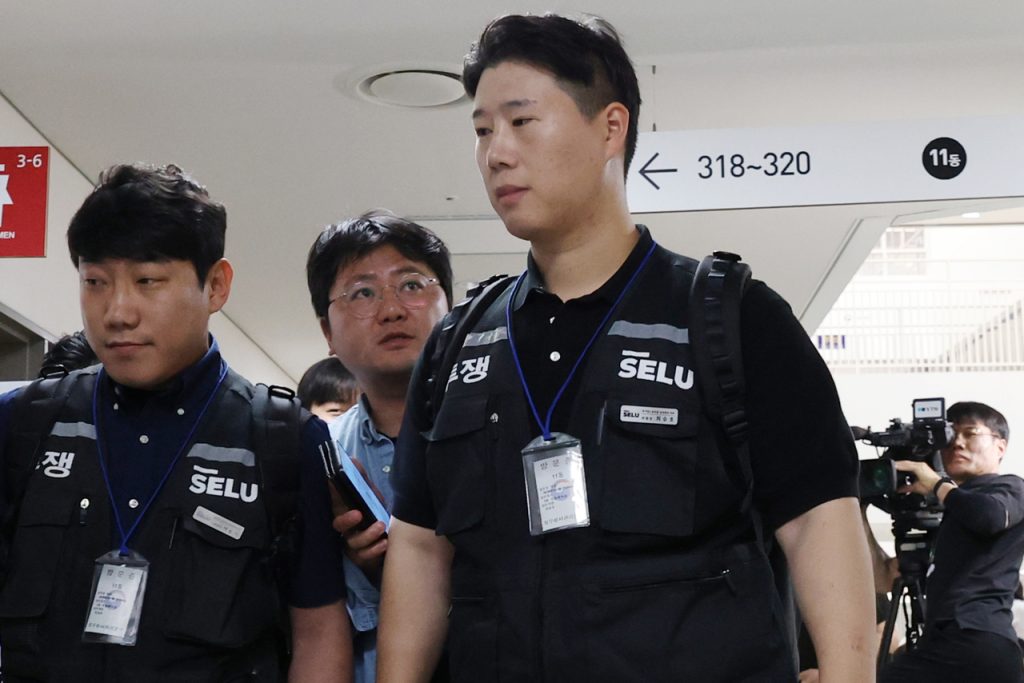
Samsung Electronics, the world’s leading memory chipmaker, and its largest labor union have resumed crucial government-led wage mediation talks. These high-stakes negotiations aim to avert an imminent strike, set to commence Thursday, following the collapse of initial discussions over performance-based bonuses. This second round represents a final effort to bridge the divide.
Addressing reporters at the National Labor Relations Commission office in Sejong, located approximately 110 kilometers south of Seoul, Choi Seung-ho, who leads Samsung Electronics’ largest labor union, affirmed, “We will participate in this second round in good faith.”
While no specific deadline has been publicly set for these critical mediation talks, with the union’s planned strike just three days away, this round is widely considered the ultimate opportunity to achieve a breakthrough and prevent industrial action.
The core of the dispute continues to be performance-based bonuses, specifically those linked to earnings generated by Samsung’s highly lucrative artificial intelligence (AI) semiconductor business, amidst the prevailing memory supercycle. This highlights the deep divisions between labor and management.
Samsung management’s proposal includes maintaining the existing excess profit incentive system. They suggest calculating the bonus pool based on either 10 percent of operating profit or economic value added (EVA). Furthermore, the company has put forward a plan for a new special compensation system, aiming to establish a more flexible and adaptable incentive structure for employees.
Conversely, the union’s demands are more stringent: fixed performance bonuses equivalent to 15 percent of the semiconductor division’s operating profit, coupled with the complete removal of any payout caps. This significant difference in proposed compensation structures remains a major hurdle.
Industry analysts and economic observers warn that a potential walkout could inflict catastrophic losses on the South Korean economy, potentially soaring to 100 trillion won (approximately $66.7 billion). This alarming figure underscores the nation’s profound reliance on its vital semiconductor exports, making any disruption severely impactful.
South Korean government officials have voiced deep concern regarding the looming strike, indicating that Seoul might invoke its emergency arbitration powers to proactively prevent industrial action. This potential intervention, however, has already drawn significant backlash from various labor advocacy groups.
According to South Korean labor law, the labor minister possesses the authority to issue an emergency arbitration order. Such an order is typically invoked if an industrial dispute is judged to pose a severe threat to the national economy or significantly disrupt the daily lives of citizens.
Should such an order be issued, it would mandate the suspension of all industrial action for a period of 30 days, during which the National Labor Relations Commission would conduct intensive mediation and arbitration efforts.
Earlier on Monday, President Lee Jae Myung emphasized the delicate balance between corporate interests and worker protections, stating that “companies’ management rights should be respected as much as labor rights.”


