
From Coachella to campus festivals, K-pop idols reshape live promotion strategies beyond fandom-centered concerts
K-pop idols are strategically expanding their live presence, moving beyond conventional music shows and dedicated concerts to prominently feature in diverse domestic, international, and university festivals.
Attracting tens of thousands, these festival stages offer invaluable opportunities for idols to directly engage with wider audiences, significantly expanding their public recognition and fan bases beyond core fandoms.
In an era where music consumption thrives on social media, performances captured by audience members, widely known as “fancams,” frequently go viral, amplifying online buzz and boosting the promotional value of festival engagements.
A significant shift in the global festival landscape is the increasing integration of K-pop idol acts into lineups historically reserved for genre-specific artists like rock, indie, and hip-hop.
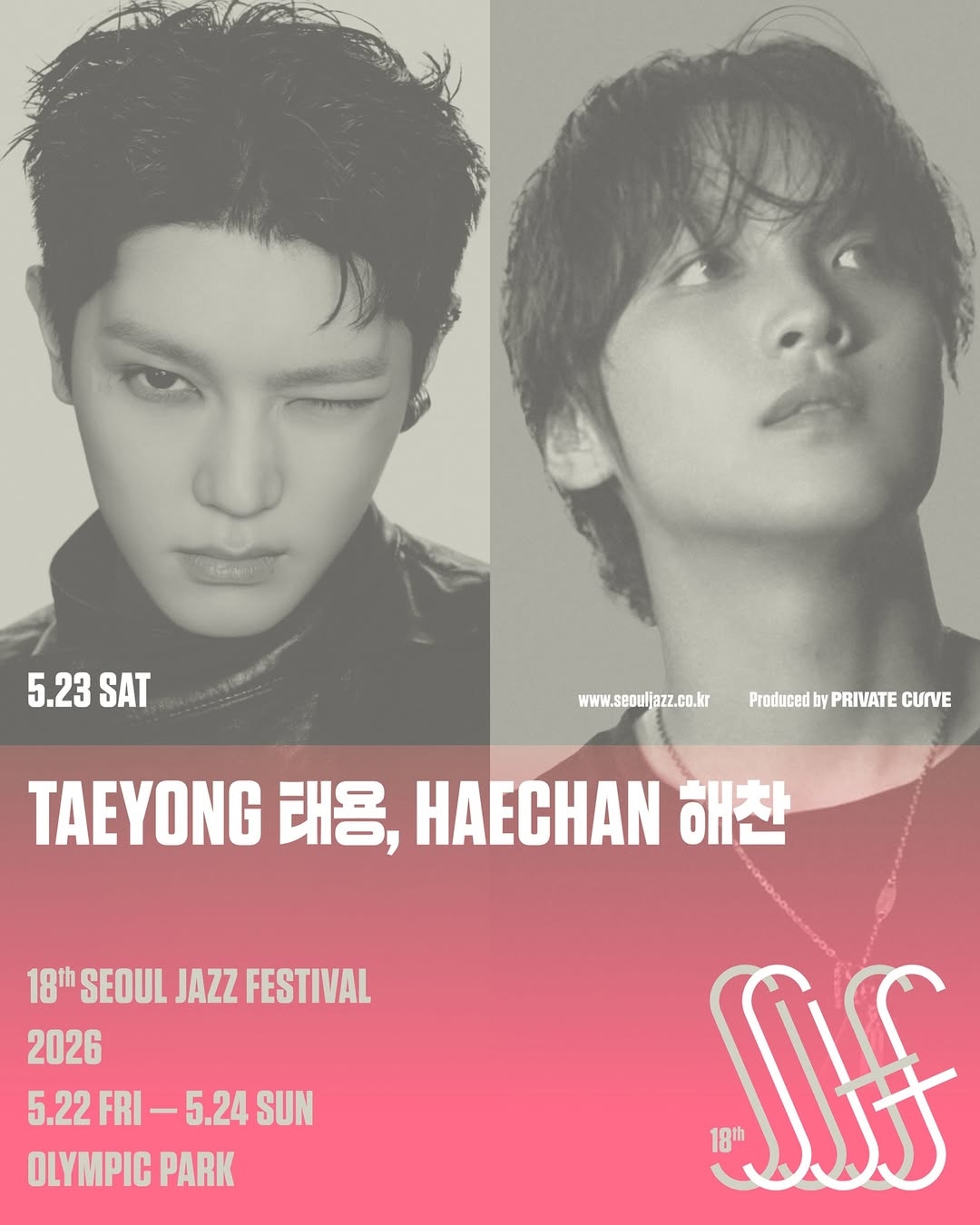
This evolving trend is clearly visible in major Korean music festivals this year. The upcoming Seoul Jazz Festival (May 22-24) will feature Seventeen members DK and Seungkwan, alongside NCT members Taeyong and Haechan. Additionally, Monsta X is slated to perform at the Seoul Park Music Festival on June 21.
Waterbomb Seoul (July 24-26) further exemplifies this, with over half of its announced lineup comprising top K-pop idols, including Shinee’s Taemin, Aespa’s Karina, WJSN’s Dayoung, Riize, and Alpha Drive One.
Industry insiders affirm that these festival appearances are increasingly recognized as strategic avenues to gain mainstream visibility and significant online traction, extending reach far beyond core fandoms. For festival organizers, securing K-pop idol acts can also substantially boost ticket sales and overall attendance.
“Festival stages are crucial for idols to solidify their image as performance-driven artists, showcasing powerful live vocals and commanding stage presence, rather than just relying on fandom support,” an industry official emphasized. They added, “These music festivals serve as vital stepping stones for idols aiming for broader career activities and significant fanbase expansion, proving their explosive live performance capabilities.”
This global trend is equally pronounced internationally, with K-pop idols consistently featuring at major global festivals like Coachella and Lollapalooza. This July at Lollapalooza Chicago, Blackpink’s Jennie is set to headline, alongside performances by Aespa, (G)I-DLE, and Cortis. Earlier in April, Big Bang launched its 20th-anniversary celebrations with a captivating performance at Coachella, where Taemin also garnered an explosive reception.

Music critic Kim Heon-sik informed The Korea Herald, “Commercially, K-pop idols are now pivotal players, drawing new and diverse audiences to international festivals.” He further noted, “For the artists themselves, the prestige of performing alongside globally recognized acts significantly enhances their brand image and international standing.”
Beyond major music events, university festivals have emerged as another crucial platform for K-pop idols.
Historically the domain of solo artists or hip-hop acts, recent university festival lineups now prominently feature top-tier K-pop groups. This spring’s university festival season, for instance, showcased NCT Wish at Seoul National University, Riize at Sogang University, Cortis at Hongik University, and Le Sserafim at Soongsil University. Additionally, groups like BoyNextDoor, Illit, and KiiiKiii are booked for performances across numerous campuses.

Industry officials highlight that university festivals perfectly align with K-pop idols’ primary demographic, predominantly individuals in their early twenties.
Given that much of the audience is highly active on social media, these events naturally generate substantial engagement and viral content across various platforms.
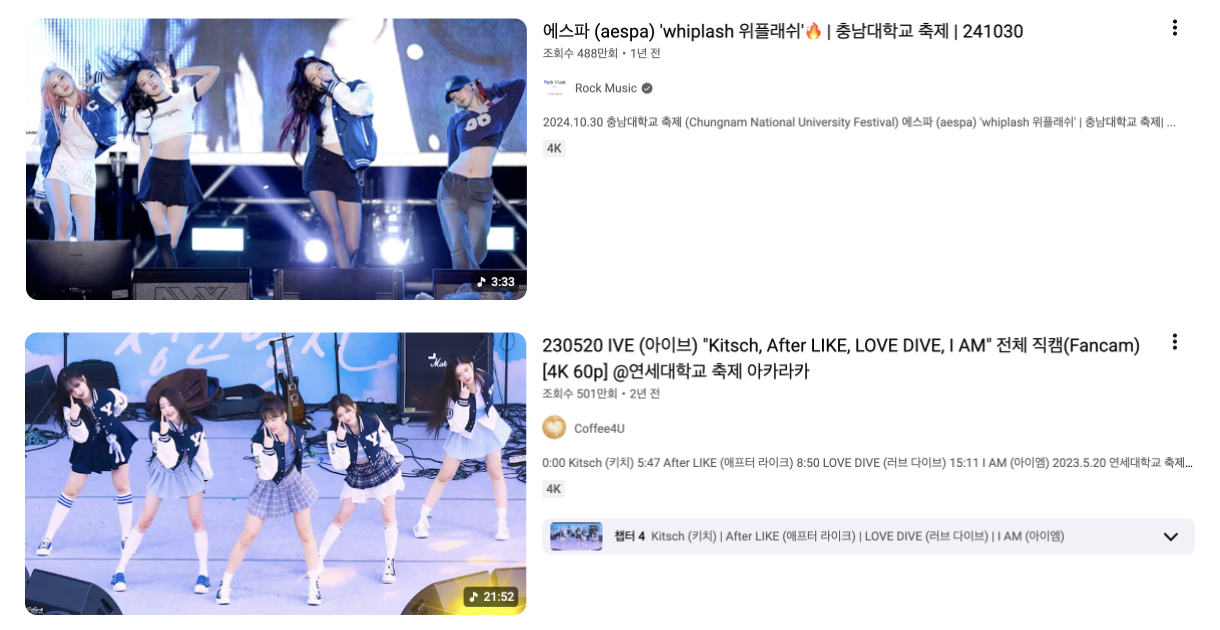
For instance, a performance video of Aespa at Yonsei University’s “Akaraka” festival in 2024 garnered an astonishing 1.29 million views on the university’s cheering squad YouTube channel – over 40 times its subscriber base.
Separately uploaded fancam footage by audience members consistently achieves massive viewership. A video of Aespa performing “Whiplash” at Chungnam National University in 2024 exceeded 4.88 million views, while a clip of IVE’s 2023 performance at Yonsei University soared past 5 million views.
“The youthful image and cultural symbolism inherently linked with universities readily transfer to idols through fan-recorded footage, creating one of the most significant promotional advantages of university festival appearances,” elaborated music critic Lim Hee-yun.
Industry officials reveal that some idols are willing to reduce their appearance fees in exchange for the substantial promotional benefits. University festival fees are generally lower than for corporate or commercial engagements, typically ranging from 20 million to 30 million won ($13,580-$20,364 USD) for top-tier acts, though highly sought-after artists can command up to 50 million won.
Despite this, agencies frequently consider these events worthwhile investments, recognizing their immense promotional value in terms of song exposure, enhanced public recognition, and accelerated fandom growth.
One industry official candidly stated, “After deducting preparation costs, many events yield minimal profit, sometimes even resulting in losses.” They concluded, “However, university festivals transcend mere event revenue. They are primarily strategic platforms for promoting new music, building widespread public awareness, and significantly expanding fan bases.”