
This Week’s Critical Talks: Last Chance to Avert Samsung’s May 21 Walkout
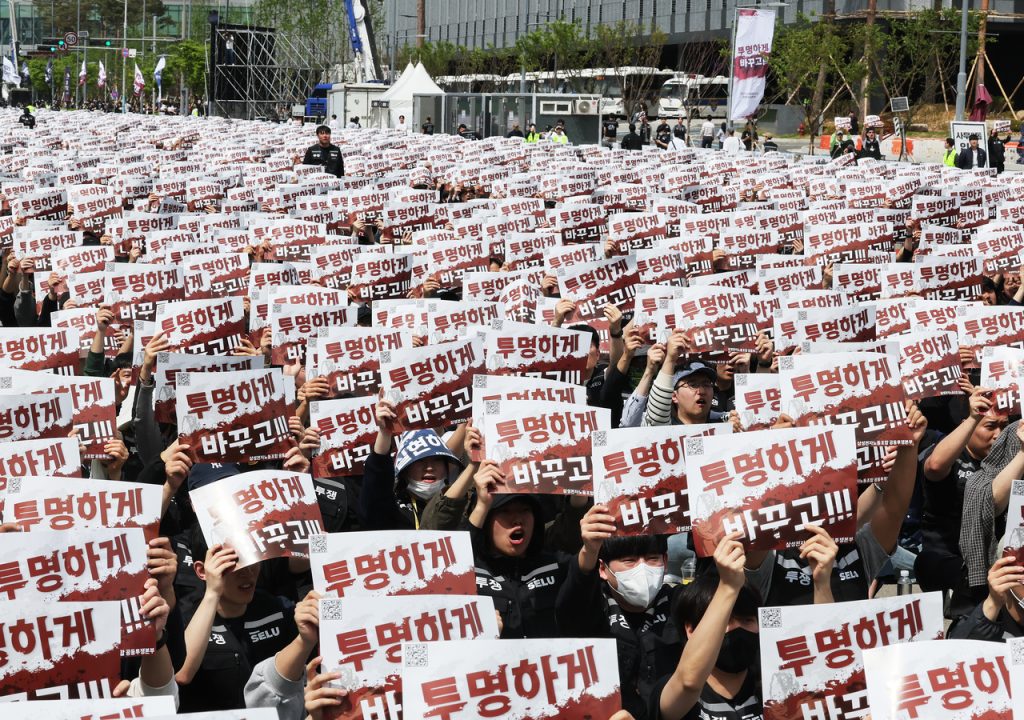
Samsung Electronics and its powerful labor union are engaged in critical negotiations this week, striving to avert a potential May 21 strike that could significantly disrupt operations at the world’s leading memory chipmaker.
Government-mediated post-mediation talks between Samsung Electronics and the union recommenced Monday under the National Labor Relations Commission. By 3 p.m., a definitive breakthrough in the ongoing labor dispute had yet to materialize.
These current negotiations are widely regarded as the final crucial opportunity to prevent an extensive 18-day walkout. Such a strike carries the potential to severely disrupt Samsung’s vital semiconductor operations and create significant ripple effects across global chip supply chains.
Post-mediation represents a follow-up negotiation stage, initiated after formal mediation concludes, provided both labor representatives and management agree to continue discussions. Any resolution achieved during this process holds the same binding legal force as a comprehensive collective bargaining agreement.
Earlier mediation talks in February and March saw Samsung and its union fail to reach a compromise, leading the labor commission to suspend proceedings. However, following an urging from the Labor Ministry for renewed discussions, both parties subsequently agreed to return to the negotiating table.
Central to this escalating labor dispute is Samsung’s contentious performance-based bonus system.
The union is steadfastly demanding the abolition of the bonus cap and a commitment from Samsung to allocate 15 percent of its operating profit to a dedicated performance bonus pool. Under this proposal, and based on projections that Samsung Electronics could achieve up to 300 trillion won ($204 billion) in annual operating profit this year, certain chip division employees might receive close to 600 million won each.
In response, Samsung management has put forth a special compensation package, which they assert surpasses rival industry standards. However, they have firmly rejected the institutionalization of removing the bonus cap, citing concerns that such a structure would prove economically unsustainable long-term.
Should this week’s pivotal negotiations collapse, Samsung Electronics would confront only the second labor strike in its long history.
The technology giant previously faced its inaugural strike in 2024, spearheaded by the National Samsung Electronics Union. During that period, the union comprised approximately 32,000 members, with only about 15 percent participating, thereby mitigating the overall impact on production.
However, the stakes in the current dispute are considerably higher. The expanded union coalition now boasts around 73,000 members, with industry analysts estimating that between 30,000 and 40,000 workers could actively participate in a potential walkout.
The union has issued a clear warning: a full-scale walkout is planned from May 21 to June 7. Industry projections indicate that such an extensive 18-day strike could inflict financial losses potentially totaling tens of trillions of won.
Notably, JPMorgan Chase recently estimated that this significant labor dispute could diminish Samsung Electronics’ annual operating profit by over 40 trillion won.
Labor Minister Kim Young-hoon confirmed on Monday via X (formerly Twitter) that the post-mediation process commenced after concerted efforts to bring both labor and management back to the negotiating table.
“I extend my gratitude to both labor and management for their decision to re-engage,” Minister Kim stated. “While this mediation may present challenges, the ultimate solution could be nearer than anticipated.”
yeeun


