Kakao joins Samsung, Hyundai, LG Uplus in pushing for SK hynix-style payouts tied to company profits
A significant trend is emerging in South Korea, as demands for performance bonuses tied directly to a fixed percentage of operating profit spread beyond the semiconductor sector. This push now encompasses major players in the automotive, telecommunications, and internet platform industries.
Kakao, the nation’s leading messaging platform, recently saw its union become the latest to advocate for this profit-linked compensation model. On Sunday, the union filed for state mediation following a deadlock in wage negotiations, signaling a broader movement for performance-based pay across industries.
This official filing with the Gyeonggi Regional Labor Relations Commission reportedly included several Kakao affiliates, namely Kakao Pay and Kakao Enterprise, along with a fourth unit. Although the union’s specific demand wasn’t explicitly stated as a percentage, industry projections estimate the proposed bonus structure would allocate approximately 13 to 15 percent of Kakao’s prior year’s operating profit. Based on Kakao’s 2025 operating profit of approximately 440 billion won ($298 million) and a workforce of nearly 4,000 employees, this could translate to an average payout of around 15 million won per employee.
Kakao, for its part, affirmed its commitment to good-faith negotiations but stated an inability to reach consensus with the union regarding “the detailed design of the compensation structure.” The company has pledged full cooperation with the commission’s mediation process.
The Kakao union’s action marks just the latest in a series of similar, high-profile demands across major South Korean corporations.
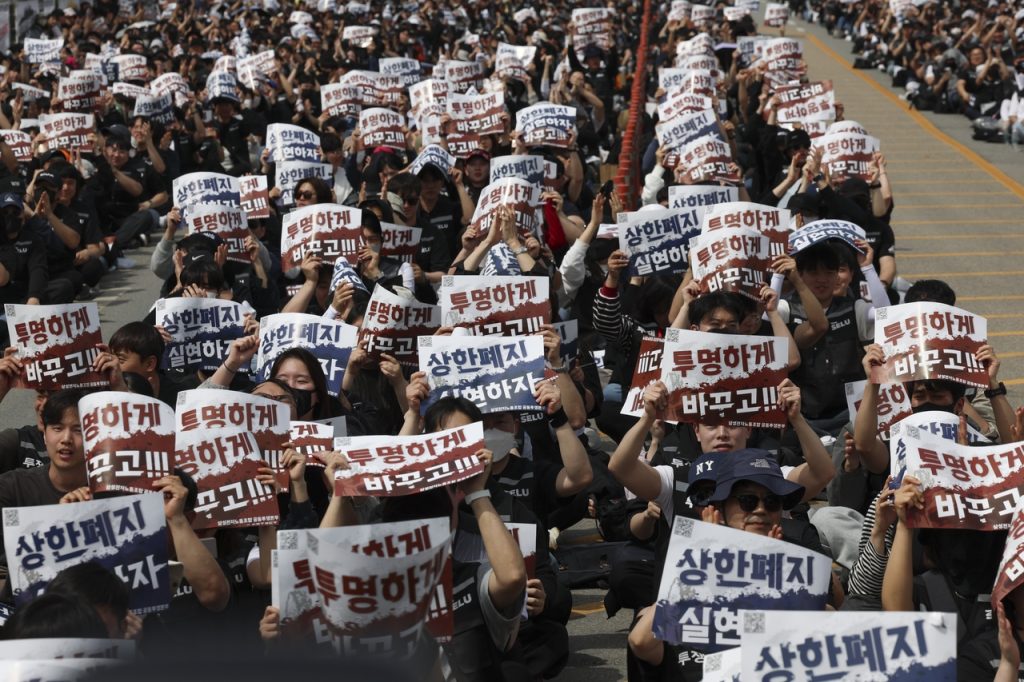
Notably, Samsung Electronics’ largest union is demanding 15 percent of the chip division’s operating profit and has slated an 18-day strike to commence on May 21st. Expanding beyond the semiconductor sector, Hyundai Motor’s union initiated its annual wage negotiations by requesting a substantial 30 percent of the company’s 2025 net profit. Given the automaker’s impressive 10.36 trillion won bottom line, this would amount to over 3 trillion won. Meanwhile, the LG Uplus union has put forward a proposal for a 30 percent operating-profit bonus, in addition to an 8 percent wage increase and a reduced 35-hour workweek, starkly contrasting with the 1.3 percent raise it accepted in the preceding year.
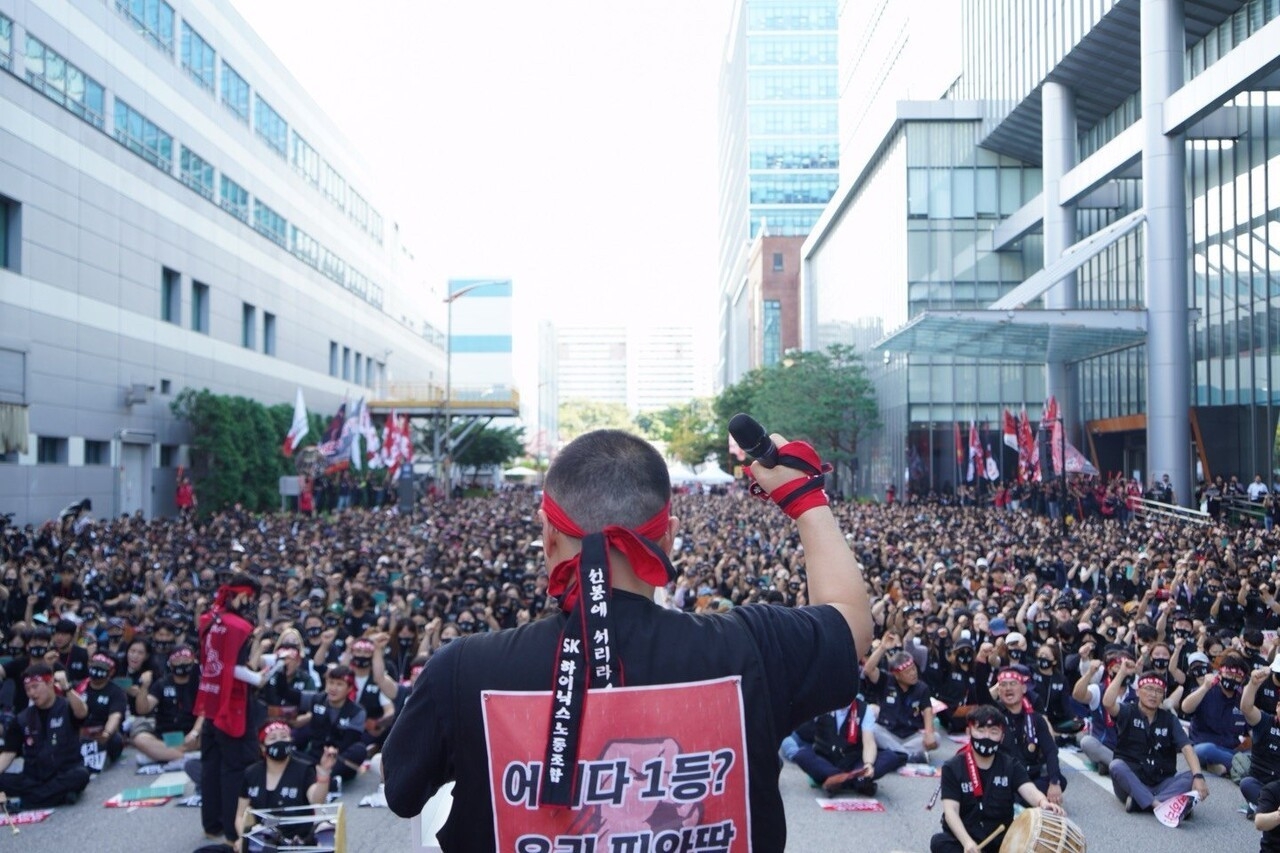
This widespread demand for profit-sharing finds its genesis in a landmark 2025 agreement at SK hynix. This pivotal deal committed the leading memory firm to dedicate 10 percent of its annual operating profit to an employee bonus pool, simultaneously eliminating the prior cap of 1,000 percent of monthly base salary. Propelled by unprecedented artificial intelligence (AI)-driven demand for high-bandwidth memory (HBM), SK hynix’s earnings saw a remarkable transformation. Consequently, the agreement led to an early-2026 payout that translated to an astounding 2,964 percent of base pay, averaging over 100 million won per employee.
Macquarie analysts have further estimated that this per-employee figure could potentially soar to 1.29 billion won by 2027, provided the memory market upcycle sustains its momentum.
However, this lucrative benchmark from SK hynix is now dramatically resetting employee expectations at other companies, many of which face significantly weaker underlying earnings and different market dynamics.
For instance, Kakao shares closed at 46,000 won on May 8th, a notable decline from over 70,000 won a year prior, as investors keenly await the successful monetization of its emerging AI agent services. Similarly, LG Uplus’s modest 3.4 percent operating profit growth in 2025 was primarily attributable to subscriber migration following security breaches at competitors SK Telecom and KT, rather than robust organic business momentum. Hyundai Motor’s first-quarter 2026 operating profit saw a significant 30.8 percent year-on-year decline to 2.51 trillion won, a figure that is actually less than the bonus pool currently being requested by its union.
Lim Chae-un, an emeritus professor of business administration at Sogang University, commented on this shifting landscape: “Traditionally, bonuses are linked to individual performance and frequently disbursed in company stock or options. What we are observing now is a reversal of this practice: a segment of operating profit being distributed in cash through collective union bargaining, often without a clear or quantifiable measure of individual contribution.”
This confluence of events and escalating demands is proving particularly unsettling for corporate Korea at this critical juncture.
Major corporations are simultaneously making colossal investments. Samsung, for example, is committing tens of trillions of won to reclaim leadership in high-bandwidth memory (HBM) and advanced packaging technologies. Concurrently, Hyundai Motor Group is channeling comparable vast sums into developing software-defined vehicles and driving electrification initiatives. South Korean telecom carriers, on the other hand, are heavily investing in AI data centers while striving to maintain the robust dividends that solidify their stocks as attractive income vehicles for investors. The potential financial ramifications are significant: a May 6th report from JPMorgan estimated that acceding to Samsung’s union demands, coupled with the projected strike action, could potentially diminish the chip division’s 2026 operating profit by as much as 43 trillion won.
In an effort to avert the looming May 21st walkout, Samsung and its union resumed government-brokered post-mediation negotiations on Monday, aiming to bridge their differing positions. Meanwhile, at Hyundai Motor, Choi Young-il, the co-CEO responsible for overseeing domestic production, commenced last week’s wage discussions by urging negotiators to “face reality,” directly referencing the challenges posed by US tariffs and ongoing Middle East risks.
mjh