Samsung Electronics Confronts Strike Threat Amid Deep Divisions Over Chip Worker Bonuses
Samsung Electronics and its largest labor union are scheduled to resume critical, government-mediated talks on Monday. The central point of contention revolves around performance bonuses for workers within the company’s chip division, particularly those in units that have consistently reported financial losses.
These two days of post-mediation negotiations represent the final formal opportunity to prevent an 18-day strike, which is currently scheduled to commence on May 21 at the world’s leading memory chip manufacturer.
Reports indicate that Samsung first presented its bonus proposal in March via internal channels. The company offered to allocate 10 percent of its chip division’s operating profit towards bonuses, with a commitment to increase this ratio if the unit surpasses domestic competitor SK hynix in both revenue and operating profit. Under this proposed structure, memory chip employees could potentially receive around 600 million won (approximately $409,500) per person.
However, workers in Samsung’s contract chipmaking and chip-design units, which have incurred losses for several years, would face a bonus cap below 100 million won. A pathway to earning up to 75 percent of the standard bonus would be available if their unit’s performance significantly improves.
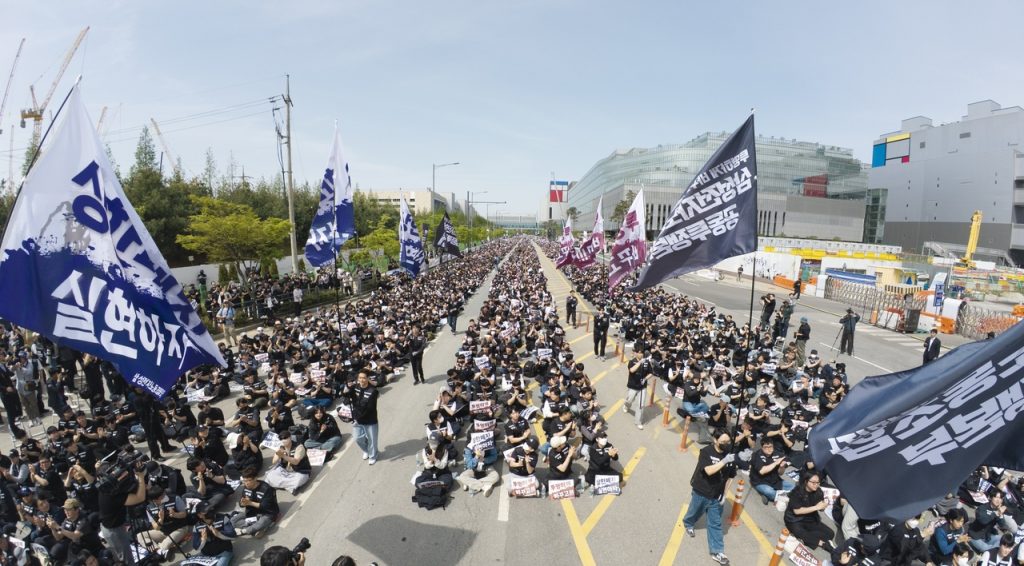
The union decisively rejected Samsung’s offer, leading to a breakdown in discussions on March 27. Following this, on April 23, the union organized a large-scale rally at Samsung’s Pyeongtaek chip complex, drawing tens of thousands of participants, and formally announced plans for the May 21 walkout. The government subsequently intervened, compelling both parties to enter post-mediation through the National Labor Relations Commission.
The majority union is advocating for a bonus pool equivalent to 15 percent of the operating profit. Based on the chip division’s projected 270 trillion won in operating profit for the current year, the union calculates this would create an approximate 40.5 trillion won bonus fund. This would translate to about 620 million won per memory employee and around 360 million won per worker in the loss-making units, a figure more than triple the management’s proposed cap.
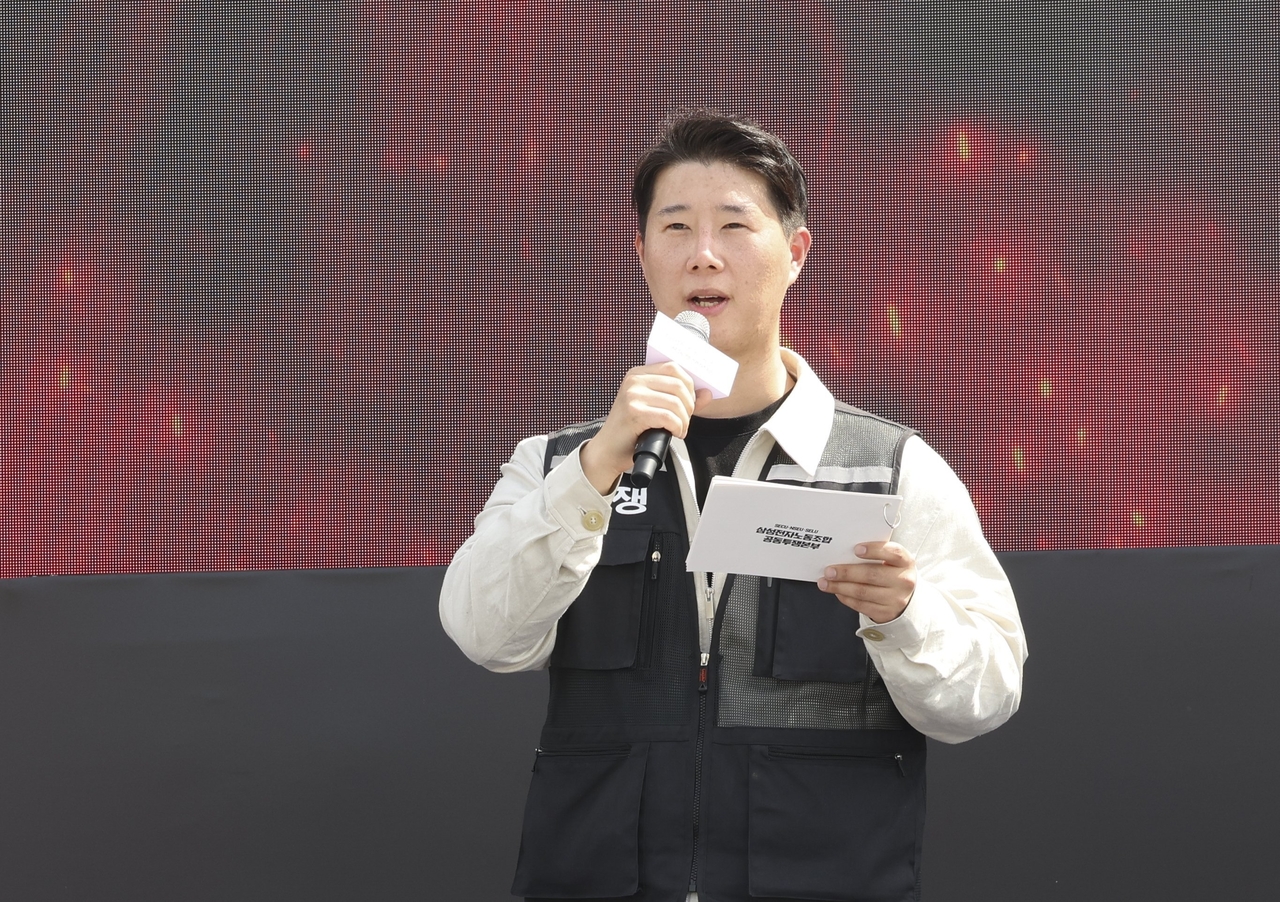
“We are prepared to launch a full-scale strike if these talks do not yield a satisfactory outcome,” declared Union Chief Choi Seung-ho in anticipation of the upcoming negotiations.
Management’s stance emphasizes adherence to pay-for-performance principles, arguing that awarding hundreds of millions of won to divisions that have consistently reported losses for multiple years would violate this core policy. This perspective is reportedly echoed by employees in Samsung’s consumer electronics division — encompassing mobile devices, televisions, and home appliances — which itself is grappling with profit pressures stemming from rising memory prices.
The ongoing dispute has also exposed divisions within the union itself. Approximately 80 percent of the majority union’s 73,000 members are employed within the profitable chip division. However, the second-largest union and consumer-electronics members within the main union have pushed for the inclusion of a company-wide bonus pool on Monday’s agenda, a proposal that Choi has rejected. This internal discord led to roughly 2,500 members withdrawing from the union in the 10 days following the April 23 rally, primarily from the consumer electronics segment.
This bonus dispute gained momentum following a landmark 2025 agreement at SK hynix. Samsung’s smaller domestic competitor agreed to allocate 10 percent of its annual operating profit to a performance bonus pool. This arrangement significantly recalibrated expectations across the Korean industry and emboldened Samsung workers, who observed SK hynix transform into a global leader in high-bandwidth memory, supplying key components to companies like Nvidia. The union at Hyundai Motor has also begun pressing for similar demands.
Analysts from KB Securities estimate that a prolonged walkout at Samsung could disrupt 3 to 4 percent of the global DRAM supply and 2 to 3 percent of NAND flash supply. Restoring production lines after an 18-day strike could require an additional two to three weeks. Global customers have already contacted Samsung to inquire about potential delivery risks.
To mitigate the impact of any strike, Samsung has filed an injunction with the court seeking to keep safety-critical staff, representing less than 10 percent of its total workforce, on the job. The company cited the necessity of maintaining stringent clean-room conditions and preventing the degradation of semiconductor wafers.
A previous post-mediation attempt to resolve a similar dispute in 2024 collapsed before any industrial action took place.
mjh