
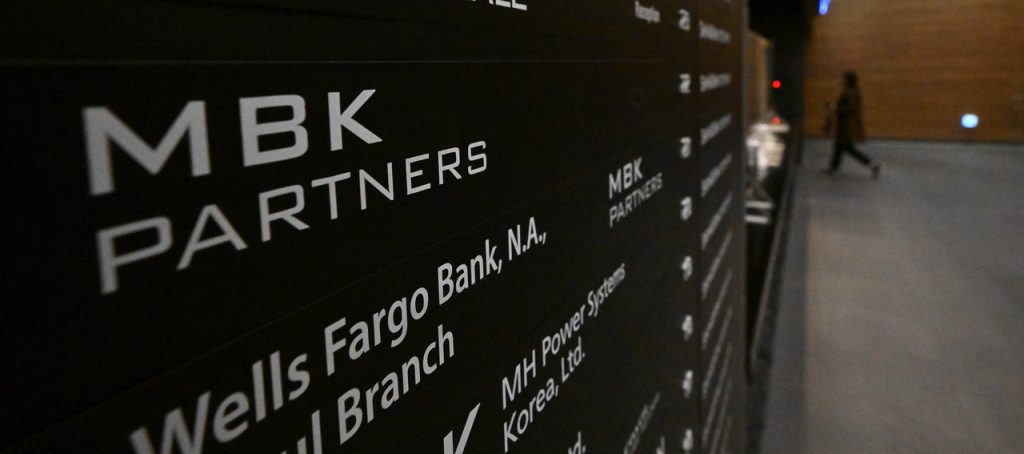
South Korean private equity firm MBK Partners is actively addressing concerns regarding potential Chinese influence amidst its ongoing control battle for Korea Zinc. This comes after MBK’s strategic decision to engage an additional US lobbyist to navigate issues with the Committee on Foreign Investment in the United States (CFIUS), the nation’s foreign investment watchdog.
Recent US Senate lobbying disclosure filings reveal that MBK Partners’ Tokyo office has enlisted The McKeon Group, a firm renowned for its expertise in defense and national security, to provide advisory services on “issues dealing with the Committee on Foreign Investment in the US (CFIUS).”
This new appointment with The McKeon Group follows MBK’s earlier engagement in February with another prominent US law firm, Squire Patton Boggs. That initial hiring was facilitated through a special purpose company established in collaboration with Young Poong, which currently stands as Korea Zinc’s largest shareholder.
The prior lobbying filing specifically outlined its purpose as “foreign investment in a critical minerals smelter in Tennessee.” This refers to Korea Zinc’s ambitious $7.4 billion plan to construct a substantial smelting facility for crucial critical minerals in Clarksville, Tennessee.
Industry observers suggest that the heightened scrutiny by the US government on foreign investments, especially amidst the escalating US-China rivalry, likely prompted this latest lobbying effort. Korea Zinc’s Tennessee critical minerals project is widely recognized as strategically important for US supply chains.
Slated for completion in 2029, this advanced facility is projected to produce 13 different nonferrous and critical minerals, including vital elements like germanium and gallium. The project is broadly perceived as a cornerstone of a larger US-led initiative aimed at strengthening allied supply chains for strategic materials globally.
Concerns have been raised by some analysts that the attempted takeover of Korea Zinc by MBK Partners and Young Poong could indeed trigger significant CFIUS scrutiny. These concerns stem from both the strategic importance of the Tennessee critical minerals project and MBK’s existing ties to Chinese capital.
Notably, China Investment Corp. (CIC), China’s prominent sovereign wealth fund, is a known limited partner in MBK Partners’ sixth fund. Reports indicate CIC contributed approximately 400 billion won ($272.9 million) to 500 billion won, accounting for roughly 5 percent of the fund’s total committed capital.
The Committee on Foreign Investment in the United States (CFIUS) operates as a crucial interagency US government body. Its mandate is to thoroughly examine foreign investments for any potential national security risks. CFIUS possesses broad authority to review both disclosed and undisclosed transactions, and can recommend to the US president that deals deemed detrimental to national security be blocked or reversed.
Despite these concerns, MBK Partners has firmly denied that its investor structure presents any issues regarding foreign influence on its operations or decisions.
MBK Partners reportedly highlighted its prior successful engagement with CFIUS. The firm stated it underwent a comprehensive CFIUS review during its investment in Japanese machine tool maker Makino Milling Machine, ultimately receiving final approval in the first quarter of this year.
In its statement, MBK Partners emphasized that “CFIUS approval reflects a comprehensive review of the transaction structure, governance, investor composition and management independence.” The firm further noted that “The US regulatory authorities recognized MBK as an independent and professional general partner that is not controlled by any specific investor.”
Addressing ongoing concerns about indirect Chinese influence, MBK Partners asserted that “It is not reasonable to conclude that a fund manager’s decision-making is subject to the influence of a particular country simply because some investors are from that country.”
The private equity firm reiterated its stance, stating that the extensive CFIUS review specifically confirmed its robust operational structure effectively blocks any outside influence over its critical investment decisions.
Despite MBK Partners consistently emphasizing that Chinese capital constitutes only a limited segment of its globally diversified investor base, concerns about potential influence have persistently emerged in both the United States and South Korea.
During a 2024 parliamentary audit, Park Sang-woong, a lawmaker from the ruling People Power Party, voiced a significant warning. He cautioned that Korea Zinc’s valuable technologies could be at risk of leakage if the company were to be acquired by a private equity firm with established ties to Chinese capital.
Concurring with these anxieties, Democratic Party lawmaker Heo Sung-moo also echoed similar concerns at the time, noting that many Koreans were reportedly alarmed by the approximately 5 percent contribution of Chinese capital to MBK Partners’ fund.
sahn


