

Samsung Electronics Board Chairman Alerts to Major Economic Crisis as Chip Strike Looms
Samsung Electronics’ board chairman has issued a stark warning regarding the extensive economic repercussions of a potential strike, imploring employees to resume negotiations amidst an escalating dispute over bonuses within the critical chip division.
In a message posted Tuesday on the company’s internal bulletin board, Shin Je-yoon emphasized that a walkout could cause irreparable damage to both Samsung Electronics and the wider South Korean economy, as the impasse over performance-based compensation intensifies.
“As chairman of the board, I feel a profound sense of responsibility and regret for causing concern,” Shin stated, acknowledging that this ongoing labor dispute has created significant apprehension among shareholders, valued customers, and the general public.
Shin Je-yoon further cautioned that an escalation of the Samsung strike could leave both labor and management in an untenable position, highlighting severe risks such as diminished global competitiveness, erosion of vital customer trust, and substantial financial damage to investors.
“The semiconductor business, a core national industry for South Korea, is profoundly dependent on precise timing and unwavering customer confidence,” he asserted. “Any disruption in critical development or production cycles, or a failure to meet crucial delivery schedules, risks severely eroding our fundamental market competitiveness and could prompt customers to shift orders to rival manufacturers.”
The union has declared its intention to launch a full-scale strike commencing May 21 for 18 days if Samsung management fails to address its demands. Key demands include performance bonuses equivalent to 15 percent of the semiconductor division’s operating profit and the permanent elimination of bonus caps. The union warns that such a prolonged walkout could incur massive financial losses, potentially reaching up to 30 trillion won ($20 billion).
Shin Je-yoon also highlighted broader macroeconomic risks, cautioning that extensive losses and customer defections from the crucial semiconductor sector could significantly depress corporate value and create far-reaching ripple effects across all stakeholders, including shareholders, employees, and local communities.
“South Korea could face a substantial decline in exports, potentially worth tens of billions of dollars, and a sharp drop in national tax revenues amounting to tens of trillions of won,” he elaborated. “This could be accompanied by increased currency volatility and a significant contraction in the nation’s gross domestic product (GDP).” Shin confirmed his commitment to working closely with management to find an urgent resolution.
Samsung’s immense and undeniable role within the South Korean economy significantly amplifies the stakes of this labor dispute. Last year, the combined revenue from seven of Samsung’s key affiliates represented an astonishing 19.3 percent of South Korea’s Gross Domestic Product (GDP), a rise from 15.1 percent a decade prior. Moreover, Samsung Electronics on its own accounts for approximately a quarter of the Kospi’s total market capitalization, underscoring its pivotal economic influence.
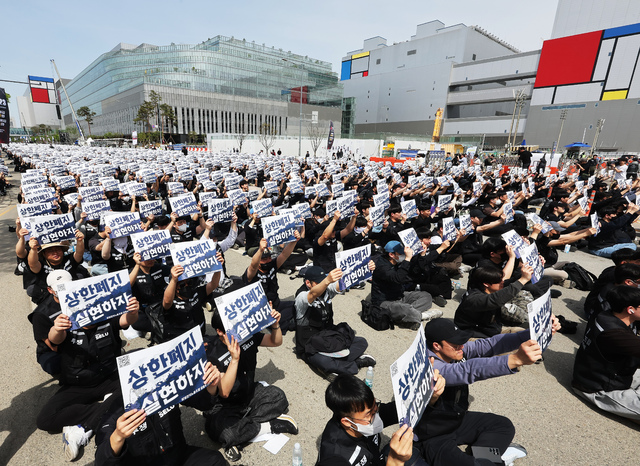
Amidst this ongoing labor dispute, a prominent shareholder group has issued a stern warning, indicating potential legal action against individual Samsung Electronics union members should a planned strike result in damage to critical company assets, thereby significantly escalating tensions ahead of any potential walkout.
The Korea Shareholder Activism Groups explicitly stated in a public announcement Tuesday that they would pursue substantial compensation from participating workers under the “third-party infringement” legal doctrine if any unauthorized or illegal strike actions cause harm to Samsung Electronics’ core operational assets.
Separately, the labor front itself is displaying clear signs of internal fragmentation, with divisions growing increasingly wide between employees in the highly profitable semiconductor (chip) business and those in non-chip units.
The Samsung Electronics Co. Union (SECU), one of the three unions that had initially jointly threatened strike action, officially withdrew from the planned walkout on Monday. They cited the majority union’s failure to adequately address the specific interests of non-chip workers. Approximately 70 percent of SECU’s members are employed within the device experience (DX) division, which is responsible for smartphones, televisions, and home appliances.
“While we do not oppose the concept of bonuses, it became evident that over 95 percent of the negotiation discussions were exclusively focused on performance-based compensation for the Device Solutions (DS) division,” an official from the SECU explained, referencing the division responsible for Samsung’s semiconductor business.
“Consequently, the negotiations were largely disconnected from broader welfare issues or other significant concerns directly impacting the crucial DX business segment,” the official concluded.


