Hyundai Ioniq V Targets China’s Tech-Savvy Market with CATL Batteries, Momenta Autonomous Driving, and ByteDance AI Integration
BEIJING — Hyundai Motor is making a significant strategic pivot in China with the unveiling of its Ioniq V electric vehicle (EV), emphasizing deep localization through key partnerships. The South Korean automaker is collaborating with leading local technology providers for everything from advanced batteries to cutting-edge driver-assistance systems, aiming to captivate China’s rapidly evolving new energy vehicle (NEV) market.
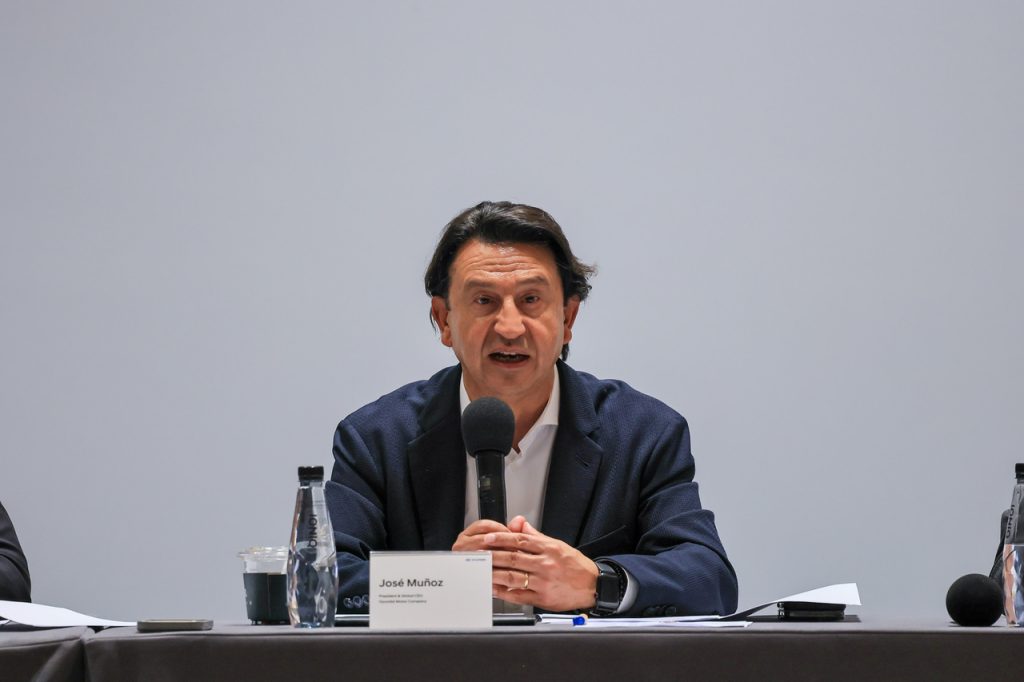
Jose Munoz, Hyundai Motor President and CEO, underscored the critical role of these collaborations with top Chinese companies. He explained that such partnerships are vital for delivering highly competitive vehicles at accessible price points, especially as Hyundai navigates intense rivalry with domestic giants and adapts to a more challenging policy landscape, including reduced government subsidies for NEVs.
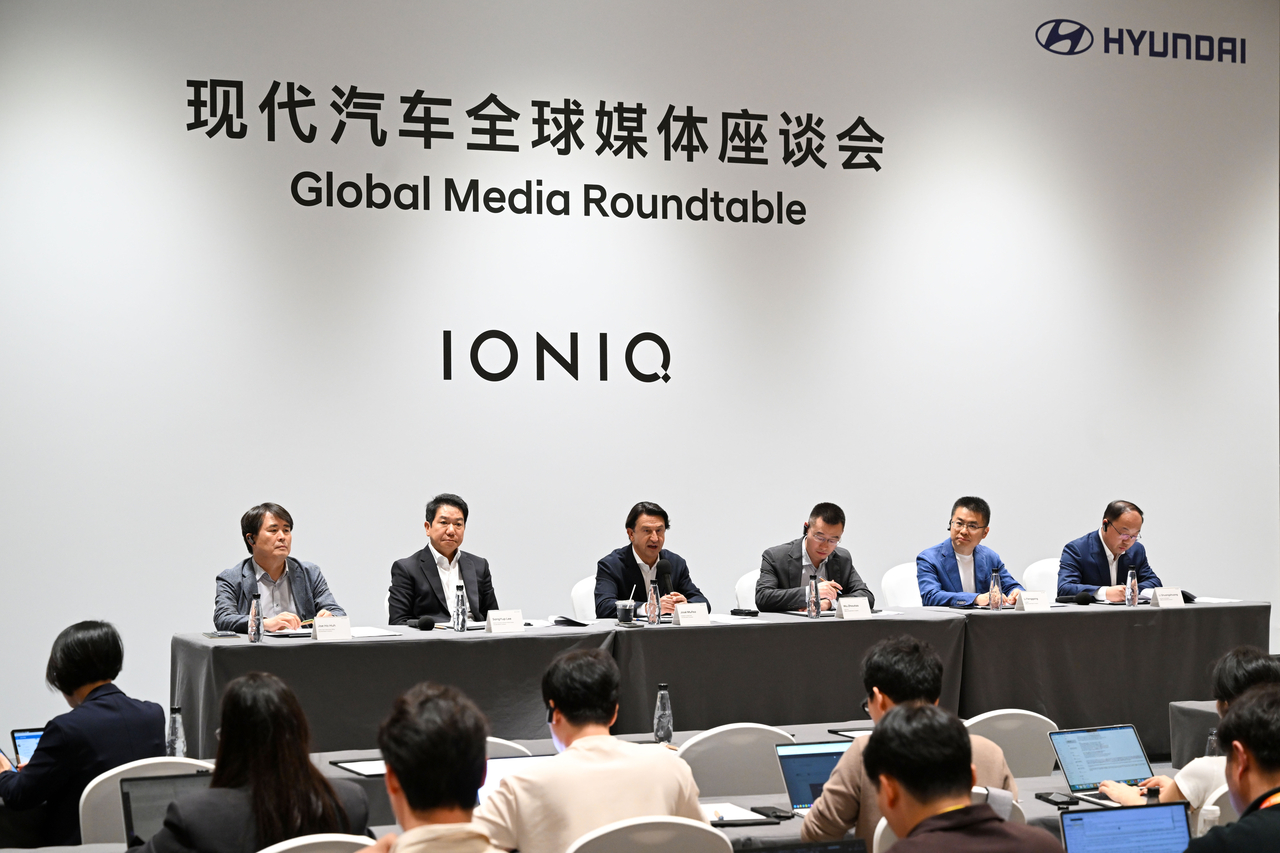
“Our approach—not just in this market, but globally—is to constantly strive to enhance our fundamental competitiveness. This is precisely why we are integrating these local suppliers into our strategy,” Munoz stated during a media roundtable held Friday on the sidelines of Auto China 2026, the world’s largest auto show, which runs until May 3.
Munoz further noted that certain features are challenging to acquire or adapt from overseas sources, reinforcing the strategic imperative for localized development and production specifically tailored to China’s unique market demands.
The all-electric Ioniq V marks the first of 20 new models Hyundai plans to introduce in China by 2030. To effectively cater to discerning, tech-savvy Chinese consumers who prioritize digitally intelligent vehicles, the automaker has increasingly forged alliances with local technology firms.
This innovative new vehicle features autonomous driving software developed by Beijing-based startup Momenta and is powered by advanced batteries from Chinese battery giant CATL, promising an impressive 600 kilometers on a single charge.
“From its initial development phase, the Ioniq V has benefited from a close partnership with Momenta, leveraging their robust technological capabilities and extensive real-world road data,” explained Huh Jae-ho, Hyundai’s China chief technology officer. He confirmed that the Ioniq V is equipped with Level 2+ autonomous driving functionalities, including sophisticated highway driving assistance and intuitive memory parking systems.
“We are committed to expanding our partnership with Momenta to achieve Level 2++ capabilities across future Ioniq models in China, enabling hands-off self-driving on highways,” Huh added, signaling Hyundai’s ambitious plans for advanced driver assistance systems in the region.
Beyond driving capabilities, the Ioniq V integrates ByteDance’s Doubao large language model, offering advanced voice recognition, smart recommendations, and personalized in-car services. This aligns with modern consumer expectations for a highly intelligent and connected vehicle experience.
Furthermore, the Ioniq V provides extensive mapping support, compatible with both Baidu and Gaode maps, along with seamless integration of WeChat, reflecting popular local user preferences and enhancing the vehicle’s digital ecosystem.
Wu Zhoutao, chair of Beijing Hyundai Motor Co.—Hyundai’s joint venture in China with BAIC Motor—emphasized that Chinese consumers are increasingly demanding more than just electric vehicles; they seek heightened intelligence and smart functionalities in their cars.
“Younger Chinese consumers are particularly focused on advanced features such as smart cabins and sophisticated smart driving technology,” Wu elaborated. “This market insight directly informed our decision to launch the Ioniq V.”
Wu added that Beijing Hyundai is actively preparing for a comprehensive transition with a strong focus on New Energy Vehicles (NEVs), outlining plans to further advance towards Level 3 autonomous driving, which enables conditional autonomous operation, typically on highways or designated routes.
The launch of Hyundai’s Ioniq V represents more than a new model debut; it is a high-stakes endeavor to regain market share in the world’s largest automotive market. This strategic push comes as the South Korean automaker strives to recover from a steep sales decline triggered by a 2017 diplomatic rift between Seoul and Beijing, which led to a consumer backlash against Korean brands. The challenge has since escalated with China’s rapid transition to electric vehicles, spearheaded by powerful domestic brands like BYD and Geely, leaving Hyundai working diligently to keep pace in an increasingly competitive, technology-driven landscape.
Against this challenging backdrop, CEO Munoz candidly acknowledged past missteps, admitting that Hyundai had become “complacent.”
“Sometimes, when things are going very well, we become very complacent and we believe we are so good,” he reflected. “I believe we have learned humility in China, to consistently analyze what is succeeding and what is not, and crucially, to listen to our partners within the market.”
Munoz also highlighted the unprecedented pace of change in China, characterizing the market’s transformation as “tremendous.” He conceded that Hyundai had been slow to react. “I think we have taken too long to respond to the situation,” he stated. “Thankfully, before it’s too late, we are making the right decisions to remain committed to this market and to ‘triple down’ on our efforts.”
Leveraging lessons from previous setbacks, Munoz expressed confidence in Hyundai’s reinvigorated strategy for China, affirming its capability to compete effectively with leading Chinese brands. The automaker has set an ambitious target of achieving annual sales of 500,000 units in China by 2030.
While the Ioniq V is primarily engineered for the Chinese market, Hyundai is keeping future export opportunities open, contingent on the model’s performance and success.
Munoz reiterated that “China comes first,” but depending on the Ioniq V’s market reception, Hyundai is considering expansion into Asia-Pacific regions, including Australia and Southeast Asia—markets where Chinese original equipment manufacturers (OEMs) are notably strong. He added that Hyundai is also exploring prospects in the Middle East, as well as Central and South America, optimistically describing potential overseas expansion as a “happy problem” to address.
sahn