Korean ESG Compliance Enters New Era: Tightening Disclosure Scrutiny and Imminent Climate Litigation, Warns Top ESG Lawyer
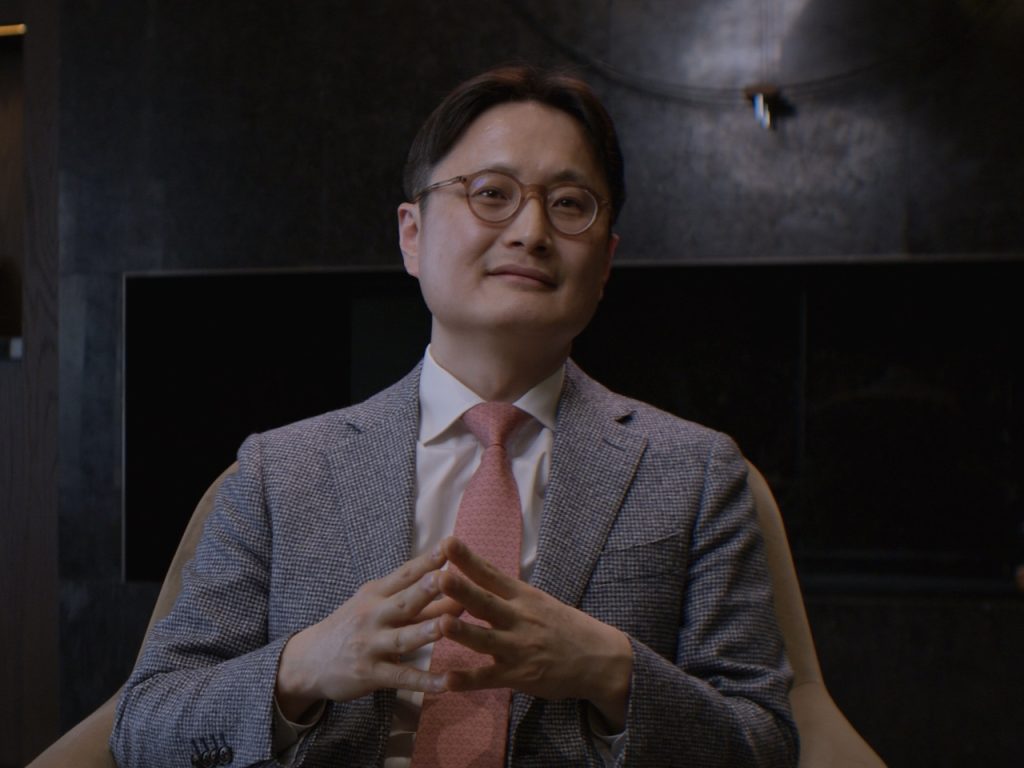
According to Yoon Yong-hee, a distinguished expert in ESG and environmental regulation, **Korean ESG compliance** has decisively entered a **new and rigorous phase**, underscored by the fact that even his own law firm is now subject to comprehensive **ESG audits**.
Multinational pharmaceutical clients are now actively engaging Yulchon LLC, where Yoon serves as a leading partner specializing in **ESG strategy** and **environmental regulation**. They are issuing formal questionnaires scrutinizing the firm’s **carbon footprint**, detailing its **decarbonization roadmap**, and evaluating **workforce diversity metrics**. This rigorous approach signals a significant shift in **corporate sustainability expectations** across global supply chains.
This development reinforces Yoon’s assertion that “the era has unequivocally arrived where **Korean companies** failing to actively participate as pivotal players within the **global ESG ecosystem** face the real threat of exclusion from international **supply chains**.” Yoon has been a key practitioner at Yulchon since 2009, witnessing firsthand the evolution of these standards.
For Yoon, this incident perfectly encapsulates a profound and broader transformation: **Korean corporate ESG** initiatives are rapidly transitioning from mere declarations to meticulous documentation, with the looming prospect of **hard-law litigation** emerging as the critical next phase.
Yoon elaborated in an exclusive interview with The Korea Herald, ahead of his participation in H.eco Tech Festa 2026 (Herald Media Group’s premier business forum on May 7 at Yonsei University), that “just a few years ago, merely announcing ambitious **net-zero targets** was sufficient to advance the **sustainability discourse**.” He stressed, however, that “today, without robust validation through independently verified frameworks such as the **Science Based Targets initiative (SBTi)**, discerning buyers and investors no longer consider these targets credible or actionable.”
This fundamental shift significantly redefines corporate **ESG liability**. What was previously perceived as aspirational messaging is now meticulously scrutinized as actionable representations, Yoon explained. Consequently, any deficient or overstated **ESG disclosure in Korea** risks escalating from administrative penalties to severe civil, and potentially even criminal, exposure for companies and their leadership.
Yoon identifies **external ESG pressure** as a powerful confluence of three distinct, yet interconnected, regulatory waves. The bedrock is the **EU’s Corporate Sustainability Due Diligence Directive (CSDDD)**, establishing a comprehensive baseline for **supply chain due diligence**. Layered upon this are various **product-specific regulations** addressing issues like conflict minerals, deforestation, batteries, and critical raw materials, each mandating stringent **traceability requirements** for specific inputs. The third influential stream involves **import restrictions**, exemplified by the US Uyghur Forced Labor Prevention Act and the pending EU Forced Labor Regulation, which can effectively block market access for goods linked to specific **labor risks**, irrespective of their origin.
“Conflating these diverse regulatory pressures into a singular **’ESG mood’** is a critical error,” Yoon cautioned. He emphasized that each wave imposes distinct and stringent **evidentiary demands** that **Korean exporters** must meticulously satisfy concurrently to maintain global competitiveness.
This inherent complexity has fostered a pronounced **two-speed Korean market**. Yoon observes that companies integrated into the sophisticated supply chains of export-led conglomerates like Hyundai Motor Group and Samsung Electronics have developed robust **ESG management systems** that are “broadly comparable to their global peers.” In stark contrast, domestically focused companies and their subcontractors often lag, remaining at “an early stage” in their **ESG integration journey**.
For organizations positioned on the leading edge of this transformation, the benefits far exceed mere compliance. Yoon highlights the emergence of a tangible **’ESG premium,’** where discerning customers are now actively prioritizing and shifting towards suppliers whose **environmental performance** is not only superior but also **independently verified**, even when facing comparable pricing and product quality.
Looking ahead, **ESG litigation** is poised to become the most significant force in reshaping the corporate landscape.
Across Europe, **climate litigation** and **human rights lawsuits** have already progressed from soft-law advocacy to robust **hard-law claims**, frequently anchored in the CSDDD and national due diligence statutes. Yoon anticipates a parallel trajectory in Korea, where an increasingly sophisticated network of **civil society legal teams**, having matured over the last decade, is expected to empower **Korean plaintiffs** to pursue similar actions. He cites the Korean Constitutional Court’s landmark 2024 ruling, which found parts of **Korea’s climate law** unconstitutional, as a crucial early indicator of this evolving legal environment.
Attendees can gain further insights from Yoon Yong-hee, who is scheduled to speak at session two of the H.eco Tech Festa 2026 on May 7.
mjh