Shin Ramyun Drives Growth in Japan: Nongshim Targets $330M Revenue by 2030 with New Flavors and Experiences
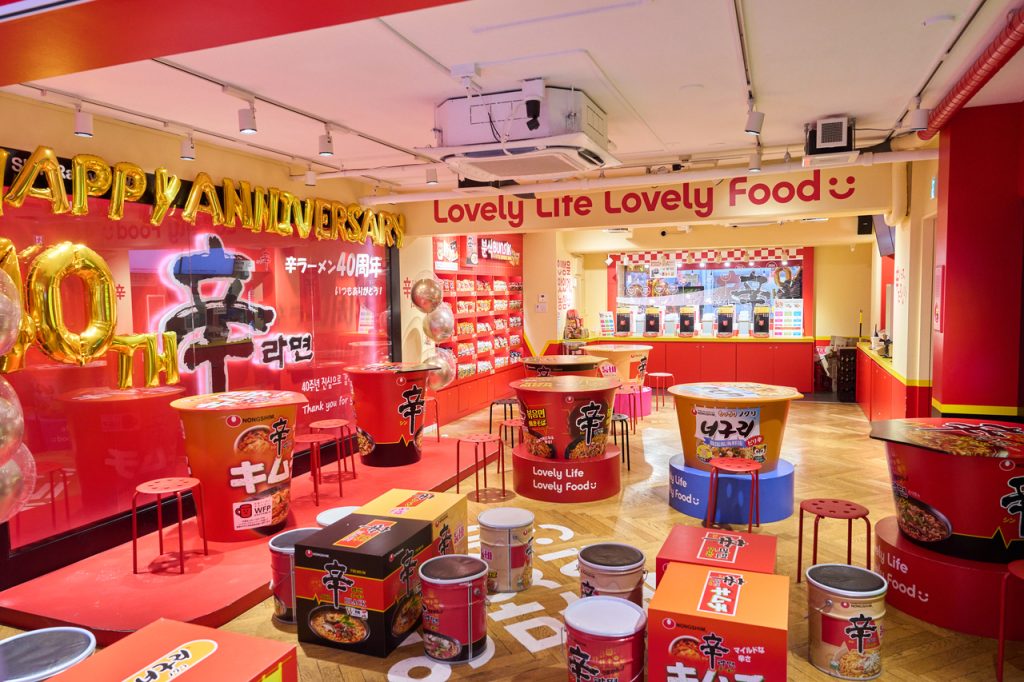
TOKYO — Nestled on Takeshita Street in Harajuku, Tokyo, an innovative Shin Ramyun-themed space offers an immersive journey into the Korean instant noodle experience, blending unique flavors with contemporary design.
Known as Shin Ramyun Bunsik — where “bunsik” refers to popular Korean street food — this dynamic eatery allows customers to personally cook their noodle bowls using automated machines. Guests can witness their broth come to life, often pausing to capture the moment with photos before savoring their first bite of authentic Korean ramyeon.
Hitoshi, an 18-year-old visitor enjoying a casual meal with a friend, exemplifies the emerging generation of consumers. Though new to Nongshim, he discovered Shin Ramyun through TikTok, highlighting its widespread appeal among youth culture.
“Korean ramyeon offers a spiciness that’s distinct from Japanese varieties, in a truly enjoyable way,” Hitoshi commented with a smile, opting for the classic original flavor. His friend, Kanaka, preferred the rich creaminess of the Toomba variant. “It’s a brand most of my friends are familiar with and have likely tried at least once,” he added, underscoring its cultural penetration.
This Harajuku establishment not only solidifies Nongshim’s decades-long mission to normalize its signature spicy taste in Japan but also marks a pivotal new phase for Shin Ramyun. The brand is now expanding beyond its iconic heat into a broader, more diverse range of flavors to capture wider market interest.
Nongshim commenced its strategic push of the flagship Shin Ramyun brand into Japan in 1987, merely a year after its domestic launch. This expansion gained significant momentum following the establishment of its local Japanese unit in 2002.
Rather than filling an existing void, Nongshim aimed to carve out a new niche in a Japanese instant noodle market traditionally dominated by established flavor bases like miso, soy sauce, and pork-bone broth. At the time, spiciness was largely considered an unconventional taste.
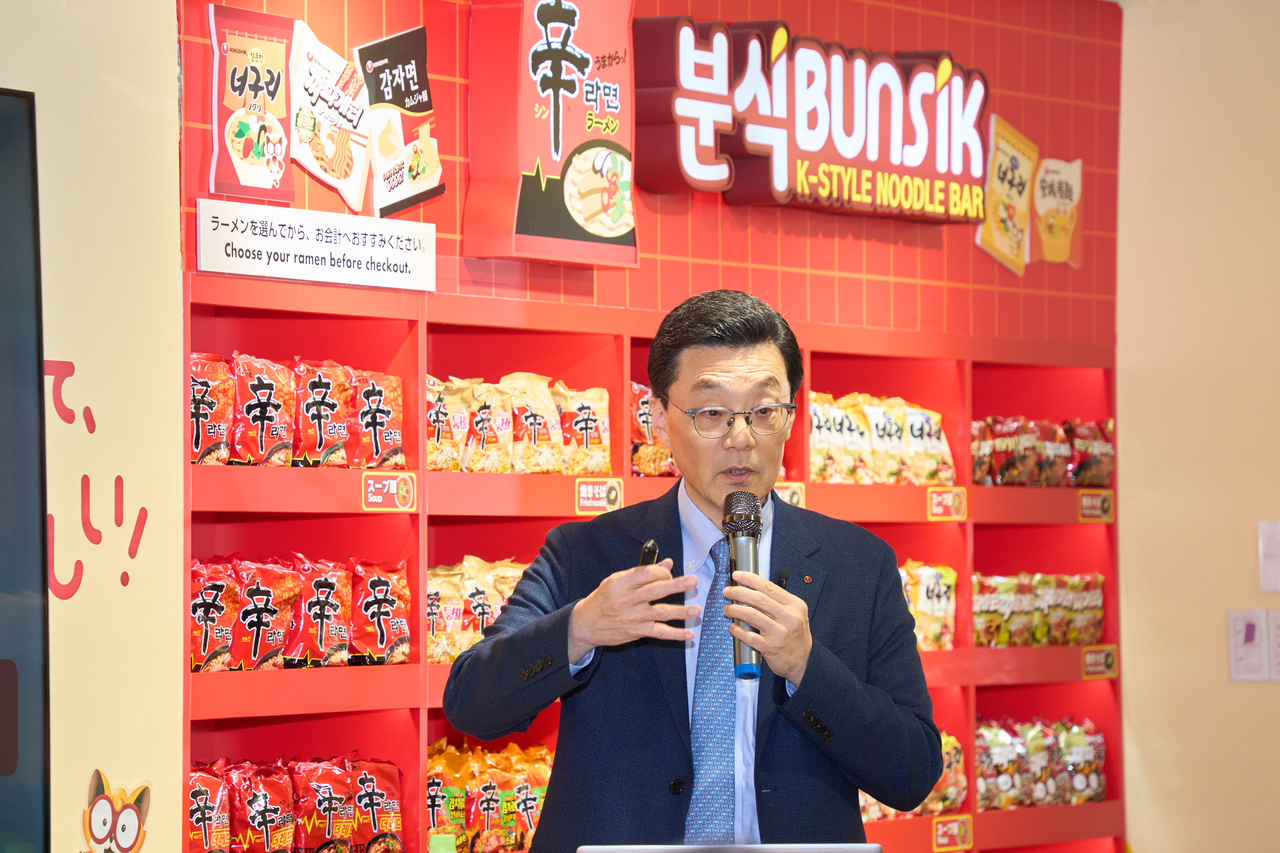
“Initially, the spicy ramyeon market was virtually nonexistent,” revealed Kim Dae-ha, head of Nongshim Japan, during a recent media conference. “We encountered repeated rejections from buyers, yet we persistently presented the same product, time and again.”
Despite early discouragement, the company steadfastly maintained Shin Ramyun’s distinct level of heat, adhering to the late founder Shin Choon-ho’s directive to “plant the brand” firmly in the market.
“Our principle was unequivocal: if consumers couldn’t enjoy it, we wouldn’t compromise our product to sell to them,” Kim emphasized. “We were instructed never to dilute the authentic flavor of Shin Ramyun.”
Through proactive sampling events and engaging street-level promotions, Shin Ramyun gradually began to reshape Japanese palates. Consumers, after a few trials, developed a liking for the unique taste, leading to the brand’s prominence surpassing the relative obscurity of the company behind it.
“Today, even if people are unfamiliar with Nongshim, they recognize Shin Ramyun. That’s how we gauge the brand’s successful establishment,” Kim quipped, reflecting on its rooted presence.
Shin Ramyun currently commands approximately 40 percent of Japan’s spicy noodle segment, a category that constitutes about 6 percent of the nation’s expansive 700 billion yen ($4.4 billion) instant noodle market. Crucially, it stands as the sole segment demonstrating significant growth.
Kim views this market shift with cautious optimism: “As larger Japanese players venture into spicy flavors, it certainly presents a competitive challenge for us. However, if their entry helps expand the overall market, we see it as a positive development.”
From Spice Pioneer to Flavor Innovator: Shin Ramyun’s Next Chapter in Japan
Nongshim Japan achieved a significant milestone last year, with sales surpassing 20 billion yen for the first time. This represents an impressive annual growth rate of approximately 18 percent, more than doubling from 9.5 billion yen just five years prior.
Nongshim has ambitious plans to double its revenue to 50 billion yen and secure a position among Japan’s top five instant noodle manufacturers by 2030, a goal that now appears increasingly within reach.
“Our objective is to capture at least 35 to 40 billion yen within the roughly 700 billion yen instant noodle market,” Kim noted. “While we currently hold a solid No. 6 position, there’s still a gap to No. 5. Therefore, we are actively working towards reaching 50 billion yen and ascending the ranks.”
With Shin Ramyun accounting for a significant 80 percent of its Japan sales, Nongshim’s strategic focus is now on extending the brand’s product range. By doing so, the company aims to broaden the very category it helped establish in the Japanese market.
Shin Ramyun Toomba, a creamier variant designed for microwave convenience, has rapidly emerged as the second-best-selling option, cultivating a strong following particularly among women in their 20s and 30s. Its remarkable success is underscored by its presence in all three of Japan’s major convenience store chains — approximately 53,000 outlets nationwide — a rare achievement for any foreign noodle brand, as highlighted by Kim.
A recent highlight for Toomba was its feature at Fuji-Q Highland, where a pop-up eatery showcased exclusive Shin Ramyun collaboration menus. “We believed this location was ideally suited to attract younger consumers, given that the park predominantly draws visitors aged 10 to 30,” a company official explained.