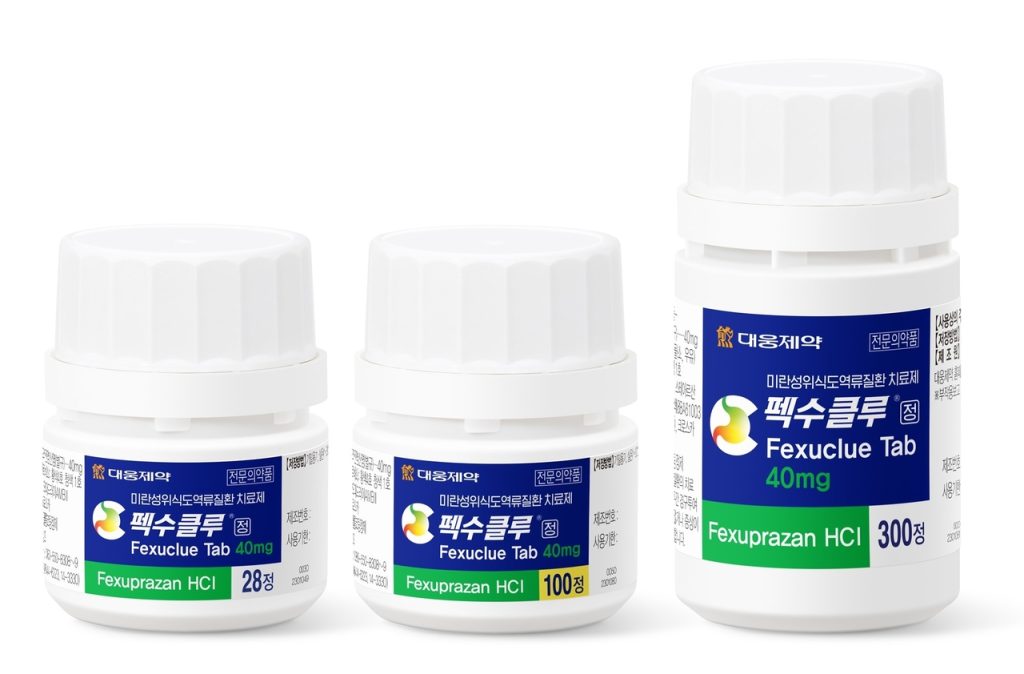
Daewoong Pharmaceutical’s Fexuclu Gains Approval in Indonesia, Targeting $155M Southeast Asian GERD Market
Daewoong Pharmaceutical announced Friday that Fexuclu, its innovative self-developed gastroesophageal reflux disease (GERD) treatment, has officially received approval in Indonesia. This significant milestone marks a strategic entry into Southeast Asia’s rapidly expanding pharmaceutical market for the Korean drugmaker.
The company outlined plans to aggressively expand Fexuclu’s prescription presence across Indonesia, responding to the increasing patient demand for highly effective and convenient GERD treatment options.
Daewoong Pharmaceutical highlights Fexuclu’s advanced mechanism as a potassium-competitive acid blocker (P-CAB). This innovative GERD medication offers faster and more consistent acid suppression, providing quick relief from symptoms with sustained, longer-lasting effects. The efficacy of P-CABs is evident in markets like Japan, where they now comprise over 60 percent of GERD prescriptions, and in Korea, where they reached approximately 35 percent last year.
Fexuclu’s global footprint is rapidly expanding, with the drug having entered 30 countries to date. It has secured regulatory approvals in 16 markets, including key nations like Korea, Indonesia, China, Mexico, and India, and is already successfully launched in six. With an anticipated launch in China soon, Daewoong Pharmaceutical views the Indonesia approval as a critical springboard for accelerating its broader global expansion strategy for Fexuclu.
“Securing approval in Indonesia, a key reference country within Southeast Asia, marks a significant milestone in Fexuclu’s global journey,” stated Daewoong Pharmaceutical co-CEO Park Seong-soo. He added, “Leveraging our extensive regulatory experience and compelling differentiated clinical data, we are committed to continually accelerating Fexuclu’s global expansion.”
According to data from IQVIA, Indonesia’s robust market for medications addressing conditions like GERD and stomach ulcers was valued at $154.95 million in 2024. This market is forecast to expand at an impressive annual rate of approximately 6 percent, fueled by evolving dietary habits (westernization) and increasing public awareness of these gastrointestinal diseases.