
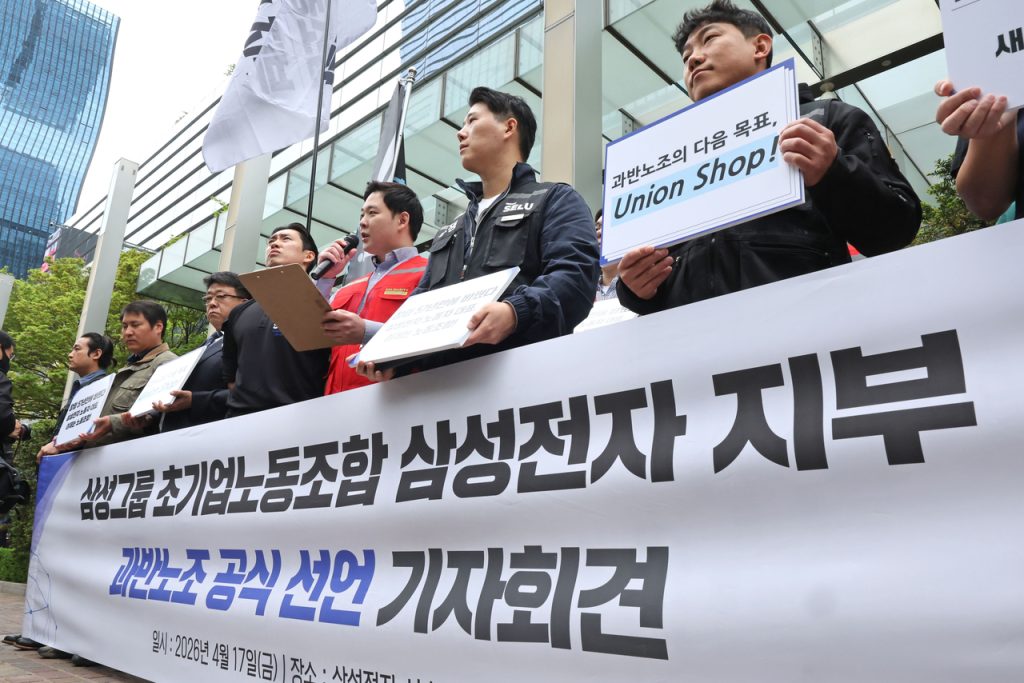
Samsung Electronics is facing a major crisis as its largest labor union, having achieved majority status for the first time, warns of a potential general strike that could inflict staggering losses of up to 30 trillion won ($20.3 billion).
The Samsung Electronics Labor Union confirmed its official recognition as the representative bargaining body, now comprising approximately 74,000 members. This significant milestone substantially strengthens the union’s negotiating power in ongoing disputes with the tech giant.
Key dates for industrial action include a mass rally scheduled for April 23 at Samsung’s Pyeongtaek campus in Gyeonggi Province. This will precede an extensive 18-day strike planned from May 21 to June 7, threatening widespread disruption to Samsung’s operations.
Speaking from outside Samsung’s Seocho office in Seoul, union leader Choi Seung-ho anticipated robust participation, with 30,000 to 40,000 members expected to attend the upcoming rally.
Choi underscored the severe financial ramifications of the planned strike. “If the strike continues for 18 days, losses could reach between 20 trillion won and 30 trillion won, even taking into account facility backup,” he stated, highlighting the potential for massive economic impact.
This projection translates to an estimated 1 trillion won in daily losses should critical production activities be halted or severely disrupted by the labor action.
Negotiations between Samsung management and the union have been at a standstill since late last month, when the union suspended talks amidst growing frustrations.
At the core of the dispute lies employee compensation. The union is primarily demanding the removal of caps on performance-based bonuses and advocating for greater transparency within the company’s compensation system.
Union leader Choi criticized the company’s approach, stating, “The company has continued to respond with one-off measures rather than engaging in meaningful negotiations. It should come forward with concrete proposals and apologize for the lack of progress in talks.”
The union has described the impending strike as “an unavoidable choice,” dismissing concerns that such a large-scale industrial action could negatively impact South Korea’s broader economy.
Moreover, the union pointed to a recent outflow of valuable workers, reporting that over 200 employees have moved to rival SK Hynix in the past four months. This talent drain is attributed to what the union identifies as an “abnormal compensation structure” at Samsung.
Addressing criticism that their demands might undermine shareholder returns, the union argued that “securing talent ultimately enhances corporate value,” asserting their proposals are beneficial for long-term company health.
The union also emphasized its commitment to adhering strictly to legal frameworks, assuring that no unlawful actions would be taken during the strike.
“We plan to proceed with a legitimate strike based on legal reviews,” Choi affirmed, reinforcing the union’s intent to operate within legal boundaries.
In response to the union’s strike declaration, Samsung Electronics has already taken preemptive legal steps. The company filed for an injunction with the Suwon District Court on Thursday, seeking to block any potentially illegal strike actions, particularly the occupation of production facilities.
Samsung clarified that this legal measure is intended to prevent operational disruptions and protect vital assets, rather than to restrict constitutionally protected labor rights of its employees.
Under South Korean labor law, specific actions are prohibited during strikes. These include interference with safety facilities, the suspension of work deemed essential to prevent equipment damage or product deterioration, and the occupation of key production sites.


