
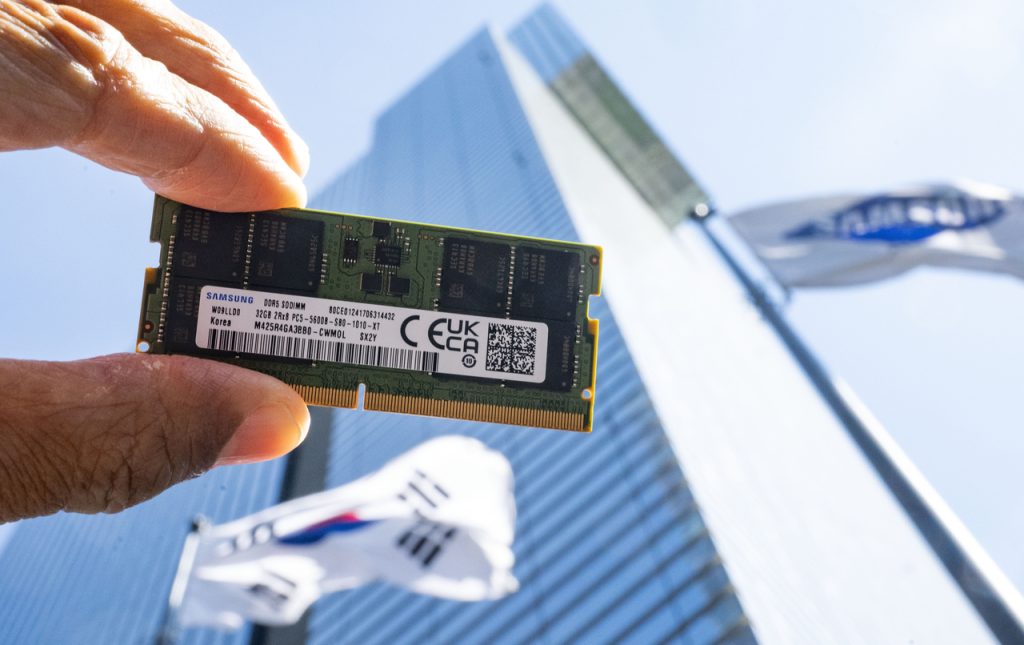
Samsung Electronics Faces Major Labor Dispute as Union Demands 15% of Operating Profit, Threatening May Strike
The labor union at Samsung Electronics is pushing for an unprecedented 15 percent of the company’s annual operating profit as performance bonuses. This substantial demand could amount to approximately 45 trillion won ($30.3 billion), a figure that would even exceed the chipmaker’s total research and development (R&D) expenditure from the previous year.
This heightened demand, initially set at 10 percent, follows Samsung’s announcement of a record-breaking 57.2 trillion won in first-quarter operating profit on April 7. This remarkable 755 percent year-on-year surge marked the highest quarterly profit in Korean corporate history. With domestic brokerages forecasting full-year operating profit to approach 300 trillion won, driven by an artificial intelligence-fueled memory supercycle, the union’s updated bonus formula could result in payouts surpassing Samsung’s 37.7 trillion won R&D investment in 2025 and roughly quadrupling the 11.1 trillion won distributed to its 4.2 million shareholders as dividends.
Negotiations between the union and management broke down in late March. In response, the union has organized a rally scheduled for April 23 at Samsung’s crucial semiconductor campus in Pyeongtaek, Gyeonggi Province. Furthermore, a comprehensive 18-day general strike is planned from May 21 through June 7 if a resolution is not reached.
Choi Seung-ho, chair of the Samsung Electronics branch of the company-wide labor union, communicated to Korean media, stating, “We do not consider 15 percent of operating profit unreasonable. Engineers are increasingly seeking opportunities with competitors or moving overseas for more competitive compensation.”
Samsung management has firmly rejected the union’s proposal. Instead, they have offered what they describe as “the industry’s best compensation relative to competitors,” without committing to a fixed profit-sharing ratio.
An official within the semiconductor industry expressed concerns, remarking, “While sharing profits with employees is essential, a payout of this magnitude raises worries that it could significantly restrict future investments in next-generation technology and advanced facilities. Samsung maintained substantial investment even when its chip division recorded nearly 15 trillion won in operating losses in 2023. This continuous spending through the downturn is a primary factor enabling its current 57 trillion won quarter. Such a large payout could jeopardize this critical reinvestment cycle.”
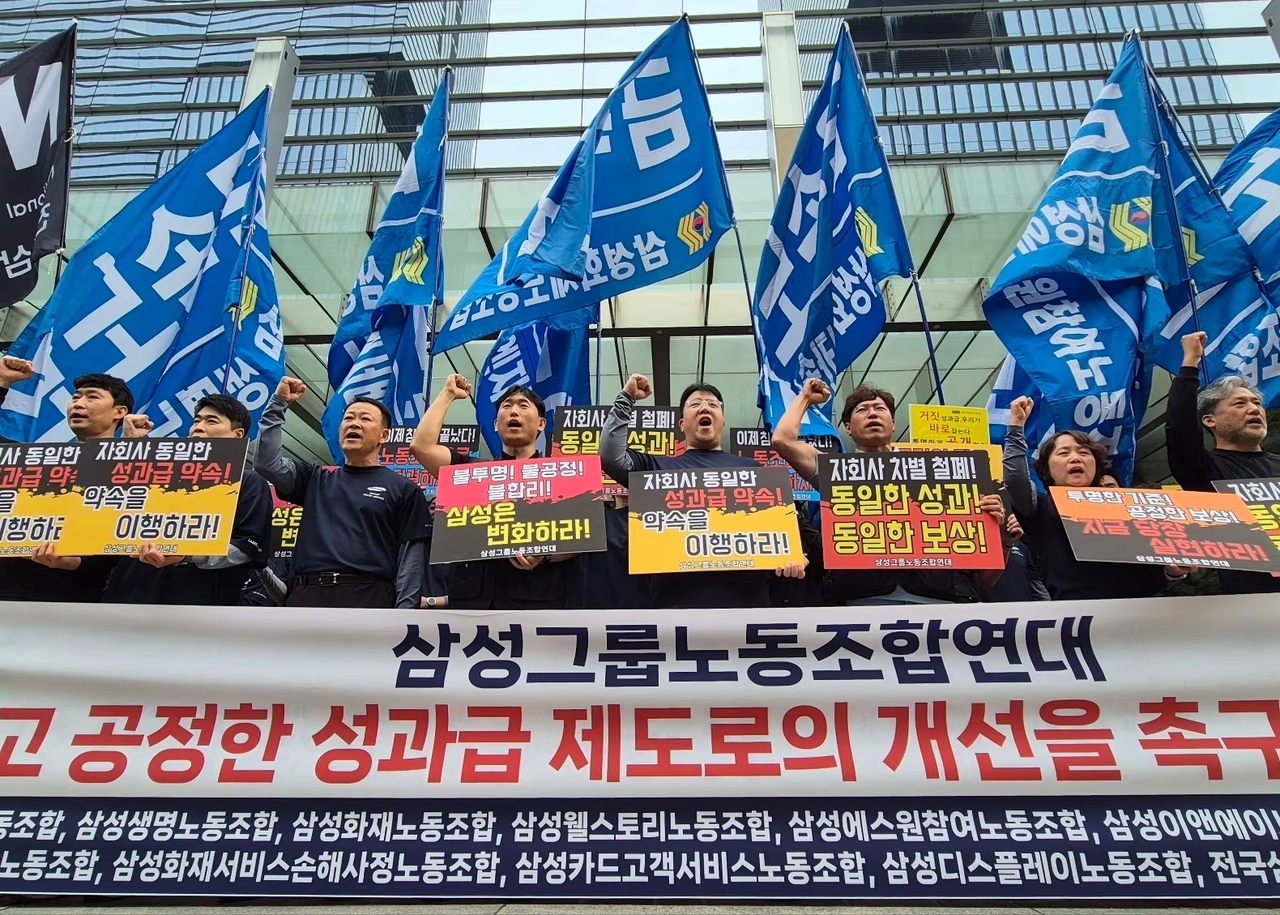
The looming strike threat holds significant implications, especially as global technology firms have secured long-term memory supply contracts, often backed by substantial prepayments. Any production delays could activate penalty clauses and divert new orders to rival manufacturers. Samsung has already experienced setbacks due to delays in qualifying its fifth-generation high-bandwidth memory (HBM) chips with Nvidia. Industry analysts caution that Chinese DRAM producers and US-based Micron Technology are poised to absorb any redirected demand resulting from a potential strike.
The ongoing dispute has also exposed divisions within the union’s own membership. Under the proposed profit-sharing formula, bonuses would predominantly benefit the semiconductor unit, which is projected to contribute approximately 95 percent of Samsung’s total operating profit this year.
“You claim to be a unified union, yet your focus remains solely on the chip business,” an employee from the consumer electronics division reportedly posted on the union’s internal message board. Samsung management has pointed out that applying this formula would drastically reduce bonus rates for employees in its loss-making system LSI and foundry units, potentially cutting them from 47 percent of salary to just 11 percent.
The standoff intensified on April 10 when Samsung disclosed that lists containing the names and ID numbers of non-union employees had circulated through internal company group chats. The company subsequently filed a criminal complaint concerning personal data violations. These lists were reportedly compiled using the union site’s member verification tool to identify non-striking employees. Union Chair Choi had previously issued a warning on YouTube, stating that workers who declined to participate in a strike would be “cataloged” and prioritized for potential reassignment or dismissal.
Based on the union’s own calculations, assuming an annual semiconductor operating profit of 270 trillion won, employees within the memory division would each receive an average of 620 million won before tax under the proposed formula. This figure significantly surpasses the 10 percent profit-sharing rate agreed upon between competitor SK Hynix and its union last year.
The economic significance of semiconductors for South Korea is immense, accounting for 38.1 percent of the nation’s total exports in March. During that month, chip shipments alone reached a record $32.8 billion, according to data from the Ministry of Trade, Industry and Energy.
mjh


