Imports jump 84% to $71.8m as Chinese beauty industry follows Korean playbook
Challenging the established Korean beauty industry on its home ground requires significant strategic boldness for any international brand, especially for Chinese players who have historically faced skepticism regarding product quality.
However, a new wave of Chinese beauty brands, often referred to as “C-beauty,” is rapidly emerging as a formidable challenger.
Last year, imports of Chinese cosmetics into Korea surged to an unprecedented $71.76 million, marking an impressive 84 percent increase year-on-year, as reported by the Korea Customs Service.
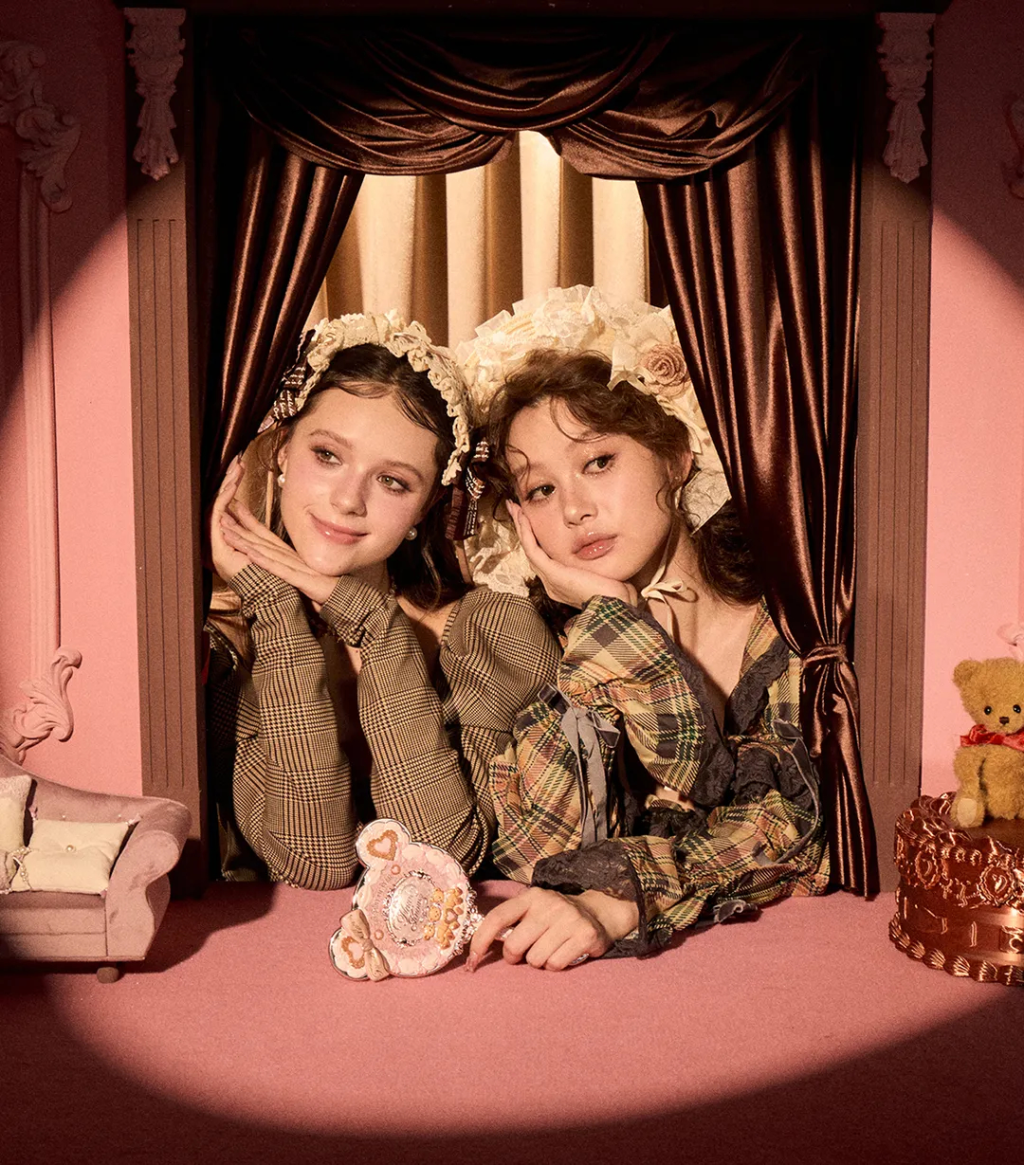
A significant indicator of this shift was last October’s two-week pop-up event in Seongsu-dong by the Chinese color cosmetics brand Flower Knows. Celebrated for its distinctive Rococo flourishes and enchanting fairy tale aesthetic, the event captivated 27,000 visitors and saw multiple product lines sell out entirely.
While this debut might not yet be considered a direct threat, industry officials view it as a clear warning signal. The robust momentum of the Chinese beauty industry, initially concentrated within China, is now actively expanding into neighboring Asian markets.
Chinese firms edge their way in
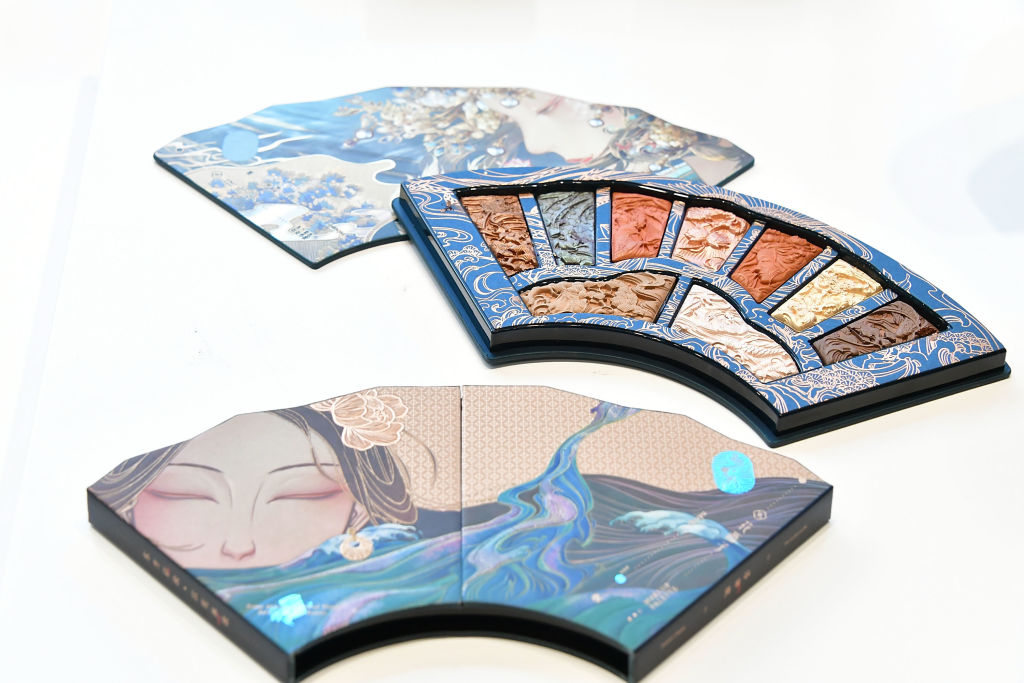
Industry insiders point to a distinct, more theatrical visual language as the foundation for this surging demand, differentiating Chinese beauty firms from the often understated sensibility of Korean beauty brands. Trends like “wanghong” makeup are rapidly gaining traction across social media platforms.
One official noted, “C-beauty is uniquely resonating with Korean consumers through its bold patterns and striking pearlescent finishes, presenting a compelling contrast to K-beauty’s characteristic toned-down aesthetic.”
Recognizing this burgeoning trend, major Korean retail platforms are increasingly embracing Chinese beauty brands.
Capitalizing on its successful pop-up, Flower Knows secured a listing on Korea’s premier fashion platform, Musinsa, in February, where it immediately soared to the top of the eye makeup category on its launch day.
A Musinsa official commented, “This marks our inaugural partnership with a Chinese beauty brand. Following the successful introduction of Flower Knows, we plan to expand our portfolio to include more C-beauty labels that have cultivated strong, loyal customer bases.”
Flower Knows has also successfully entered Chicor, Shinsegae’s popular beauty retailer, which confirmed a noticeable surge in demand from its younger consumer demographic.
Beyond Flower Knows, other prominent Chinese brands like Judydoll, Florasis, and Perfect Diary are also actively expanding their presence. Judydoll, for instance, recently launched a dedicated Korean Instagram account and is reportedly exploring an official listing on Coupang, Korea’s largest e-commerce platform.
Paradoxically, a significant factor in their ascent has been the marked improvement in product quality, much of which can be attributed to collaborations with Korean expertise.
Chinese brands are increasingly engaging Korean contract manufacturers, effectively narrowing the quality and innovation gap with their domestic Korean counterparts. Flower Knows, for instance, collaborates with renowned manufacturers like Kolmar Korea and Cosmax, in addition to its Chinese production partners.
Analysts, such as a Seoul-based expert from Daol Investment & Securities, project substantial revenue growth for Cosmax’s China operations this year, with 13 percent for its Shanghai unit and 15 percent for its Guangzhou unit.
They further noted, “The international expansion of C-beauty color brands is poised to significantly bolster growth within Cosmax’s China-based operations.”
Korean beauty holds the line
Even as Chinese beauty brands gain traction within Korea, Korean beauty brands are strategically shifting their focus, intensifying their outward-looking global expansion while simultaneously diversifying away from the Chinese market.
Data from the Ministry of Food and Drug Safety reveals that Korean cosmetics exports reached a record $3.1 billion in the first quarter, marking a 19 percent year-on-year increase. This growth was significantly driven by a remarkable 40.9 percent surge in shipments to the US, totaling $620 million, which effectively offset a 9.6 percent decline in exports to China, which stood at $470 million.
Although cosmetics shipments to China have nearly halved in recent years, dropping from $3 billion in 2022 to $1.6 billion in 2025, this figure still represents a substantial 23 times the $71.76 million in Chinese beauty imports into Korea. This highlights a significantly more robust demand among Chinese consumers for Korean beauty products compared to the reverse.
Industry insiders emphasize that the enduring strength of Korean beauty brands transcends mere market share. Their success is inextricably linked to the global phenomenon of Korean culture, a synergistic relationship that competitors would find exceptionally challenging to replicate.
One industry official asserted, “For C-beauty to effectively challenge K-beauty on the global stage, it must first cultivate a comparable level of global fandom for Chinese culture.”
Given that Chinese beauty products are predominantly concentrated in color cosmetics, a significant competitive advantage for the Korean beauty industry lies in its robust skincare sector. Skincare alone generated an impressive $2.43 billion in the first quarter, vastly overshadowing the $330 million from color cosmetics. K-beauty’s skincare expertise, built upon years of deep formulation research and development, presents a formidable barrier for rivals attempting to quickly bridge this gap.
For some, the primary concern from China is not direct competition but rather the burgeoning gray market activities.
Kim Byung-hoon, CEO of APR, highlighted at a beauty event last September, “The real issue confronting K-beauty is the proliferation of counterfeit products. When these fakes are mistaken for genuine items, they not only damage individual brands but also significantly erode consumer trust in the entire K-beauty category.”
In 2025, the Korea Customs Service reported that cosmetics constituted 37 percent of the 117,000 seized counterfeit Korean-branded goods, with an alarming nearly 98 percent originating from China.