Bank of Korea Maintains Key Rate; Gov. Rhee Concludes Term Amid Won Volatility, Inflation Concerns
The Bank of Korea (BOK) has announced it will maintain its benchmark interest rate at 2.5 percent. This pivotal decision, made on Friday, comes amidst significant volatility in the Korean won and escalating inflationary pressures, largely attributed to the ongoing Iran conflict.
The central bank’s Monetary Policy Board unanimously voted to keep the key interest rate unchanged, marking a consistent stance since July of last year. This decision highlights the BOK’s cautious approach to South Korea’s economic stability.
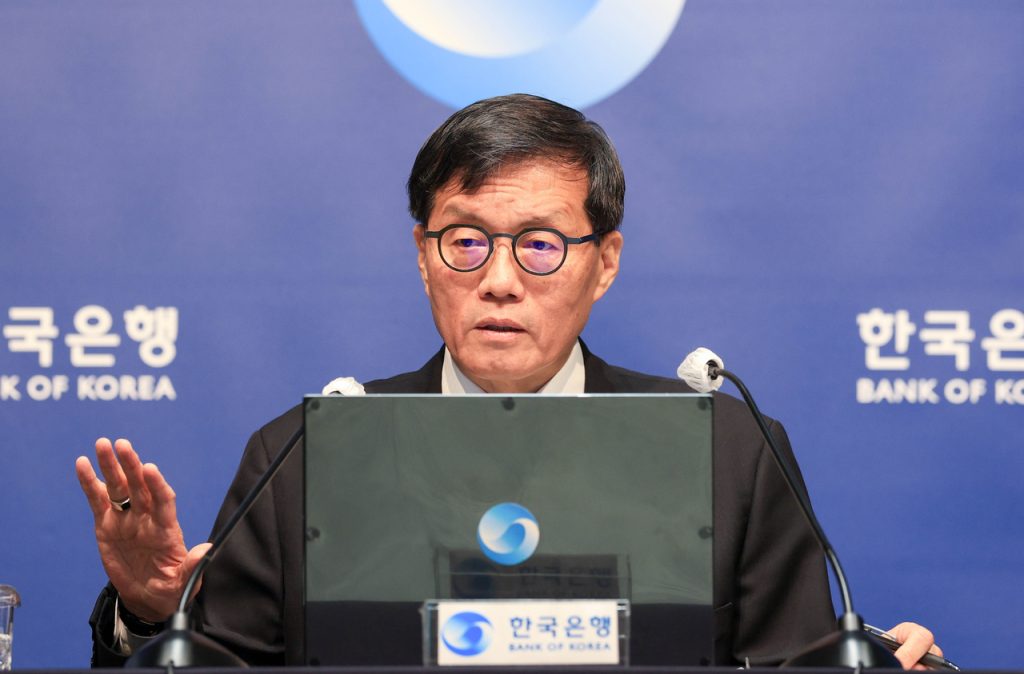
“The risk of stagflation remains limited for now,” stated BOK Governor Rhee Chang-yong at a press conference held at the central bank in Seoul on Friday. He further noted the difficulty in accurately assessing the potential economic ramifications of the Iran situation in the immediate future.
Governor Rhee elaborated, “If energy infrastructure were to be damaged, the economic impact could be prolonged, making it challenging to generalize a response.”
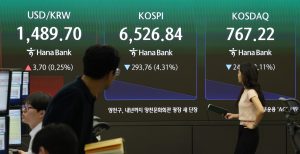
This critical monetary policy decision is set against a backdrop of sharp volatility in the Korean won, directly influenced by developments in Iran and fluctuating global oil prices. The national currency recently depreciated past the 1,500-per-dollar threshold, a level not seen since the 2009 global financial crisis.
As of 2:35 p.m. Friday, the won was quoted at 1,482.58 per dollar. While showing some recovery from its recent lows, the currency’s value continues to exhibit considerable instability.
Beyond currency fluctuations, the Iran conflict has intensified inflation concerns within South Korea. The nation is particularly vulnerable to external price shocks due to its substantial reliance on imports for vital energy and other resources. Consequently, higher global oil prices are projected to directly impact domestic costs, thereby exerting upward pressure on consumer prices across the country.
The central bank has revised its projection for this year’s consumer price increase, now expecting it to surpass the earlier forecast of 2.2 percent made in February.
Rhee emphasized that if the current supply shock proves temporary, responding with interest rate adjustments might not be appropriate. However, he cautioned, “If the situation is prolonged and leads to broader inflationary pressure, then decisive policy action may become necessary.”
This rate-setting meeting held on Friday marked Governor Rhee Chang-yong’s final official duty, as he is scheduled to conclude his four-year term on April 20.
Reflecting on his tenure, Governor Rhee light-heartedly quipped about his unfulfilled desire to stabilize the Korean won before his departure. “If I had been able to step down with a stabilized currency, I could think I had done a good job. But US President Donald Trump did not make that easy,” he remarked.
Regarding his overall management of monetary policy, Rhee affirmed, “I had no regrets.” He further explained, “There were many who said the BOK was too late in cutting rates, while others later argued that the won depreciated because it did not raise rates. Given this balance of views, I believe the monetary policy was fairly well managed.”
Following Governor Rhee’s departure, Governor nominee Shin Hyun-song is anticipated to assume leadership and chair future Monetary Policy Board meetings. The Bank of Korea’s next crucial rate-setting meeting is officially scheduled for May 28.
silverstar