
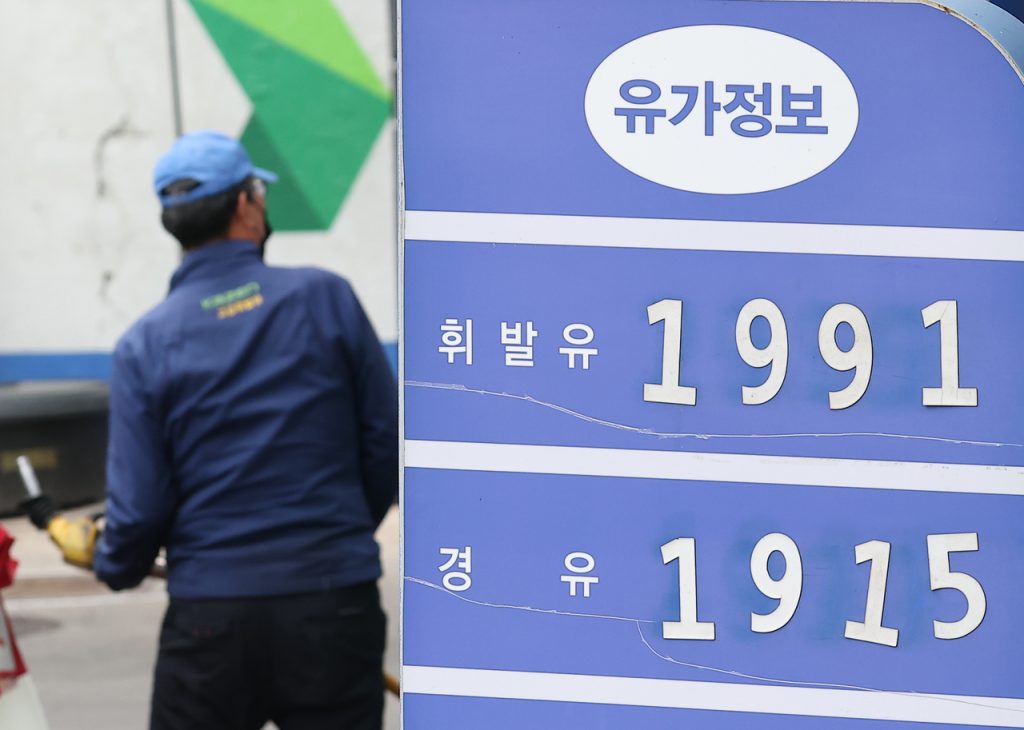
South Korea’s government announced Thursday its decision to maintain existing price caps on fuel products for the upcoming two weeks. This measure comes amidst the volatile Middle East situation, influenced by a delicate two-week ceasefire agreement between the United States and Iran, impacting global energy markets.
For the next fortnight, the Ministry of Trade, Industry and Resources confirmed that the maximum retail prices for key fuel types supplied by local oil refineries to gas stations will remain frozen. Regular gasoline prices will hold at 1,934 won ($1.3) per liter, diesel at 1,923 won per liter, and kerosene at 1,530 won per liter.
This bi-weekly adjustment of maximum fuel product prices is a key component of the price cap system, originally implemented in mid-March with the primary objective of stabilizing domestic fuel costs and ensuring economic predictability.
The ministry elaborated that the decision to freeze these fuel price caps was primarily driven by a significant drop in international gasoline prices. Following Wednesday’s announcement of a two-week ceasefire agreement between the U.S. and Iran, global gasoline benchmarks returned to levels comparable to two weeks prior, despite ongoing negotiations regarding the deal’s specifics.
Deputy Minister for Trade, Industry and Resource Security, Yang Ghi-wuk, stated in a press briefing that, consequently, there was no compelling justification to raise the price ceiling for gasoline at this time.
While acknowledging a rise in global diesel and kerosene prices, Deputy Minister Yang highlighted the government’s decision to maintain their domestic price thresholds. This strategic choice underscores the significant impact these fuels have on the livelihoods of essential workers, including cargo truck drivers, couriers, farmers, and fishermen, recognizing their crucial role in the national economy.
To safeguard consumers and ensure fair pricing, the ministry further announced plans for continuous, rigorous monitoring of unfair market practices related to fuel products. This proactive approach aims to prevent gas stations from implementing excessive price hikes, even in light of Thursday’s announced price freeze.


