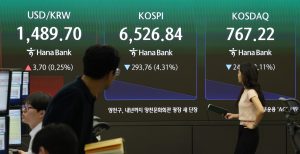
The Korea Exchange announced Thursday that 54 listed companies are facing potential delisting due to inadequate audit opinions on their 2025 financial statements. This includes 12 firms from the Kospi market and 42 from the Kosdaq market.
These companies triggered delisting criteria as of April 7, having received adverse or disclaimer audit opinions. Such opinions are critical indicators, signaling significant concerns regarding a company’s financial health and the effectiveness of its internal controls.
On the Kospi market, 12 firms were flagged, a number consistent with the 14 identified in the previous year. Seven of these firms are new additions to the list. Notably, four companies, including Kumyang and Sambu Construction, have failed to meet audit standards for the second consecutive year and will face delisting decisions after their designated improvement period concludes on April 14.
Han Chang, having received adverse or disclaimer opinions for three consecutive years, has already been marked for delisting, with its trading currently suspended pending liquidation procedures.
In related developments, eight Kospi-listed firms were newly placed under supervisory review, an increase from four a year prior, while three companies were removed from this status. This reflects a mixed landscape regarding corporate restructuring efforts within the market.
The situation appears more challenging on the Kosdaq market, where 42 firms met delisting grounds. This includes 23 new cases, up from 19 last year, highlighting growing financial pressures particularly among smaller enterprises.
Several Kosdaq companies, such as Kainos Medicine and Olipass, have already had their delisting confirmed following repeated audit failures, while others are still undergoing review.
Furthermore, broader market risk indicators have deteriorated. Forty-three firms were newly designated as investment caution issues, contrasting with 21 removals from this list, underscoring persistent vulnerabilities within the market structure.
These developments coincide with intensified efforts by regulators to tighten listing standards. The Korea Exchange is set to increase the minimum market capitalization requirement for listings from 15 billion won to 20 billion won ($13.5 million). Additionally, a new “penny stock rule” will be introduced, specifically targeting shares that trade below 1,000 won.
A recent simulation conducted by the exchange projects that the number of Kosdaq firms at risk of delisting could potentially increase fivefold, reaching approximately 220 under the new regulations.
Financial Services Commission Chairman Lee Eok-won emphasized that stricter regulatory measures are essential to enhance overall market quality and to expedite the exit of underperforming companies from the exchange.
ch0221