
The family of the late Samsung Electronics Chairman Lee Kun-hee is on track to finalize a historic 12 trillion won ($8 billion) inheritance tax payment this month, effectively lifting a significant financial burden from South Korea’s largest conglomerate.
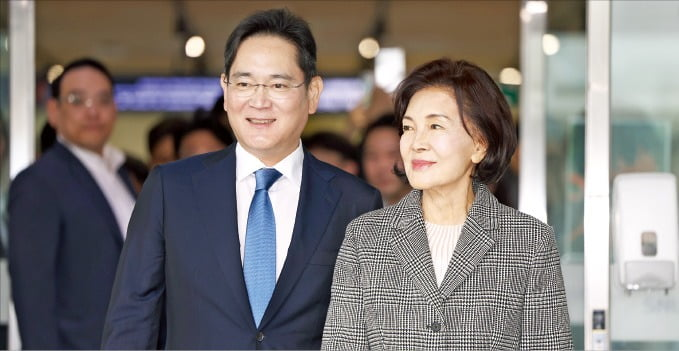
Industry sources confirmed Sunday that Samsung Electronics Chairman Lee Jae-yong, alongside his mother Hong Ra-hee and sisters Lee Boo-jin and Lee Seo-hyun, will make the final installment. This concludes a meticulous five-year plan to settle one of the most substantial inheritance tax bills ever recorded in South Korea.
This monumental achievement is expected to significantly reduce financial uncertainty surrounding the Samsung conglomerate, thereby solidifying Chairman Lee Jae-yong’s leadership and strategic direction.
The massive tax obligation originated from the late Lee Kun-hee’s extensive estate, valued at approximately 26 trillion won. This comprehensive estate included significant shares, vast real estate holdings, and invaluable art collections. In 2021, the Samsung family strategically chose to settle this amount through six installments over a five-year period, utilizing South Korea’s deferred payment scheme.
Among the family members, Hong Ra-hee, the honorary director of the Leeum Museum of Art, bore the largest portion of the tax, approximately 3.1 trillion won. Following her were Chairman Lee Jae-yong with 2.9 trillion won, Hotel Shilla President Lee Boo-jin with 2.6 trillion won, and Samsung C&T President Lee Seo-hyun with 2.4 trillion won.
To facilitate these substantial payments, the three women notably divested stakes in various Samsung affiliates, including Samsung Electronics, Samsung SDS, and Samsung C&T. They also strategically entered into stock trust agreements. As recently as January, Hong Ra-hee signed a significant trust deal to dispose of 15 million Samsung Electronics shares, marking a crucial step in their final funding efforts.
In contrast, Chairman Lee Jae-yong strategically minimized the sale of shares in core affiliates. His funding strategy primarily involved utilizing substantial dividends and personal loans, thereby successfully maintaining robust control centered on Samsung C&T, which functions as the group’s de facto holding company.
As a result, his stake in Samsung Electronics common shares has notably increased to 1.67 percent from 0.70 percent before the inheritance. Concurrently, his holding in Samsung C&T surged to 22.01 percent from 17.48 percent, and his stake in Samsung Life Insurance also climbed significantly to 10.44 percent from a mere 0.06 percent.
Industry estimates indicate that the Samsung family has collectively received approximately 4 trillion won in dividends from various affiliates since the passing of Lee Kun-hee in 2020. When factoring in earlier accumulated payouts, analysts suggest that over 6 trillion won may have been strategically channeled towards funding these substantial inheritance tax payments.
Beyond the tax obligations, the Samsung family has also demonstrated significant philanthropy, carrying out large-scale donations. In 2021, they pledged a monumental 1 trillion won for medical causes and generously donated over 23,000 invaluable artworks from Lee Kun-hee’s renowned collection to the state.
With the complex inheritance tax issue now largely resolved, analysts anticipate Samsung will pivot its strategic focus more decisively. This shift is expected to emphasize massive investments in critical future growth engines such as semiconductors, artificial intelligence (AI), and biopharmaceuticals, alongside broader business restructuring initiatives.
This pivotal moment aligns perfectly with Samsung’s improving earnings momentum. Samsung Electronics is projected to announce exceptionally strong first-quarter results, primarily propelled by robust global demand for advanced AI memory solutions. This surging demand has notably lifted DRAM prices and significantly boosted profitability within its crucial semiconductor business division.
Market consensus for Samsung Electronics’ operating profit has seen a substantial upward revision, climbing by more than 10 percent from just a month earlier to approximately 40 trillion won. This projected figure would more than double the 20.1 trillion won recorded in the previous fourth quarter, setting a new all-time high for the company.
Although preliminary earnings reports do not yet detail divisional performance, industry experts and analysts widely anticipate that these impressive gains will be overwhelmingly driven by the powerhouse semiconductor business.


