
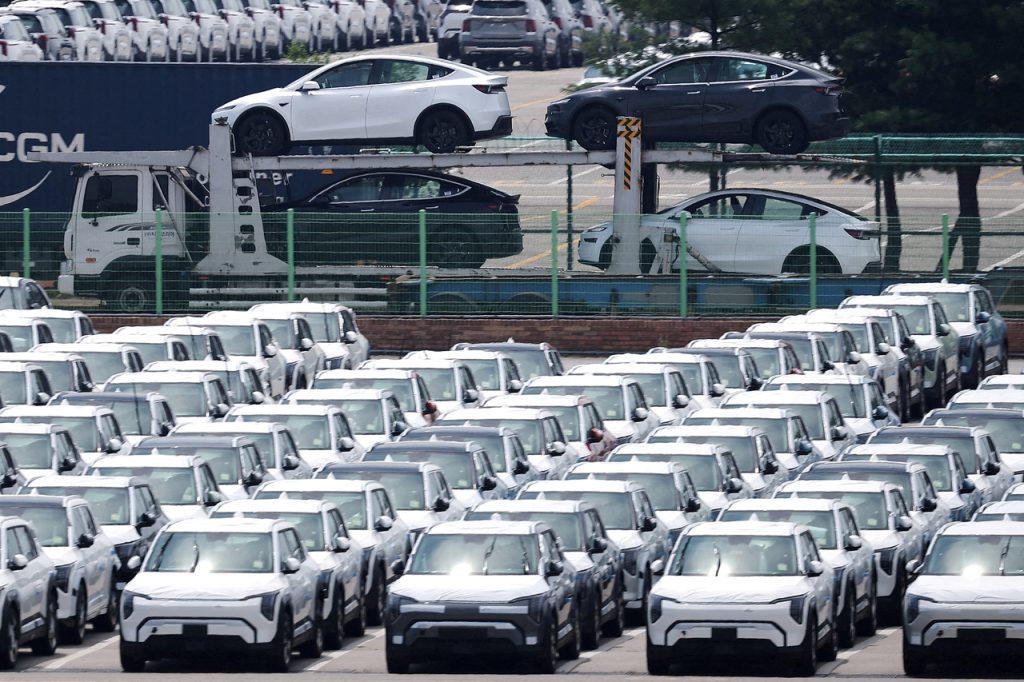
Tesla has shattered long-standing market dynamics, seizing the top position in Korea’s competitive imported car market for the first time ever in the first quarter.
Data from the Korea Automobile Importers and Distributors Association reveals Tesla’s remarkable performance, with 20,964 electric vehicles sold between January and March, marking an astonishing 335.1 percent increase year-over-year.
This unprecedented achievement signals a significant shake-up in a market traditionally commanded by luxury stalwarts such as BMW, Mercedes-Benz, Audi, and Volkswagen. Tesla’s lead places it ahead of BMW, which sold 19,368 units, and Mercedes-Benz with 15,862 units, establishing an intense new three-way contest among premium imported car brands.
A substantial sales gap now separates this leading trio from other significant players like BYD, Volvo Cars, and Audi.
Several key factors contributed to Tesla’s dramatic surge, primarily the escalating demand for electric vehicles (EVs) in Korea, further propelled by the accelerated distribution of government subsidies. Unlike prior years, where EV subsidy programs were usually confirmed in March, this year’s incentives were finalized in January, significantly stimulating early-quarter purchases.
Furthermore, the upward trend in global oil prices, fueled by ongoing geopolitical tensions, has added considerable momentum, rapidly accelerating the consumer shift towards electric vehicles. March data highlights this shift explicitly: national EV sales soared to 16,249 units, representing a substantial 47.8 percent of all imported car sales. For the first time, EVs outpaced hybrid vehicles, which registered 14,585 units or 42.9 percent of the market.
Despite this impressive performance, questions regarding the long-term sustainability of Tesla’s momentum persist within the market.
Globally, Tesla’s overall deliveries experienced a 14 percent quarter-on-quarter decline, totaling 358,000 units in the first quarter, falling short of market expectations of 365,000 units.
Additionally, Tesla’s robust Korean sales figures are also attributed to strategic and aggressive pricing strategies, including significant conditional discounts specifically targeting first-quarter deliveries. These measures are widely seen as an effort to efficiently clear inventory, particularly for its popular China-made Model Y vehicles.
jwjeon7625


