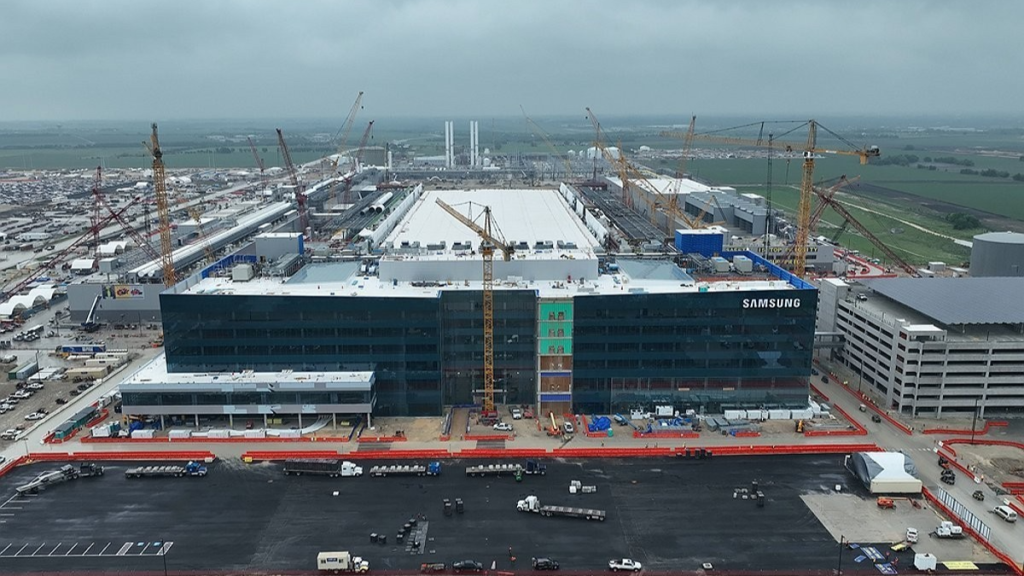
Samsung’s $17 billion semiconductor foundry in Taylor, Texas, is entering a critical phase: equipment installation and commissioning. The company’s career page reveals 183 open positions at the site as of Thursday, signaling significant progress in bringing the advanced manufacturing facility online, according to industry sources.
The available roles highlight the breadth of expertise needed for a modern semiconductor fab. They encompass core process engineering functions such as lithography, etching, deposition, and chemical-mechanical planarization (CMP), as well as crucial support roles in metrology, infrastructure safety, and fab planning. A review of the job postings suggests that Samsung began a focused recruitment drive at least two months prior, with the majority of core process engineering positions advertised over 30 days ago.
Recent job postings, including six cleanroom technician positions and six infrastructure risk prevention roles added this week, indicate preparations for the initial stages of wafer processing. This signifies a move closer to actual chip production.
Samsung anticipates directly employing approximately 1,500 individuals at the Taylor facility. This workforce will be comprised of both local hires and experienced staff transferring from Samsung’s existing Austin campus, according to industry sources. Furthermore, equipment vendors, including industry giants like ASML, Lam Research, and KLA, are expected to deploy an additional 1,500 or more engineers to manage tool installation and qualification. This influx will bring the total on-site workforce to an estimated 3,000 during the initial setup period.
The Taylor fab secured temporary certificates of occupancy for essential sections earlier this year and initiated testing of Extreme Ultraviolet (EUV) lithography equipment last month, sources reveal. Samsung has stated that the facility will focus on manufacturing chips using its advanced 2-nanometer process technology featuring gate-all-around (GAA) transistors, with an initial target output of 50,000 wafers per month.
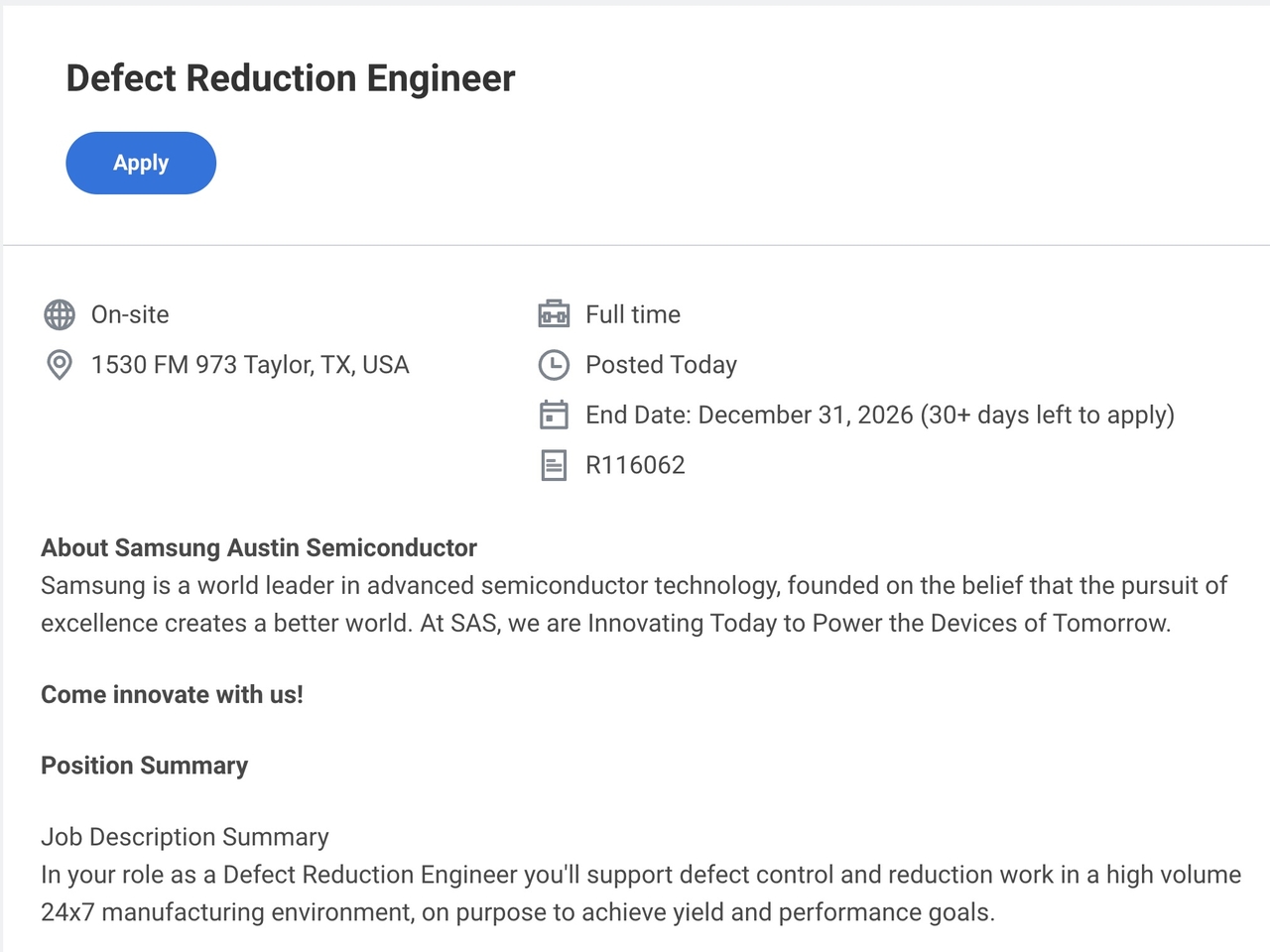
Interestingly, some job descriptions hint at a broader scope of operations than just the most cutting-edge nodes. A recently posted defect reduction engineer role lists responsibilities that encompass process nodes ranging from 45nm down to 14nm, alongside foundry customer support. This suggests the Taylor site may also handle work related to Samsung’s existing Austin operations, potentially including legacy chip production or support activities.
A capacity planning job posting also describes a “1-to-3-year” timeframe for coordinating tool installations and qualifying equipment. This timeline appears more conservative compared to Samsung’s publicly stated goals of starting trial runs this year and commencing volume production in 2027.
Samsung received a preliminary award of $6.4 billion under the US CHIPS Act in 2024 after committing to expand its investment in Texas. The company is also actively recruiting for a Director of Texas Government Relations, the highest-paying open position at the site. This role will be responsible for managing policy engagement on critical areas such as incentives, utilities, water, and energy – all essential for sustaining a large-scale fab in central Texas.
mjh