
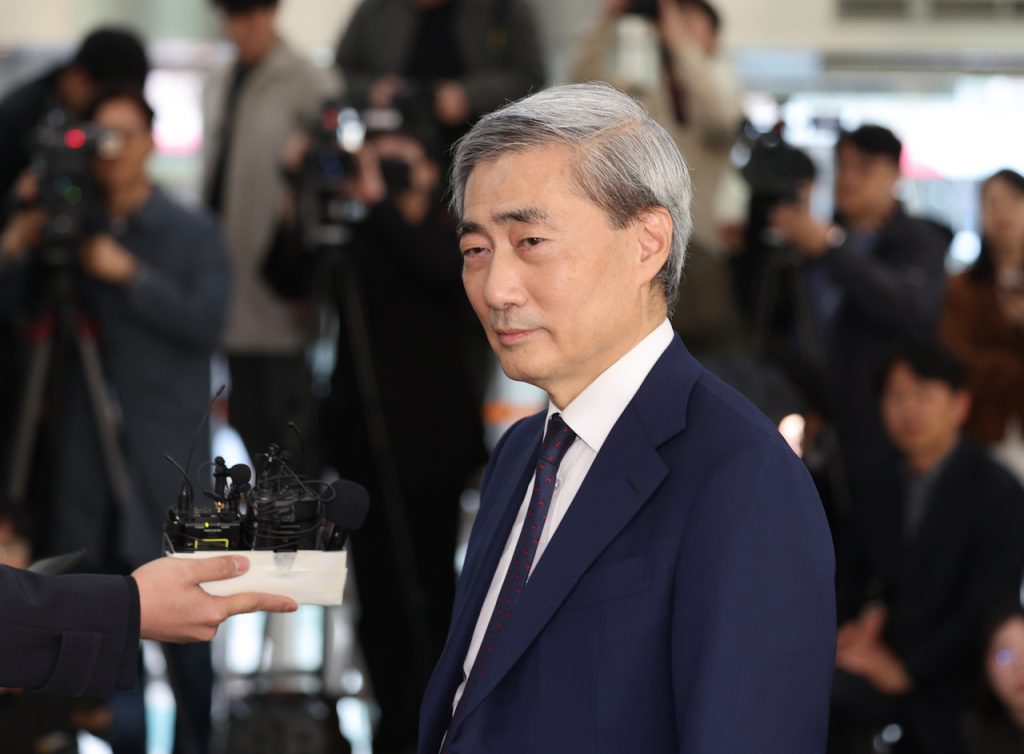
Shin Hyun-song, South Korea’s nominee for Bank of Korea (BOK) Governor, tempered concerns about a potentially aggressive shift in monetary policy on Tuesday. He emphasized the importance of adaptable responses to economic conditions over adherence to fixed policy labels.
Upon arriving at Hanwha Financial Plaza in Seoul for his confirmation hearing, Shin addressed the “pragmatic hawk” label ascribed to him, which sparked speculation about accelerated interest rate hikes by the Bank of Korea. He stated this characterization doesn’t represent his philosophy.
“I don’t think it is desirable to divide policy approaches into binary categories such as hawkish or dovish,” Shin said. “What matters is to fully understand the interaction between the financial system and the real economy, and respond flexibly depending on the situation.”
His statements follow market anticipation of a potentially more restrictive monetary policy in Korea following his nomination.
Regarding the recent weakening of the Korean won, which saw the dollar-won exchange rate exceed 1,520, Shin advised against excessive alarm. He stressed the exchange rate’s significance as a broader indicator of financial system stability rather than a specific target.
“We should not attach too much meaning to the level itself,” he said. “The exchange rate reflects how much risk the current financial system can absorb.”
Shin highlighted improvements in external vulnerabilities in recent years, citing increased foreign capital inflows and the expanded use of foreign exchange swaps. These factors have contributed to sufficient dollar liquidity within the domestic market.
“While a higher exchange rate often raises concerns about capital outflows or dollar shortages, there have been meaningful improvements,” he said, suggesting that external risks appear manageable in the current environment.
Looking forward, Shin identified geopolitical instability in the Middle East as the primary risk to the Korean economy. He pointed to rising oil prices as a key driver of inflation and a source of potential downside risks to economic growth.
“Inflation has been affected by higher oil prices, and the economy is also facing downside risks,” he said. “However, the course and duration of the conflict remain highly uncertain.”
Addressing the potential inflationary impact of a supplementary budget designed to mitigate economic consequences of the Middle East situation, Shin suggested the effect on prices would likely be limited.
“Given the difficulties faced by vulnerable sectors due to the Middle East situation, policy support is necessary,” he said. “Based on the scale and design of the supplementary budget announced so far, the impact on inflationary pressure appears limited.”
Shin’s remarks indicate a policy orientation that balances inflation concerns with the need for economic stability, while maintaining adaptability in the face of evolving global uncertainties. His confirmation hearing will provide further insights into his approach to guiding South Korea’s monetary policy.
silverstar


