
South Korea is set to implement an expansionary fiscal policy in the coming year, prioritizing a significant transformation focused on artificial intelligence, according to a government announcement made on Monday. Spending could potentially reach approximately 800 trillion won ($529 billion).
The government, under guidelines approved by the Cabinet, aims to stimulate new growth engines and increase fiscal investment in regional development, as stated by the Ministry of Planning and Budget.
The government’s fiscal management plan for the period of 2025-2029 outlines a spending target of 764.4 trillion won for the next year, marking a 5 percent increase from the 728 trillion won budget allocated in 2026.
This figure does not incorporate a supplementary budget of roughly 25 trillion won, which is currently in the planning stages.
Should expansionary fiscal policies continue alongside improvements in tax revenue, the total budget for the next year could potentially climb to around 800 trillion won.
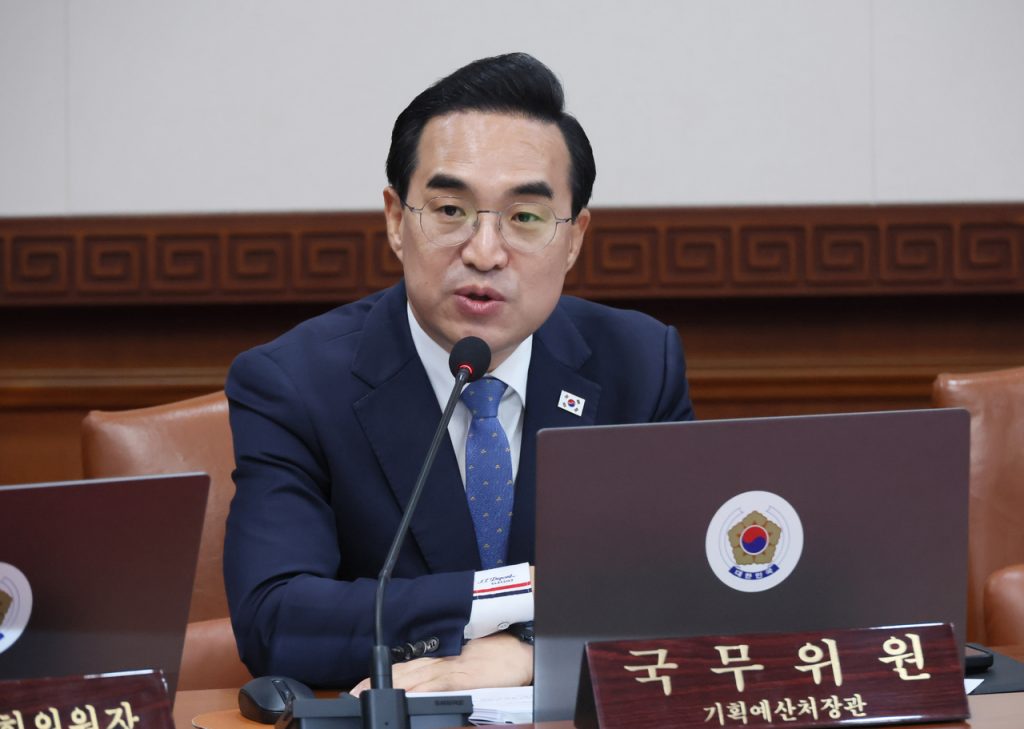
“At this point, we can confirm our commitment to active fiscal management and a sustainable expansionary fiscal policy. However, predicting the precise scale of next year’s fiscal spending remains challenging,” Cho Yong-beom, a senior ministry official, informed reporters.
Cho explained that the budget guidelines reflect a positive trend in economic recovery, fueled by stronger domestic demand and sustained export growth driven by the increasing demand for semiconductors.
However, he also highlighted ongoing structural uncertainties such as tariff policies imposed by major economies, geopolitical tensions in the Middle East, and the challenges presented by a declining population, all of which necessitate proactive policy measures.
According to these guidelines, the government intends to create a highly innovative economy capable of adapting to industrial shifts like the AI transformation, while also fostering advanced industries as catalysts for new growth.
To establish South Korea as a leading force in AI, aiming for a position among the top three global powers, the government will promote the adoption of AI technologies across all sectors of the economy.
The government also intends to expand a national growth fund and create a dedicated semiconductor account to ensure stable investment conditions within crucial sectors.
Furthermore, the government will prioritize balanced regional development, shifting away from the concentration of growth in the Seoul metropolitan area. The vision is to cultivate five major regional hubs, alongside three special self-governing provinces.
Key national universities located in these regions will be developed into centers for education and research, with the aim of nurturing talent needed by local industries and stimulating regional economies.
The guidelines also emphasize the need for increased support for vulnerable sectors in order to address widening inequality.
On the industrial front, the government plans to foster a supportive ecosystem for startups, entrepreneurs, and small business owners.
Funding will be provided to selected promising entrepreneurs, and assistance will be offered to small and medium-sized enterprises to facilitate the adoption of AI and expansion into new export markets.
For young individuals facing challenges in entering the job market, including those classified as economically inactive, the government will enhance customized education and training programs to ease their transition into the workforce.
To effectively realize these objectives, the government plans to undertake extensive spending restructuring, according to the ministry.
The aim is to reduce mandatory spending by roughly 10 percent, and discretionary spending by approximately 15 percent.


