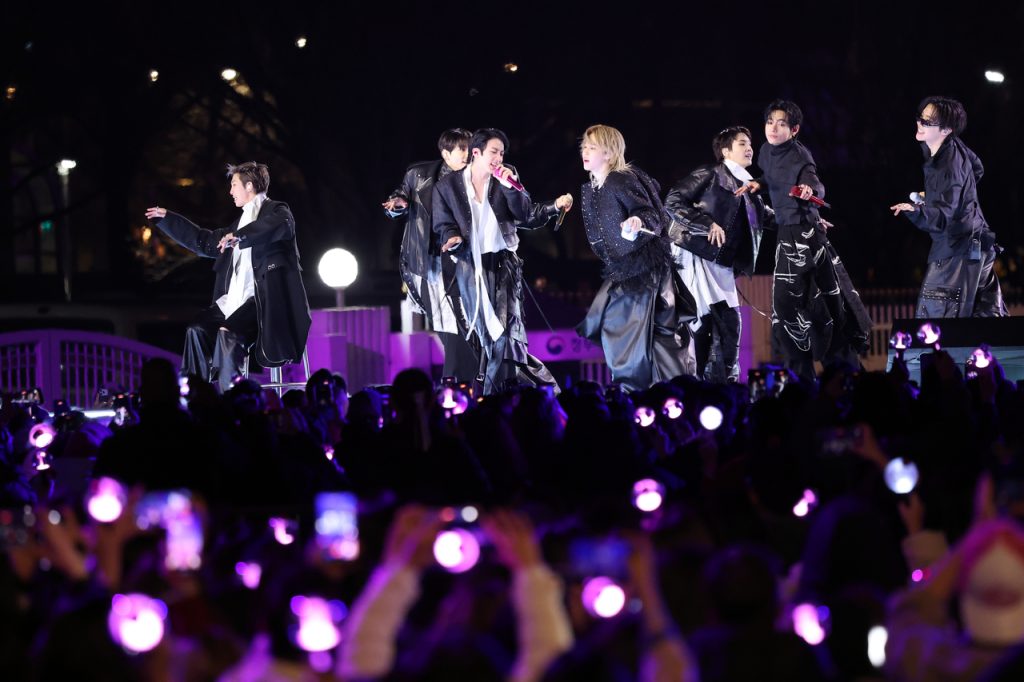
BTS’s highly anticipated comeback concert transformed Seoul’s Gwanghwamun Square into a vibrant global stage on March 21st. However, local merchants experienced a shift in spending patterns rather than a widespread retail surge over the concert weekend.
According to Hyundai Card data released on Monday, foreign card spending in the Gwanghwamun area saw a significant increase of 74 percent compared to the previous year during the Friday-to-Sunday period. Despite this influx, total spending decreased slightly by 0.53 percent, as a 1.4 percent dip in spending by Korean nationals offset the gains made by international visitors.
This downturn was particularly noticeable on the day of the concert. Spending on Saturday plummeted by 38 percent, totaling 66.2 million won ($44,000), a considerable drop from the 105.9 million won recorded the previous year. Spending rebounded by 37 percent on Sunday and showed a modest increase of 6.5 percent on Friday.
The concert also influenced consumer behavior. Pharmacies, frequently visited by international tourists, witnessed a remarkable surge in sales, more than doubling to 8.56 million won over the three-day period. Convenience store spending also rose by 27 percent, reaching 30.3 million won. Conversely, restaurant spending declined by 4.3 percent overall, with a sharp 41 percent decrease on the concert day, suggesting a preference for quick and convenient purchases over traditional dining experiences.
Analysis of spending by age group revealed a similar trend. Cardholders in their 20s and 30s increased spending by 13 percent and 3 percent, respectively, while spending by those in their 40s remained relatively stable. However, cardholders aged 50 and older reduced their spending by approximately 8 percent.
These spending patterns align with the weekend’s attendance figures. Despite the hype surrounding a potential economic boom driven by the globally recognized K-pop group, the BTS concert attracted approximately 100,000 attendees, significantly less than the 260,000 anticipated by authorities. Stringent crowd control measures implemented on the concert day, including extended subway operating hours, were cited as contributing factors to the shortfall in expected spending.
“While overall spending was impacted by comprehensive safety protocols on the concert day, the data indicates that such events effectively stimulate spending among international visitors and younger demographics,” stated an industry representative.
jwc