
KB Financial Group shareholders have approved a significant capital reserve reduction of 7.5 trillion won ($5 billion), paving the way for increased tax-free shareholder payouts.
This strategic move will transfer the designated amount to retained earnings, enabling future distributions from the reclassified capital to be exempt from the 15.4 percent dividend income tax, directly benefiting shareholders.
The annual shareholder meeting also saw the approval of amendments to KB Financial Group’s articles of incorporation, aligning them with recent revisions to the Commercial Act. These changes broaden the fiduciary duty of directors to explicitly include the interests of shareholders, moving beyond solely prioritizing the company.
A key addition to the articles mandates directors to protect the interests of all shareholders and ensure equitable treatment across their responsibilities.
During the meeting, shareholders voted to appoint Seo Jeong-ho, a seasoned lawyer from Seoul-based The Wiz, as a new outside director. Seo brings extensive experience in internal control, tax matters, and a comprehensive understanding of the financial industry to the board. Additionally, four incumbent outside directors were successfully reappointed.
The proposal concerning directors’ compensation was also approved, maintaining the annual compensation cap for all directors at 3 billion won. Similarly, the limit on long-term incentives, to be granted as treasury shares or their cash equivalent, remained unchanged at 30,000 shares.
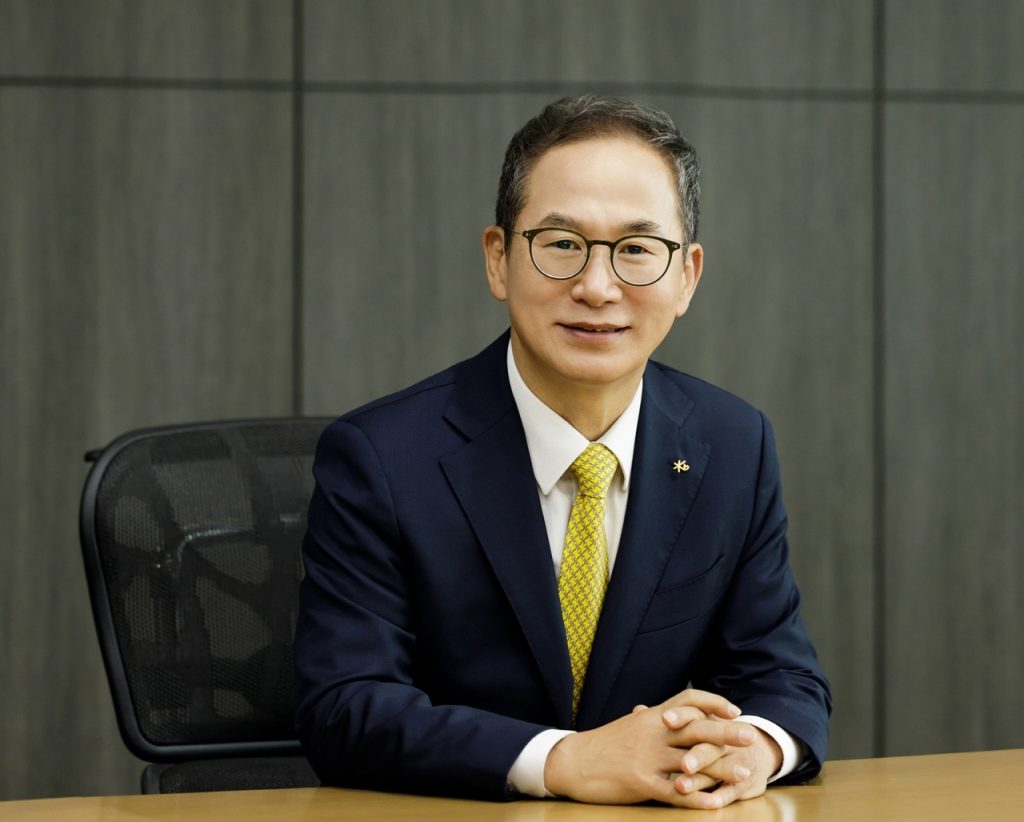
In his address to shareholders, Chairman Yang Jong-hee highlighted trust as the cornerstone of competitive advantage for financial institutions in an increasingly volatile market.
“As uncertainty intensifies, trust becomes the ultimate differentiator in the financial sector,” Yang stated.
He further emphasized KB’s commitment to strengthening responsible management across various critical areas, including consumer protection, robust internal controls, stringent information security, and a dedication to creating social value. These efforts will be complemented by continued performance improvements through strategic transformation and expansion initiatives.
Yang also addressed the structural shifts occurring within the financial industry, largely driven by the accelerating pace of digital transformation and evolving customer behavior.
“The increasing fluidity of money movement is eroding the stability of traditional profit models, while a new competitive landscape, centered on non-face-to-face and platform-based services, is rapidly emerging,” he concluded.
jwc


