
Samsung Electronics Eyes Multiyear AI Chip Supply Deals with Record Investment
Samsung Electronics has announced a record investment of 110 trillion won ($73.5 billion) in facilities and research for 2026, signaling a strategic move to secure long-term supply agreements with key AI chip customers. This plan was unveiled as part of the company’s corporate value-up strategy on Thursday.
The investment marks a significant 21.7 percent increase compared to 2025 and represents the first time Samsung’s annual spending has surpassed the 100 trillion won milestone. This allocation is the largest single-year commitment within Samsung’s previously announced five-year, 450 trillion-won investment roadmap.
The majority of this massive investment will be directed toward the Device Solutions division, encompassing Samsung’s core semiconductor operations.
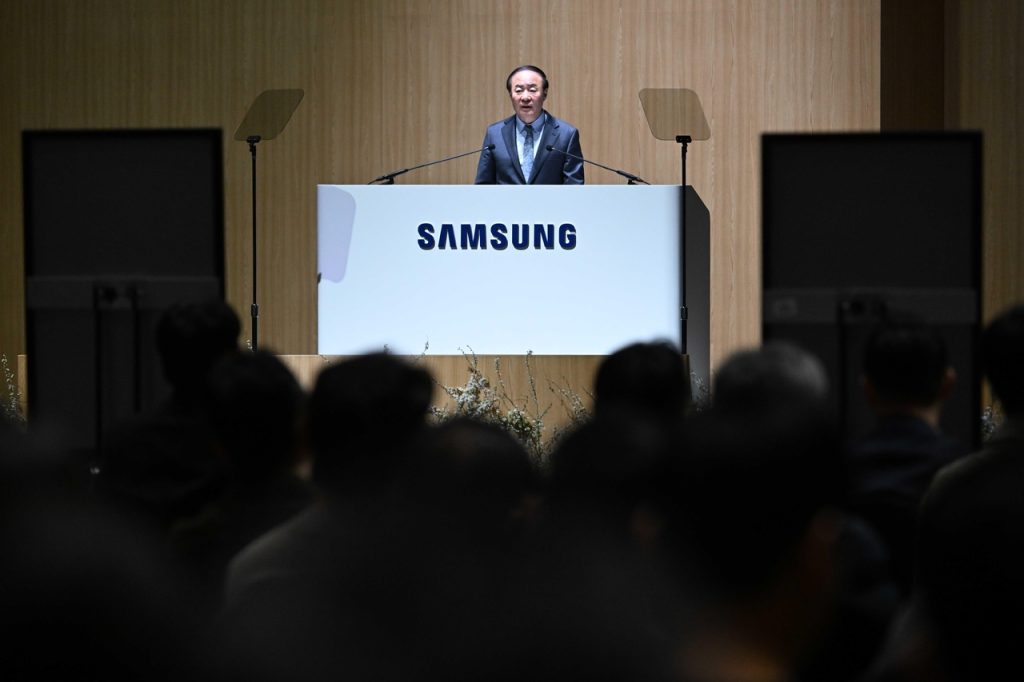
During Samsung’s annual general meeting held on Wednesday, Vice Chairman Jun Young-hyun emphasized the company’s shift toward establishing three- to five-year supply contracts for its memory business, replacing the more traditional quarterly and annual arrangements prevalent in the industry.
“Transitioning to multiyear contracts will provide both our customers and Samsung with enhanced business stability and predictability,” Jun stated to shareholders. He further explained that these agreements would enable Samsung to better anticipate demand fluctuations and adjust investment levels with greater flexibility.
This strategic shift necessitates a corresponding increase in production capacity, driving the need for the record investment.
Expanding Capacity to Support Long-Term Contracts
Samsung is expediting construction at its Pyeongtaek campus in Gyeonggi Province, accelerating timelines for the P4 fab and installing essential equipment for the P5 facility. A new plant is also actively under construction at the Yongin cluster.
In Taylor, Texas, the company’s foundry fab, designed to produce 2-nanometer processes, is targeting commercial production by the end of the year. This follows previous delays that pushed the initial 2024 target back by two years. Reports indicate that Tesla’s next-generation AI chips, under a reported $16.5 billion deal (according to Reuters), are scheduled for manufacturing at the Taylor facility beginning in 2027.
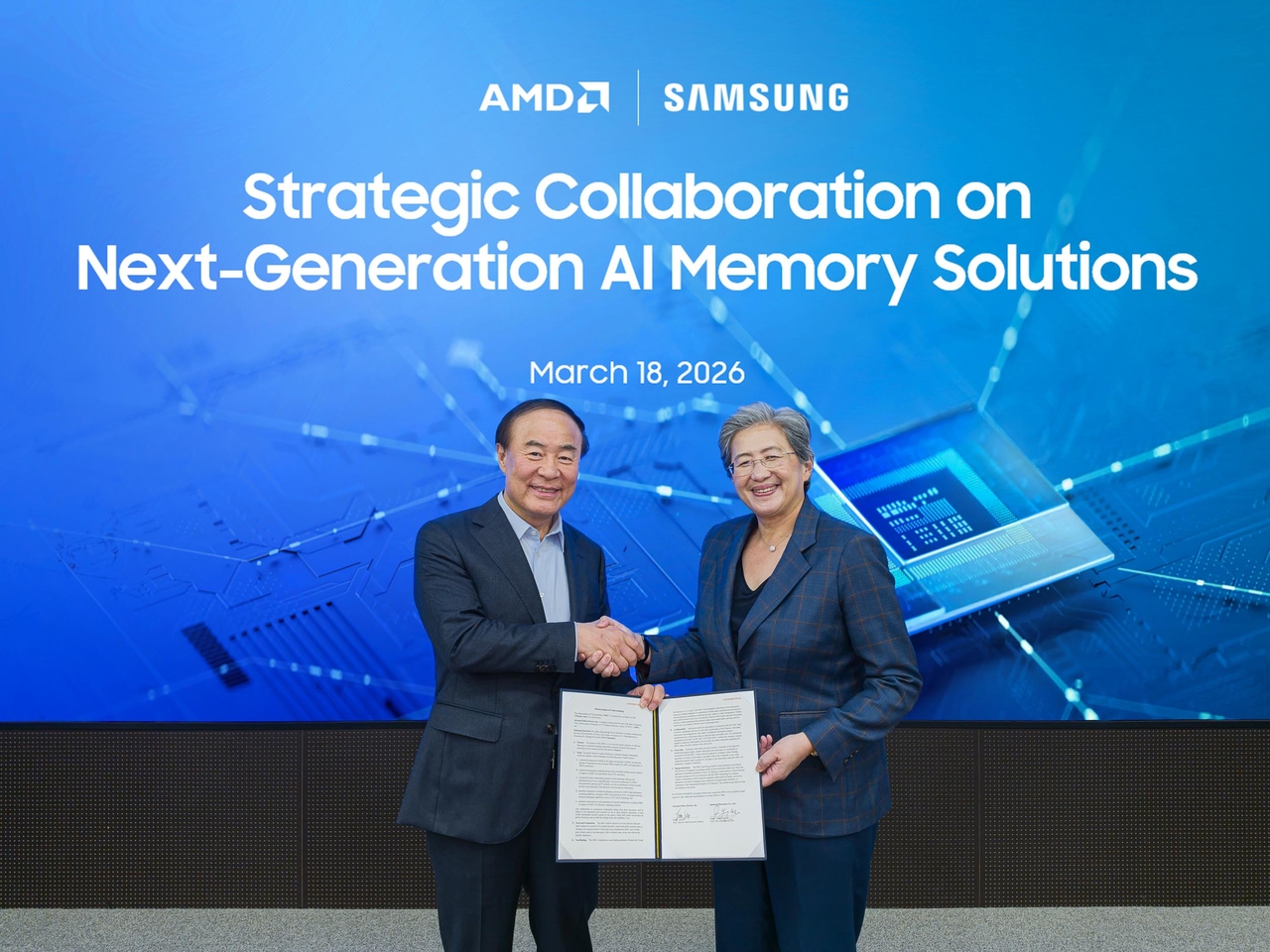
On the memory front, Samsung commenced mass production of its sixth-generation high-bandwidth memory, HBM4, in February, establishing itself as the first chipmaker to ship the product. Since then, Samsung has joined Nvidia’s HBM4 supply chain and solidified an agreement with AMD on Wednesday, designating Samsung as a preferred HBM4 supplier for AMD’s next-generation data center GPUs.
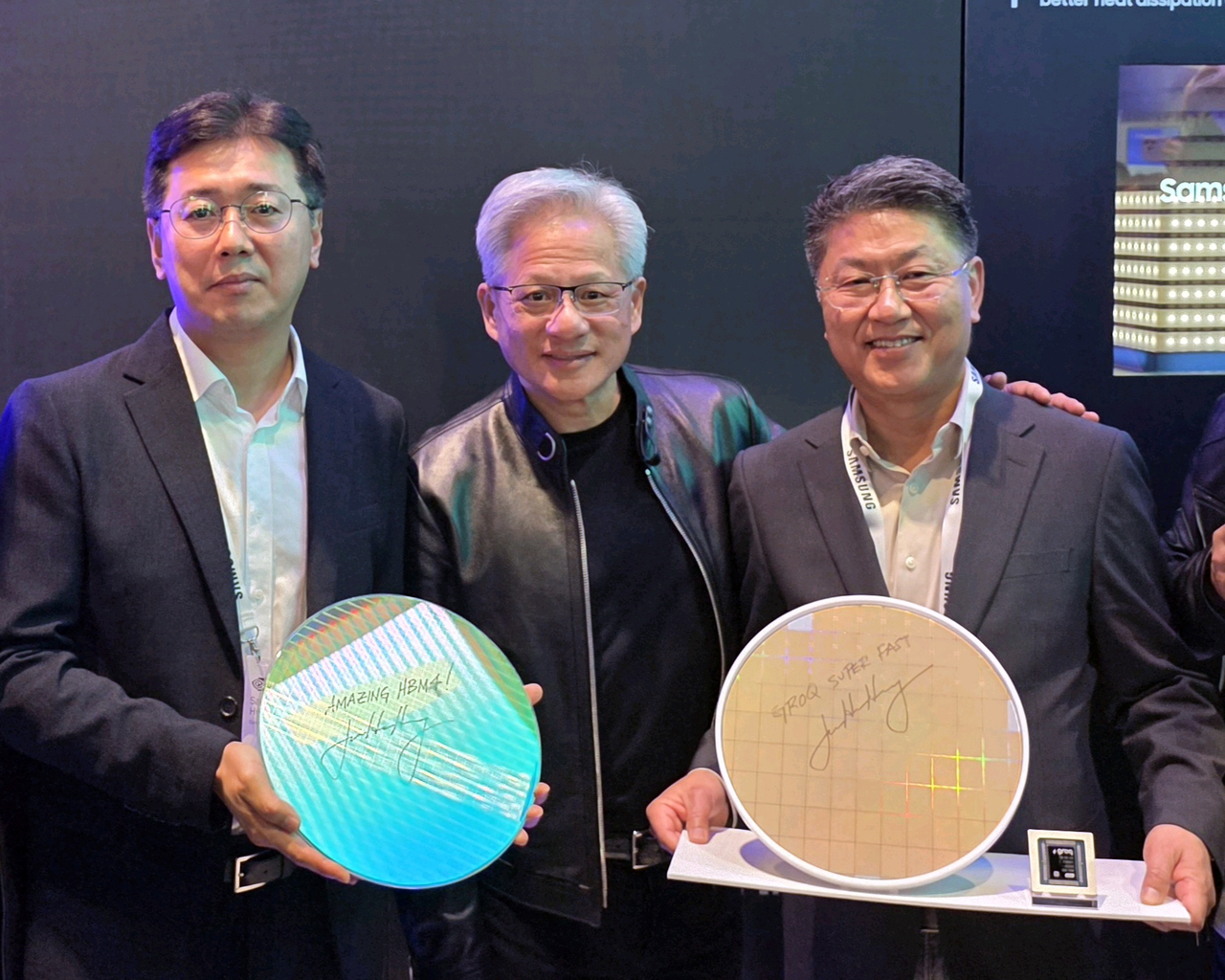
During Nvidia’s GTC 2026 conference, Samsung also showcased its seventh-generation HBM4E, with sample shipments planned for the second half of this year.
Foundry Business Gains Traction
Samsung’s foundry business is experiencing renewed momentum, driven by recent high-profile customer acquisitions. However, this growth stems from a previously diminished market share. According to Counterpoint Research, Samsung’s share of the pure-play foundry market decreased from 10 percent in the second quarter of 2024 to 7 percent in the fourth quarter of 2025.
(Samsung Electronics)
Recent developments suggest a potential turning point. Nvidia CEO Jensen Huang confirmed at GTC on Monday that Samsung is manufacturing the Groq 3 language processing unit on its 4-nanometer process for Nvidia’s next-generation AI platform. “We’re ramping production as fast as possible. Thank you, Samsung,” Huang stated.
Han Jin-man, head of Samsung’s foundry unit, described the company’s Tesla chip contract as “a strategic and future-oriented partnership.” He also informed shareholders that Samsung’s 2nm process would serve as the foundation for the Taylor fab’s output. However, he acknowledged that significant profitability gains for the division are still one to two years away.
Beyond its semiconductor investments, Samsung also plans to pursue acquisitions in areas such as advanced robotics, medtech, automotive electronics, and HVAC systems. The company further stated that any remaining funds, representing 50 percent of its 2024-2026 free cash flow after prior payouts and this year’s 9.8 trillion-won regular dividend, will be returned to shareholders.
mjh


