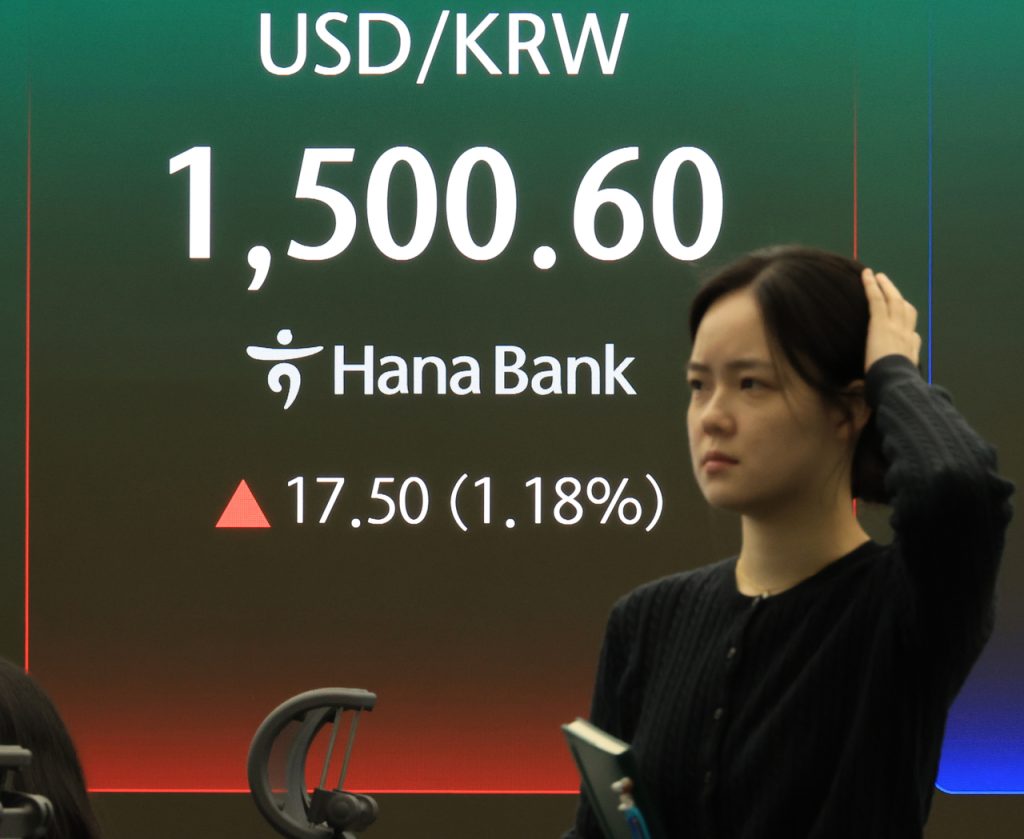
The South Korean won (KRW) experienced a significant drop against the US dollar (USD) on Thursday, surpassing the 1,500 won level. This decline was largely attributed to surging global oil prices fueled by escalating tensions in the Middle East.
The won opened trading at 1,505 KRW per USD, a decrease of 21.9 won compared to the previous day’s close, breaking through the key psychological and technical barrier of 1,500 won.
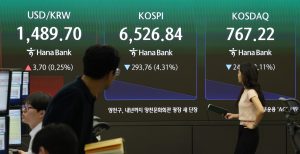
Earlier in the week, on Monday, the won briefly touched this level during intraday trading, marking the first instance since March 2009. This initial dip was triggered by rising global oil prices, the ongoing Middle East crisis, and growing concerns about potential supply disruptions.
The weakness in the won’s value coincided with a more than 5% surge in global oil prices on Wednesday (U.S. time). This spike followed reports of an alleged Israeli attack on natural gas facilities linked to Iran’s South Pars field, the world’s largest gas field.
In response to the alleged attack, Iran’s Revolutionary Guard issued a threat to target oil and gas facilities in Qatar, Saudi Arabia, and the United Arab Emirates. These threats have intensified fears of further disruptions to energy supplies, according to various foreign media outlets.
Hawkish comments from Federal Reserve Chair Jerome Powell concerning the situation in Iran have further contributed to the pressure on the Korean won.
During a press conference held after the decision to maintain the benchmark interest rate on Wednesday (US time), Powell indicated that the surge in oil prices has heightened inflationary pressures, suggesting a cautious approach to future rate cuts.
The Federal Reserve decided to hold the interest rate steady within the 3.5-3.75 percent range for the second consecutive time, while reaffirming its projection of a single rate cut this year.
The US Dollar Index (DXY), which measures the dollar’s strength against a basket of six major currencies, has risen significantly, climbing well above the 100 level.