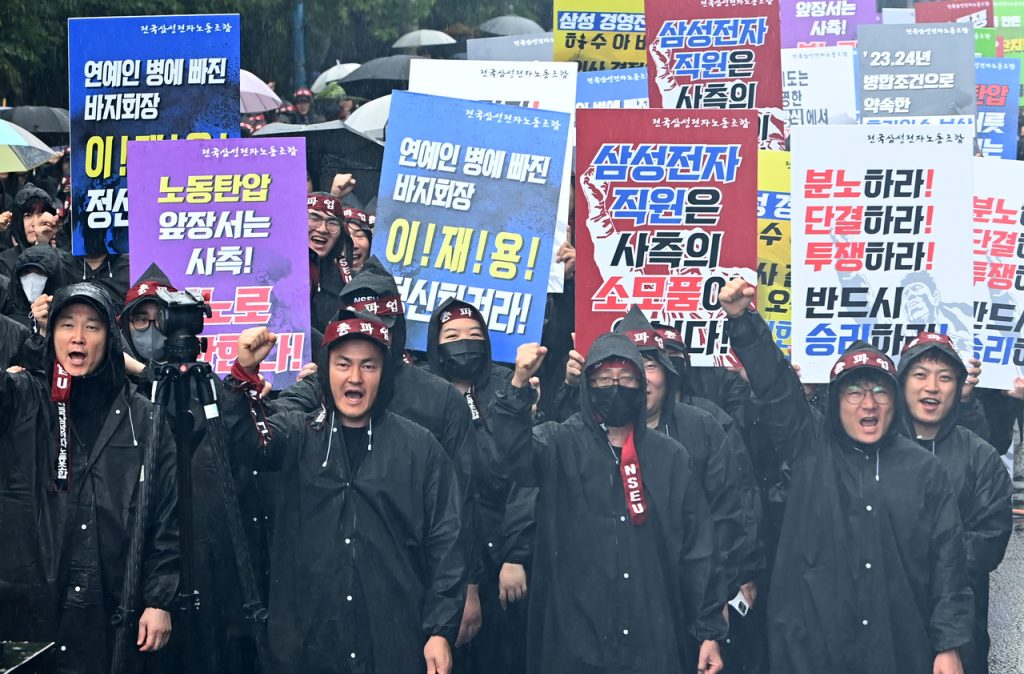
Samsung Electronics’ labor unions are preparing for a general strike in May, potentially the second in the company’s history and the first in almost two years. This action follows a breakdown in wage negotiations and demands for a fairer compensation system.
A coalition of labor unions announced on Wednesday that they had secured the legal right to strike, with 93.1 percent of participating members voting in favor of the walkout.
This coalition, known as the Joint Struggle Headquarters, comprises three key unions: the Samsung Group United Union Samsung Electronics Co. Union, the National Samsung Electronics Union, and the Samsung Electronics Co. Union.
The largest of the three, the Samsung Group United Union Samsung Electronics Company Union, boasts a membership of over 60,000 employees.
The vote saw a significant turnout, with 73.5 percent of eligible members participating. Specifically, 66,019 of approximately 90,000 eligible members cast their ballots, with 61,456 voting in support of the strike.
The strike vote was triggered after mediation efforts under the National Labor Relations Commission failed to produce a resolution. The commission had previously suspended arbitration, paving the way for the unions to proceed with a strike.
The unions have scheduled a large-scale rally for April 23, aiming to build momentum leading into the May strike. Their demands center on normalized bonus payments and a more equitable compensation structure.
The core of the dispute revolves around compensation. Key demands for the 2026 wage discussions include increased transparency in performance-based bonuses, the elimination of caps on bonus payouts, and a 7 percent increase in base salaries.
If the strike proceeds, it would mark only the second instance of such action at Samsung Electronics since its founding in 1969, with the previous strike occurring in July 2024.
Negotiations had been ongoing for more than three months following the formation of a joint bargaining group in November. However, the parties failed to reach common ground, leading the unions to declare an impasse on Feb. 19 and subsequently seek mediation.
This mediation effort also proved unsuccessful. Following the National Labor Relations Commission’s decision to halt mediation on March 3, the unions reorganized under the Joint Struggle Headquarters and initiated the process to secure a strike mandate.
Samsung Electronics has responded with a revised bonus framework designed to address concerns about transparency. The proposal offers employees a choice between basing the operating profit incentive pool on 20 percent of economic value added or 10 percent of operating profit.
The tech giant has also proposed a 6.2 percent wage increase, the allocation of 20 shares of treasury stock, higher salary caps based on employee rank, and expanded long-service leave benefits.
Specifically, within its device solutions division, which encompasses the semiconductor business, Samsung has offered an additional incentive of up to 100 percent of operating profit incentive if the division’s operating profit reaches 100 trillion won ($67 billion).
However, the unions have remained firm in their demand to remove the upper limit on operating profit incentive payouts, even while demonstrating some willingness to compromise on base wage increases. Management has resisted this demand, arguing that eliminating the cap could exacerbate disparities across different business units and foster resentment in divisions with weaker performance.
With neither side willing to concede on this key point, negotiations ultimately collapsed, setting the stage for a potential full-scale strike at Samsung Electronics.
yeeun