Strong AI Demand Boosts Memory Outlook for Samsung, but Tariffs and Device Costs Pose Risks
SUWON, Gyeonggi Province — Samsung Electronics’ annual shareholders meeting opened to applause on Wednesday, a stark contrast to last year’s tense atmosphere. Investors returned in high spirits, buoyed by the stock’s significant rebound, record annual revenue, and an enhanced dividend plan.
The company’s 57th annual general meeting, held at the Suwon Convention Center, highlighted the dramatic shift from 2025. Just a year prior, frustration permeated the room, fueled by a stagnant share price around 50,000 won ($33.65) and concerns about Samsung’s semiconductor competitiveness.
This year, a more optimistic tone prevailed as the stock price surged into the 200,000 won range during the meeting itself.
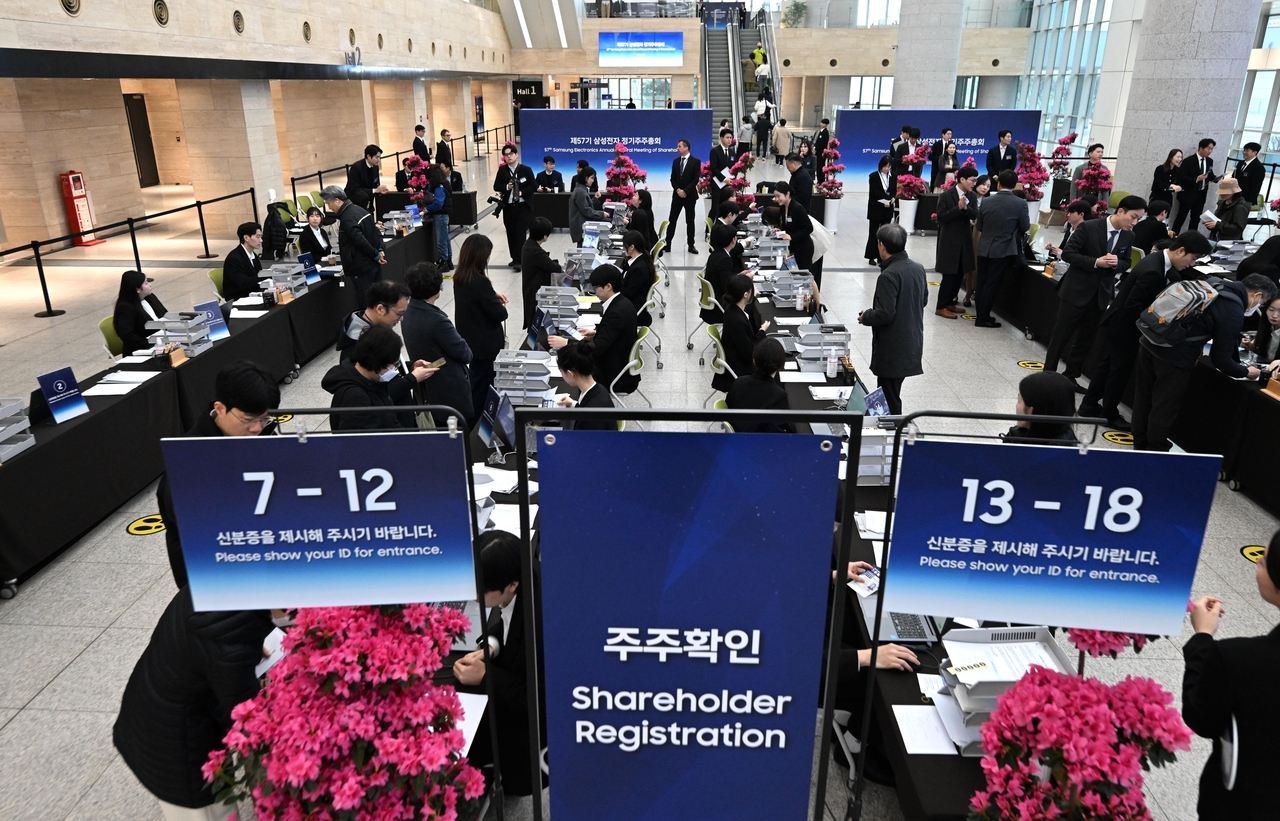
“Last year, I was so upset about the low share price that I couldn’t sleep before coming,” one shareholder remarked at the event. “This year, I was too excited to sleep.”
As South Korea’s largest listed company and a popular choice among retail investors, Samsung Electronics’ shareholder meeting often serves as a barometer for broader market sentiment.
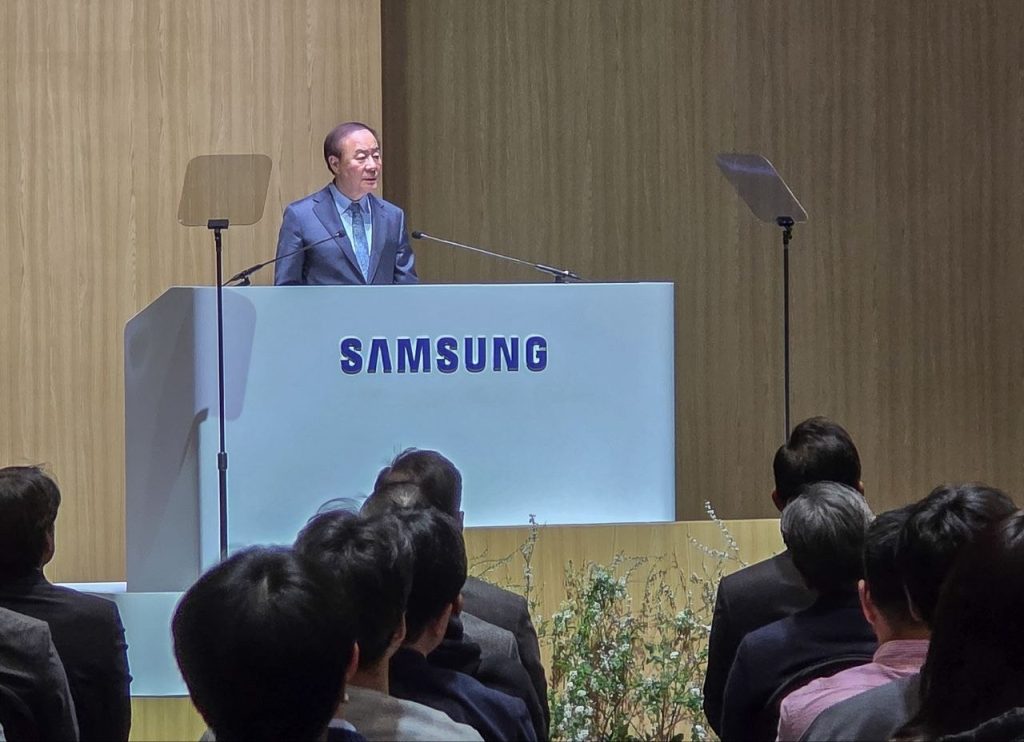
Vice Chairman Jun Young-hyun, who presided over the meeting, opened by acknowledging shareholders with a bow and expressing gratitude for their support amidst a challenging business landscape.
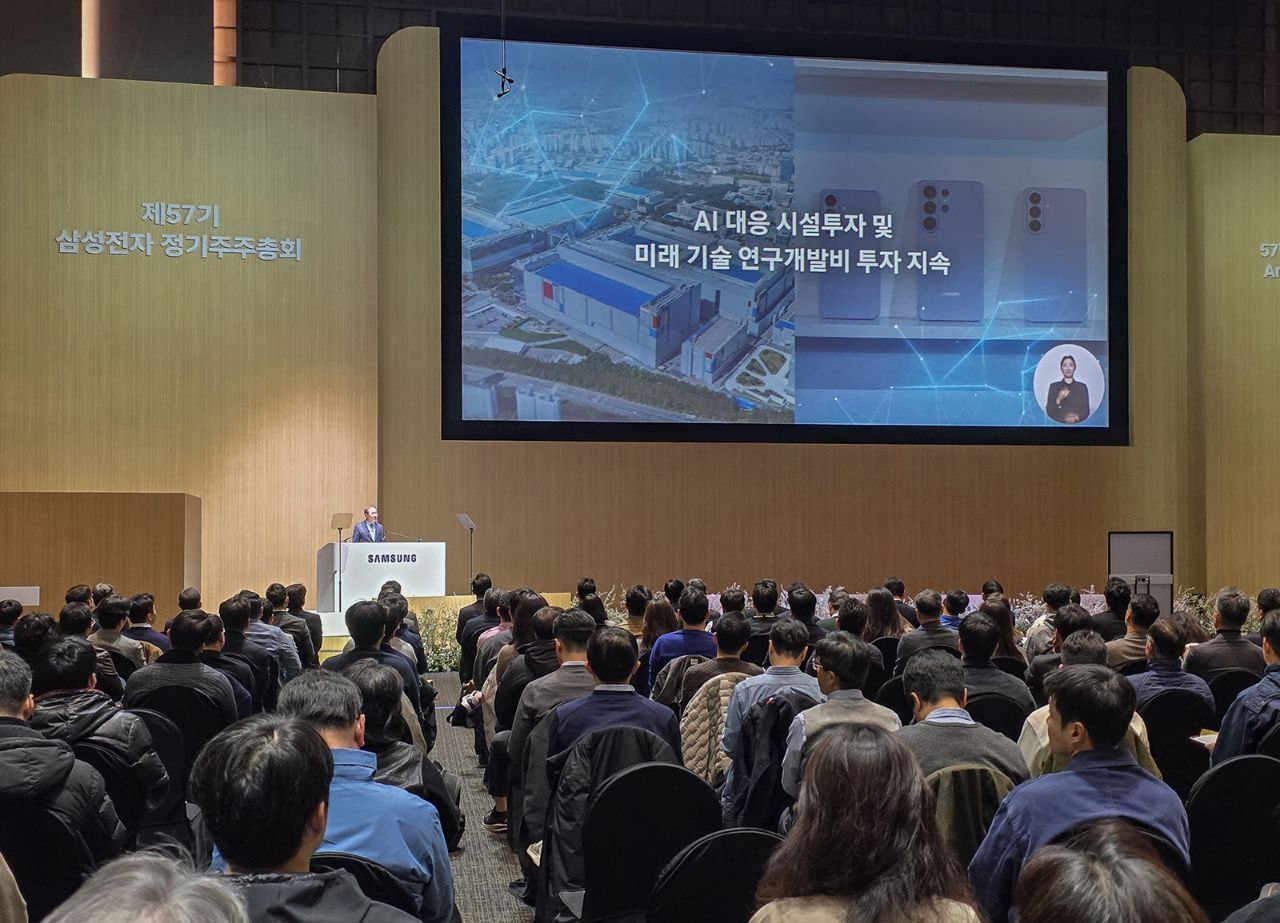
“Thanks to shareholders’ unwavering confidence, we achieved record sales of 333.6 trillion won in 2025,” Jun stated. He also highlighted Samsung’s milestone of becoming the first South Korean company to surpass 1,000 trillion won in market capitalization.
The announcement of Samsung’s shareholder return plan drew the most enthusiastic response from the attendees.
The company revealed its plan to distribute 9.8 trillion won in regular annual dividends for 2025, in addition to a special dividend of 1.3 trillion won, with payments scheduled for April 17. Management also suggested the possibility of further expanding shareholder returns should earnings significantly improve this year.
This commitment resonated strongly with investors, not only due to the substantial payout but also because 2026 marks the conclusion of Samsung’s current three-year shareholder return policy. Several shareholders inquired about future plans, prompting Jun to indicate that the company intends to accelerate shareholder returns through a combination of increased dividends and treasury share cancellations.
Confidence Restored: Expectations Resurface
However, the meeting was not solely a celebratory occasion. Some shareholders seized the opportunity during the Q&A session to question management about the sustainability of the earnings recovery, Samsung’s strategy for retaining semiconductor talent amidst global competition, and potential weakening of board oversight following the departure of outside director Yoo Myung-hee, which reduced the board’s size from nine to eight members.
Jun acknowledged that Samsung’s semiconductor compensation had occasionally become less competitive due to lower performance-linked bonuses during a period of weaker business performance. He assured shareholders that this gap was narrowing as product competitiveness recovered and incentive payments increased.
Regarding business conditions, Jun stated that Samsung’s performance had significantly improved since the second half of last year, with strong artificial intelligence demand potentially supporting a favorable memory market, potentially including tighter supply. He also identified US tariff issues and cost pressures in Samsung’s device businesses as key risks.
“We will do our best to deliver solid results by strengthening technology competitiveness and managing risks,” he affirmed.
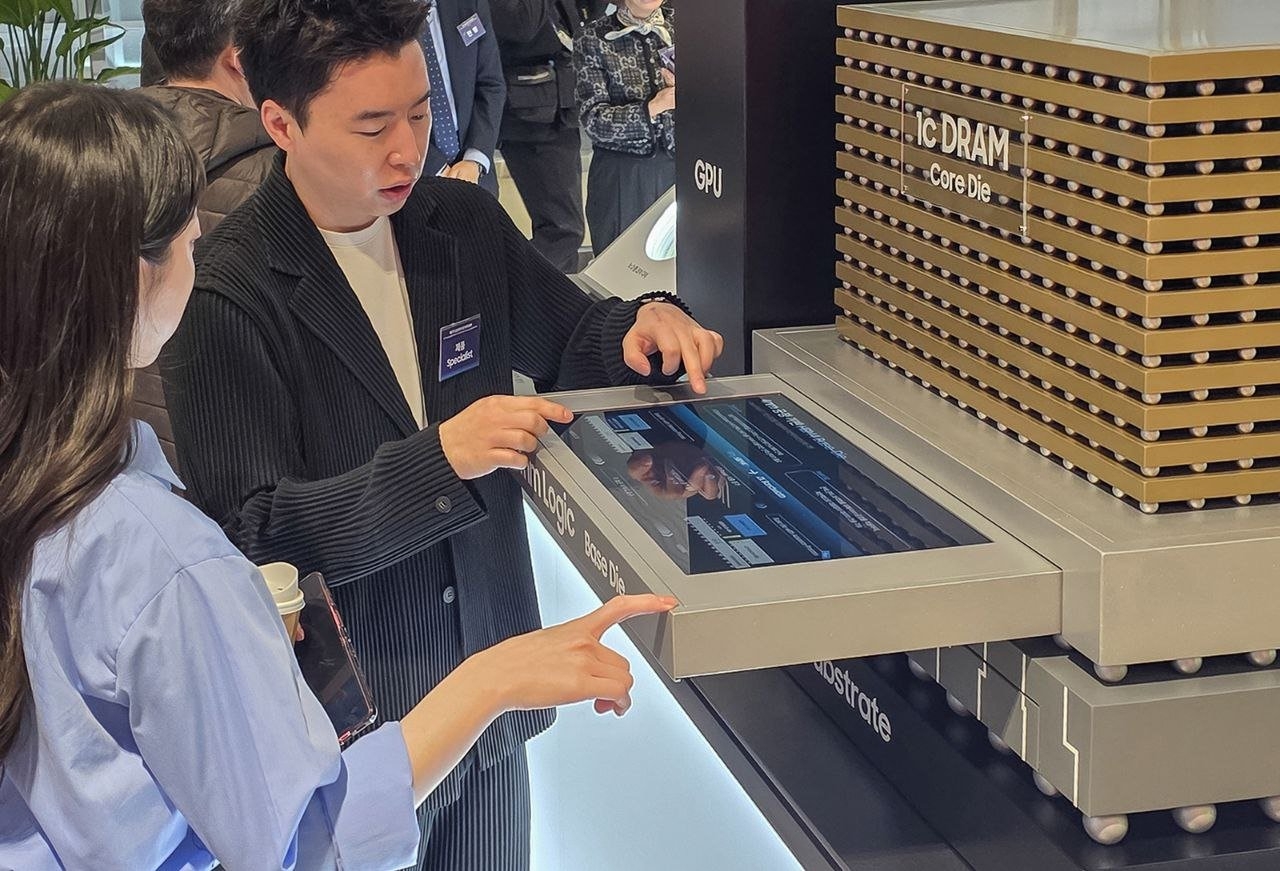
Samsung also utilized the meeting to reinforce its focus on AI. The company announced that its Device Solutions division would enhance its competitiveness in high-value products such as HBM4 (high bandwidth memory used in AI chips), while strengthening its capabilities across memory, foundry, logic, and advanced packaging. The Device eXperience division outlined plans to deepen AI integration across smartphones, televisions, home appliances, and other devices.
mjh