
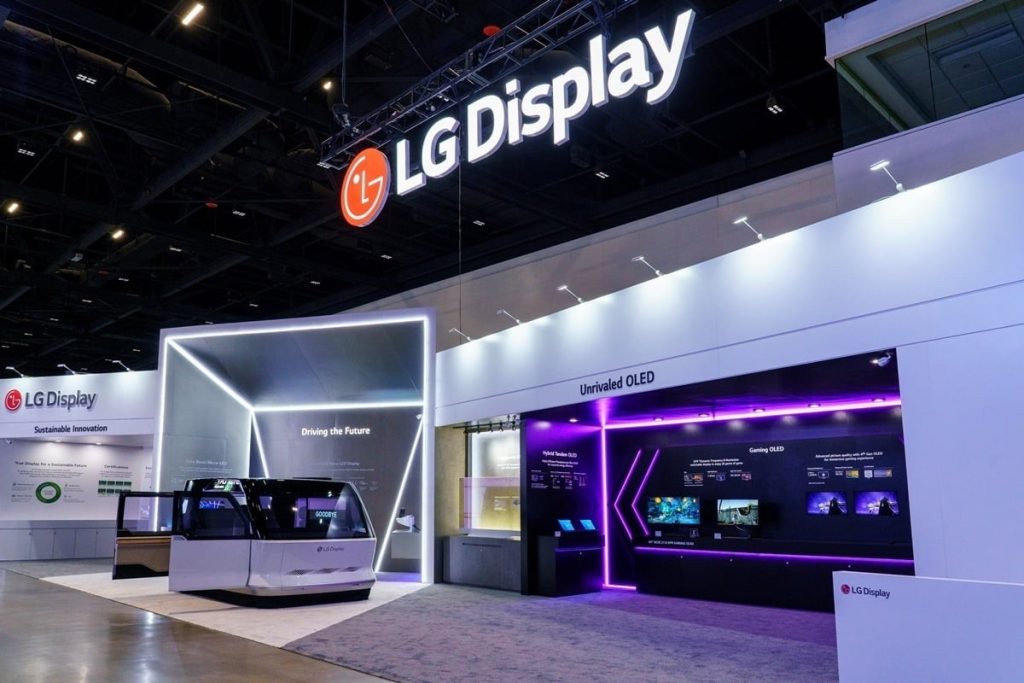
LG Display is set to significantly increase its capital expenditure in 2026, projecting a range of mid- to upper-2 trillion won. This represents a substantial increase of over 1 trillion won compared to the 1.4 trillion won ($947.1 million) invested in 2025, signaling a strategic push towards OLED technology.
According to its 2025 annual report, filed on Wednesday, LG Display’s 2025 investments of 1.4 trillion won were directed towards expanding production capacity for differentiated products, with a focus on organic light-emitting diode (OLED) panels.
The company forecasts a rise in capital spending for 2026, reaching the mid- to upper-2 trillion won range.
This updated guidance builds upon the initial announcement made in January, which indicated that this year’s capital expenditure would increase from the mid-1 trillion won level in 2025 to the “2 trillion won range.”
This ambitious investment plan underscores LG Display’s intensified focus on OLED technology following a period of restructuring. In 2025, the company reported revenues of 25.8 trillion won and an operating profit of 517 billion won, marking a return to annual profitability after four years. Notably, OLED products accounted for a record 61 percent of annual sales, highlighting the increasing importance of this technology to LG Display’s business.
A portion of the 2026 capital expenditure is allocated to a previously announced 1.26 trillion won investment program, revealed in June 2025. This program aims to upgrade OLED production infrastructure through June 2027. Approximately 700 billion won of this investment is earmarked for LG Display’s Paju complex in South Korea, while around 560 billion won will be allocated to its module plant in Vietnam.
LG Display has stated that this investment is designed to strengthen its OLED technology competitiveness, prepare for future growth, and maintain a selective approach towards new large-scale projects.
During the January earnings call, Chief Financial Officer Kim Seong-hyun emphasized LG Display’s cautious stance regarding investments in a separate 8.6-generation IT OLED line. He cited uncertainties surrounding customer demand and the volatile broader business environment as reasons for delaying a firm commitment.
This cautious approach contrasts with that of Samsung Display, which, according to industry reports, is preparing to commence mass production on its pioneering 8.6-generation IT OLED line in May.
mjh


