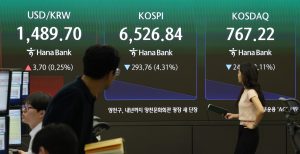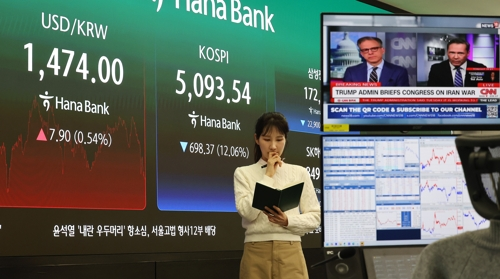
Amid escalating geopolitical tensions in the Middle East, the Korean won’s daily volatility against the US dollar has surged to levels not seen since the peak of the COVID-19 pandemic, according to recent data released on Sunday.
Following the US-Israeli joint strikes on Iran on February 28th, the won has experienced significant fluctuations. The average daily fluctuation of the Korean won against the US dollar reached 13.2 won as of Friday, based on the Bank of Korea’s economic statistics system.
This level of volatility represents the highest point since March 2020, when it reached 13.8 won as global financial markets grappled with the uncertainty of the COVID-19 pandemic.
The current volatility also exceeds the 9.7 won recorded in April 2025, a period marked by former US President Donald Trump’s threats to impose widespread tariffs on foreign imports, which he referred to as “Liberation Day.”
According to Infomax, the financial data arm of News Agency, the Korean won has been among the worst-performing currencies, depreciating by 2.81 percent against the US dollar this month alone.
This decline surpasses the performance of other major currencies, including the euro (1.69 percent), the Australian dollar (1.24 percent), and the Japanese yen (1.21 percent).
Market analysts attribute the increased volatility to South Korea’s substantial dependence on energy imports and its export-oriented economy.