

As AI Tools Dominate Knowledge Search, Naver Transforms Shopping into its New Gateway
These days, typing “sofa” into Naver’s shopping app yields a different experience.
Instead of a traditional grid of product listings, an intelligent AI agent initiates a conversation, asking relevant questions such as: “Do you live alone?” and “Do you have pets?” It intelligently analyzes browsing patterns, identifies potential pet ownership, and subsequently recommends waterproof and scratch-resistant materials. The agent then proposes a specific product, like a three-seat Aquatex sofa from Carrem Furniture, offered at a 41 percent discount for 347,000 won ($235) and boasting a 4.74-star rating.

Users can even request brand comparisons, and the AI instantly generates a comprehensive specification table.
This innovative feature is Naver’s Shopping AI Agent 1.0, currently in its beta phase since its launch last week. While it may seem like just another AI integration, it underscores a more significant strategic play within a market where Google’s dominance has been limited. The core question is: Can a local platform effectively leverage its existing ecosystem to maintain a competitive edge in the era of generative AI search?
Search Decline, Growth Maintained
South Korea’s internet landscape has historically presented a unique case on the global stage. Naver’s search engine market share once peaked at 78 percent in 2015. Although this dominance has diminished over time, it still held a significant 62 percent share in 2025, according to government data.
The emergence of generative AI tools such as ChatGPT in late 2022 led many analysts to predict a rapid decline in Naver’s position. However, contrary to these expectations, Naver has consistently reported record-breaking financial results, largely due to its strategic shift away from relying solely on search as its primary business.
“Naver is synonymous with search, but its ambitions extend far beyond that,” explained Kim Do-yoon, an assistant professor of business at Yonsei University. He noted that over the past decade, the company has successfully integrated itself into users’ daily lives through a diverse range of commerce, payment, and content services.
These strategic moves are reflected in the company’s financial performance. In 2025, Naver reported a record revenue of 12.04 trillion won ($8.76 billion), representing a 12.1 percent year-on-year increase. Commerce revenue alone saw a substantial rise of 26.2 percent, reaching 3.69 trillion won.
“The most common misconception is that a decline in search share inevitably translates to a decline in advertising revenue,” stated Lee Ji-eun, a researcher at Daishin Securities. She pointed out that the decrease in search share is primarily concentrated in desktop-based informational searches. “Mobile lifestyle searches, such as those related to restaurants, shopping, and local services, have remained stable or even experienced growth.”
Leading Where Search is Slowing
Despite overall growth, the search business shows subtle signs of stagnation.
OpenSurvey panel data from December indicates a decline in Naver’s primary usage rate, dropping from 49.1 percent to 46.0 percent in just nine months. Furthermore, the percentage of users ranking Naver among their top three search services experienced an even steeper decline, falling by 5.4 percentage points.
This trend is significant. “Users who previously considered Naver as a secondary or tertiary option are abandoning the platform more quickly,” Kim explained, drawing parallels to the decline of Yahoo Japan.
Concurrently, generative AI services are gaining rapid adoption. ChatGPT usage surged from 39.6 percent to 54.5 percent during the same period.
Category-level data further elucidates this dynamic. The fastest-growing search categories, namely knowledge acquisition and work-related queries, are precisely those where AI tools are making inroads. Conversely, Naver’s dominance persists in areas such as local searches and shopping, which exhibit relatively stable or declining search demand.
In essence, Naver’s strengths lie in segments of the search market that are no longer experiencing significant growth.
This understanding underscores the company’s current strategy: intensifying its focus on AI-powered commerce.
Naver’s commerce ecosystem boasts exceptional depth.
Its Smart Store platform accommodates over 600,000 merchants. Naver Pay connects with a vast network of 1.6 million online partners. The Plus membership program further solidifies user engagement by offering cashback rewards and bundled services.
For AI models trained on specific domains, this rich dataset can be more valuable than sheer model size. According to a Seoul National University researcher specializing in large language model agents, who requested anonymity, Naver’s direct access to transaction data from hundreds of thousands of merchants provides “a depth of insight that external players simply cannot replicate.”
However, the current system is still in its early stages.
Based on the beta version, the researcher suggests the AI shopping agent is “more akin to rule-based curation with a natural-language interface layered on top” rather than a truly intelligent agent.
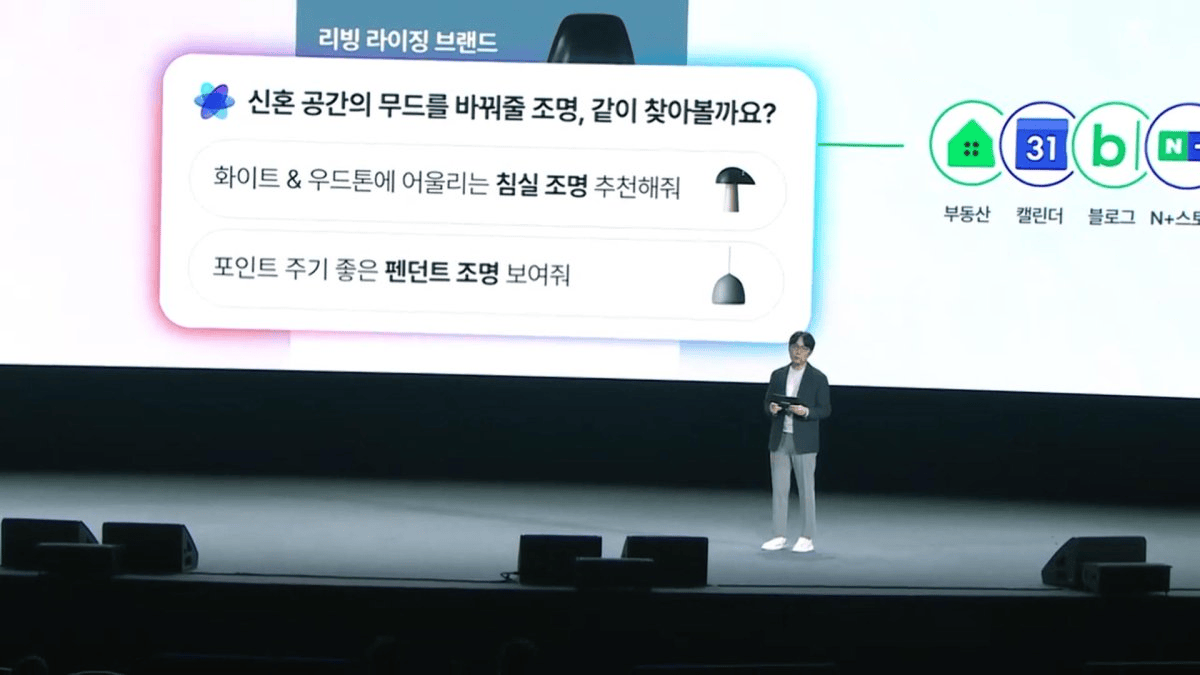
The true test will come later this year with the planned AI Tab, which aims to seamlessly integrate Naver’s various services – maps, local listings, shopping, and payments – into a unified conversational interface. “Technically, this would require coordinating multiple AI agents and data sources in real-time for tens of millions of users,” he added.
The Agentic Commerce Race
Naver’s initiative mirrors a broader industry trend toward AI-driven shopping agents. Google recently unveiled its Universal Commerce Protocol, partnering with major retailers such as Walmart, Target, and Shopify. Meanwhile, OpenAI has begun incorporating shopping functionalities into ChatGPT.
Professor Kim posits that Naver may possess a structural advantage. Unlike global AI companies heavily reliant on advertising revenue, Naver already generates income from payment commissions, transaction fees, and membership subscriptions. Thus, even if AI reduces ad clicks, increased purchase conversion rates could still bolster overall commerce revenue.
For analysts, the revenue mix is a crucial indicator. Lee notes that intermediation revenue is growing at a faster pace than commerce advertising, signaling a shift from “a platform that displays ads” to “a platform where transactions actually occur.”
Nevertheless, Naver’s AI models are unlikely to rival the scale and capabilities of those developed by Google or OpenAI. “HyperCLOVA X is significantly smaller than frontier models,” the SNU researcher commented.
“Naver’s strength lies in its two decades of accumulated localized data. The critical question is whether its AI can evolve quickly enough to effectively leverage that advantage and create the next generation of services.”
mjh


