Rising valuations ease tensions as corporations grow more receptive to activists
Activist hedge funds were once treated as unwelcome agitators in South Korea, often turned away at corporate doorsteps. Management teams, wary of short-term pressure and hostile campaigns, viewed them as disruptive forces threatening their control and stability.
While a full detente has yet to emerge, the mood is noticeably shifting.
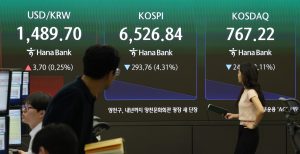
Amid a blistering stock market rally, shareholder activism has moderated as rising valuations ease the urgency for direct confrontation. At the same time, corporations appear increasingly willing to engage — and in some cases quietly welcome — activist scrutiny as a catalyst to lift share prices and narrow the long-standing “Korea discount.”
“South Korea activism slowed moderately in 2025 as a rapidly rising stock market was seen to reduce the need for direct action by shareholders,” Diligent Market Intelligence said in a recent report. The number of Korea-based companies subject to activist demands fell to 60 in 2025, down from 66 in 2024 and 77 in 2023.
DMI attributed the decline largely to the sharp rally in domestic equities, noting that rising market values may have reduced the immediate need for proxy fights and public campaigns.
Industry officials suggest the shift is not merely cyclical but structural. Traditionally, many conglomerates have tolerated undervalued share prices to maintain control with relatively small ownership stakes and to limit their inheritance and tax burdens. That calculus is beginning to change.
The government’s push to boost corporate valuations, improve shareholder returns and reduce the Korea discount has altered incentives. Companies are paying closer attention to their share performance and reassessing their stance toward activist investors.
“SK Square is said to be satisfied with Palliser Capital’s campaign last year. This marks a striking contrast to its previous wariness toward such campaigns,” said an official closely associated with foreign hedge funds investing in Korea.
In October 2024, British hedge fund Palliser Capital disclosed more than a 1 percent stake in SK Square, the investment arm of SK Group, and pushed the company to unlock value through expanded investments and larger treasury share buybacks. During the campaign, SK Square’s shares surged more than sevenfold, rising from around 78,000 won to roughly 560,000 won earlier this month, before reports surfaced that the fund had trimmed part of its holdings.
“Foreign activist funds increasingly share the view that Korean corporates are now willing to engage, something that was not possible in the past,” the official said. “Building on that consensus, more funds are showing interest and asking about companies here.”
Palliser has since launched a campaign targeting LG Chem, proposing measures that include the introduction of nonbinding shareholder proposals and the appointment of independent directors. LG Chem has agreed to put the proposals forward at its March shareholders’ meeting — a development seen as significant in Korea’s traditionally conservative corporate environment.
Though acceptance of the proposals remains uncertain, industry watchers say the mere fact they are formally tabled marks progress.
“There is a clear shift in corporate mindset,” said an executive at a US hedge fund that has long engaged with Korean companies. “There is still a long way to go, but even having the conversation itself is meaningful.”
“Top Kospi companies have begun canceling sizeable volumes of treasury shares, reflecting both anticipation of tighter rules and a willingness to position ahead of the regulatory curve,” said Christy Tan, senior investment strategist at Franklin Templeton Institute. “We are encouraged by what we are seeing so far.”
silverstar