Manufacturing Outlook Surges as Services Sector Lags in South Korea
South Korea’s business sentiment has turned positive for the first time in four years for March, driven by robust semiconductor and automobile exports, indicating a potential recovery in corporate confidence after a prolonged downturn.
The Federation of Korean Industries (FKI) announced Tuesday that its Business Survey Index (BSI), a monthly poll of the country’s top 600 companies by sales, rose to 102.7 for the upcoming month.
This marks a significant shift, as the index has remained below the positive threshold for 47 consecutive months, last reaching 102.1 in March 2022.
The BSI is compiled through surveys of companies, measuring their optimism regarding current economic conditions and their outlook for the following month.
The index reflects corporate perceptions of the business climate. A reading above 100 suggests more companies anticipate improvement than deterioration compared to the previous month, while a reading below 100 indicates the opposite.
The rebound was primarily fueled by the manufacturing sector, with its BSI soaring to 105.9 in March from 88.1 in February. This figure is the highest in approximately five years, since a reading of 108.6 in May 2021.
Among the ten manufacturing sectors, six reported positive outlooks. General and precision machinery and equipment, including semiconductors, led with a figure of 128.6, followed by pharmaceuticals at 125.0, textiles, apparel, leather, and footwear at 114.3, and the electronics and telecommunication equipment sector at 113.3.
Meanwhile, three sectors, including wood, furniture and paper; petroleum, refining and chemicals; and non-metallic materials and products, remained neutral. Only the food, beverage, and tobacco sector remained below 100.
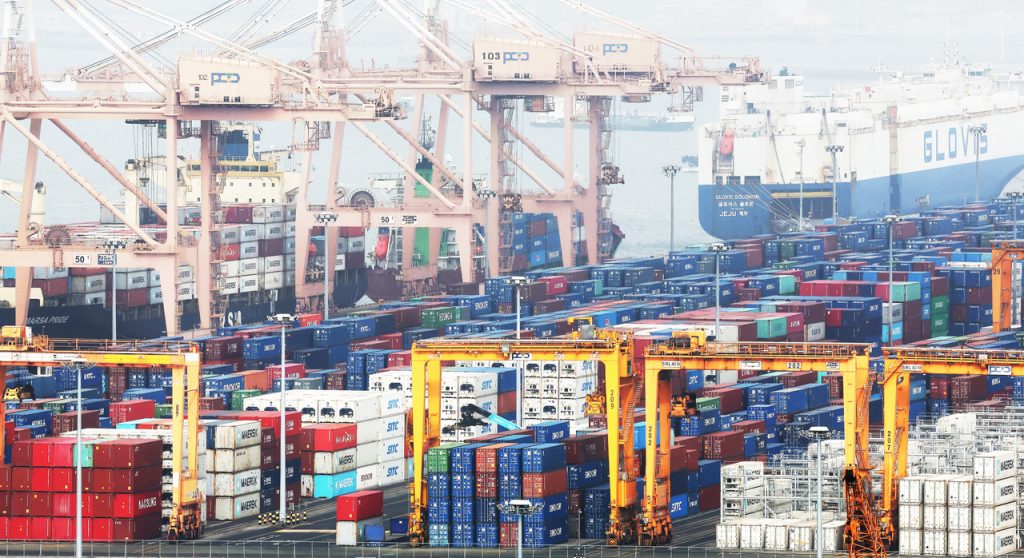
The business lobby group attributed the improvement to a surge in exports of key products like semiconductors, automobiles, and computers.
According to data from the Ministry of Trade, Industry and Resources, semiconductor exports reached a record $20.54 billion in January, more than doubling compared to the same period last year and surpassing the $20 billion mark for the second consecutive month.
Amidst the global artificial intelligence (AI) boom, South Korea’s semiconductor exports have surged, driven by strong demand and elevated prices for advanced memory chips, particularly high-bandwidth memory (HBM) used in AI accelerators, and advanced DRAM.
Automobile exports also increased by 21.7 percent year-on-year to $6.07 billion, the second-highest January figure on record.
The outlook for non-manufacturing sectors, however, remained less optimistic, with the figure slightly decreasing to 99.4. However, retail and wholesale businesses showed a strong outlook at 111.8, while leisure, hospitality, and dining reached 108.3, indicating a gradual recovery in domestic consumer spending.
By category, the export sector’s outlook reached 100, the highest since June 2024, while domestic demand, investment, and employment remained pessimistic, albeit improved from the previous month.
“The improvement in business confidence, which had been sluggish for an extended period amidst economic downturn, is a very meaningful change,” said Lee Sang-ho, head of economic and industrial research department at the FKI. “The National Assembly and the government need to maintain the economic momentum to revitalize business through regulatory reform, ensuring the improvement is not just a short-term rebound.”
sahn