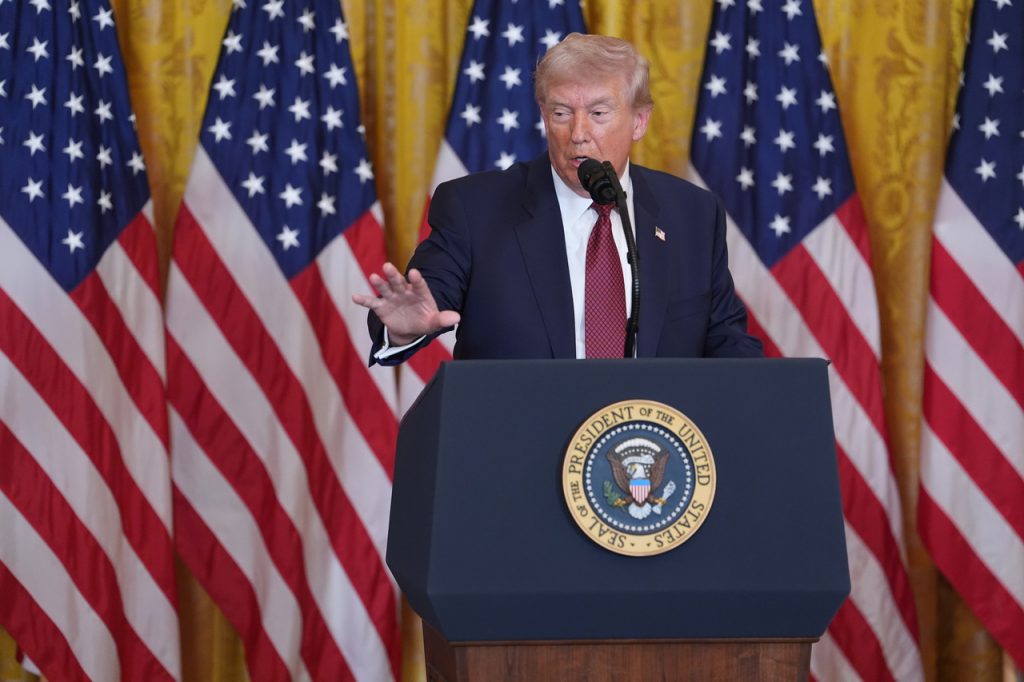
The US Supreme Court has ruled against President Donald Trump’s “reciprocal tariffs,” which impacted numerous trading partners, including South Korea. This decision introduces uncertainty into global trade and challenges existing agreements based on these duties.
Following the Supreme Court’s decision, South Korea’s presidential office, Cheong Wa Dae, announced it would analyze the situation and develop a response that prioritizes national interests.
In a 6-3 vote, the Supreme Court determined that the 1977 International Emergency Economic Powers Act (IEEPA) does not authorize the president to impose broad tariffs on imports. Trump had invoked IEEPA to justify the tariffs, but lower courts had previously deemed them illegal. The Supreme Court upheld those previous rulings.
“IEEPA does not authorize the President to impose tariffs,” wrote Chief Justice John Roberts in the court’s opinion.
IEEPA allows a US president to declare a national emergency and regulate economic and financial transactions to address “unusual and extraordinary” foreign threats. Trump had argued that US trade deficits and supply chain vulnerabilities constituted national economic threats, thus justifying his use of the act.
This ruling effectively removes the legal basis for the sweeping tariffs Trump initiated after declaring a national emergency regarding the US trade deficit in April of the previous year. These measures included a general 10% tariff on nearly all imports, alongside additional reciprocal tariffs targeting specific countries.
South Korean goods were subjected to a 15% reciprocal tariff, reduced from an initial 25%, following a bilateral agreement between the two nations. As part of this agreement, Seoul committed to investing $350 billion in the US, along with other pledges, in exchange for the tariff reduction.
With the tariffs now deemed illegal, the future of the trade agreement between Washington and Seoul is uncertain. The deal could face renewed scrutiny, potentially leading to renegotiations, diplomatic tensions, and confusion among businesses.
It is unclear whether Trump will accept the ruling or seek alternative legal avenues to reimpose similar trade restrictions. During November court arguments, Trump indicated he would consider other measures if the ruling went against his tariff policy.
The Trump administration had cautioned that an unfavorable ruling could force the government to reverse trade agreements and potentially reimburse importers substantial sums already collected. However, the court’s decision did not immediately mandate refunds.
sahn