
Energy Storage Surge: Korean Battery Makers Pivot as US Automakers Scale Back EV Plans
Korean battery manufacturers are strategically shifting their focus in North America, moving from electric vehicle (EV) batteries toward energy storage systems (ESS) as US automakers curtail their EV ambitions and unwind joint ventures.
This transition comes as EV batteries have historically been a key revenue driver for these companies, raising concerns about whether this strategic shift will be sufficient to maintain robust growth amid a potential prolonged slowdown in the EV sector.
Bloomberg reported on Wednesday that Stellantis is considering withdrawing from StarPlus Energy, its US battery joint venture with Samsung SDI. This move aligns with Stellantis’ efforts to reduce EV investments and preserve capital following a recent announcement of over 22 billion euros ($26.2 billion) in asset writedowns.
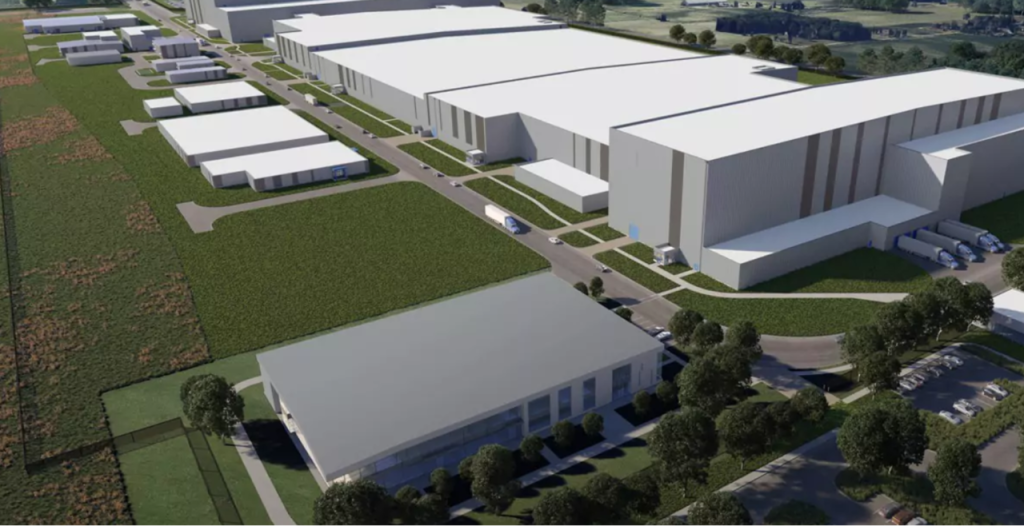
StarPlus Energy, located in Kokomo, Indiana, commenced operations at its first plant in December 2024, designed as a crucial production hub for the North American EV market. A second plant is currently under construction, slated for launch next year, with a total investment of $6.3 billion in the two facilities.
According to the Bloomberg report, Stellantis is contemplating selling its stake to a third party, although no definitive decision has been reached.
This potential move follows a broader trend of US automakers reassessing their partnerships with Korean battery manufacturers, triggered by a decline in North American EV demand after the elimination of federal consumer EV subsidies in September 2025.
Last week, Stellantis divested its 49 percent stake in NextStar Energy, a Canadian joint venture with LG Energy Solution, for a nominal $100. This exit concludes a partnership where its stake had been valued at approximately 1.4 trillion won ($964 million). In the US, LG Energy Solution acquired the third Ultium Cells battery plant in Michigan from its joint venture with GM last year.
Furthermore, SK On dissolved its US battery joint venture with Ford Motor Co. in December of the previous year, dividing ownership of the three BlueOval SK plants. SK On will assume full control of the Tennessee facility, which is currently under construction, while Ford will take over the two Kentucky plants.
In response to these shifts, the three Korean battery manufacturers are accelerating their expansion into the rapidly expanding North American energy storage systems market. This growth is largely fueled by the demand from AI data centers and supported by tax incentives provided under the US Inflation Reduction Act.
During recent earnings calls, LG Energy Solution and SK On announced their intentions to secure ESS orders totaling over 90 gigawatt-hours and 20 gigawatt-hours, respectively, this year, primarily focusing on North America. Samsung SDI aims to increase its annual ESS sales by approximately 50 percent year-over-year. The battery facilities recently acquired from their former US partners are being, or will be, repurposed as manufacturing hubs for ESS applications.
Despite the strategic pivot of Korean battery manufacturers towards ESS, experts suggest that this segment may not deliver profit margins that are sufficiently high or structurally stable to fully compensate for the EV business.
Lee Ho-geun, a professor of automotive engineering at Daeduk University, commented, “The transition from EVs to ESS is essentially a temporary solution. Even with rapid growth in energy storage demand, it is not anticipated to generate the same scale and volume as the EV market.”
According to a researcher at a Korean battery firm, while the profit margins on batteries used in large-scale ESS containers may not differ significantly from those of EV batteries in the medium to long term, “The ESS business cannot – and should not – be considered a replacement for the EV segment.”
The researcher explained that ESS battery packs typically need to be priced lower per kilowatt-hour than EV batteries to remain competitive, prompting Korean manufacturers to increase the supply of cost-effective lithium iron phosphate (LFP) cells for power storage systems.
“Unlike EV batteries, which are sold under negotiated contracts with automakers, ESS projects go through competitive tenders. That lowest-bid dynamic makes it harder to protect margins. And since ESS systems mainly use low-margin LFP cells, winning large-scale projects leads to profitability. But larger projects also come with greater pressure to lower the price,” the researcher added.
hyejin2


