Washington-Beijing Tensions Create Strategic Opening for Korean Shipbuilders
China Factor examines how China’s rise is redrawing the competitive map for Korea’s key industries, and what that means for the global supply chain order. This is the third installment. — Ed.
While China dominates with nearly two-thirds of global ship orders, South Korea faces a challenge where its competitive advantage is shifting from technology to geopolitics and ecosystem dynamics, with a limited time frame.
In 2025, Chinese shipyards secured 63% of global new vessel orders, surpassing South Korea’s 21% and Japan’s 5%, according to Clarkson Research Services. Chinese data indicates an even higher share at 69%, emphasizing China’s increasing industry leadership.
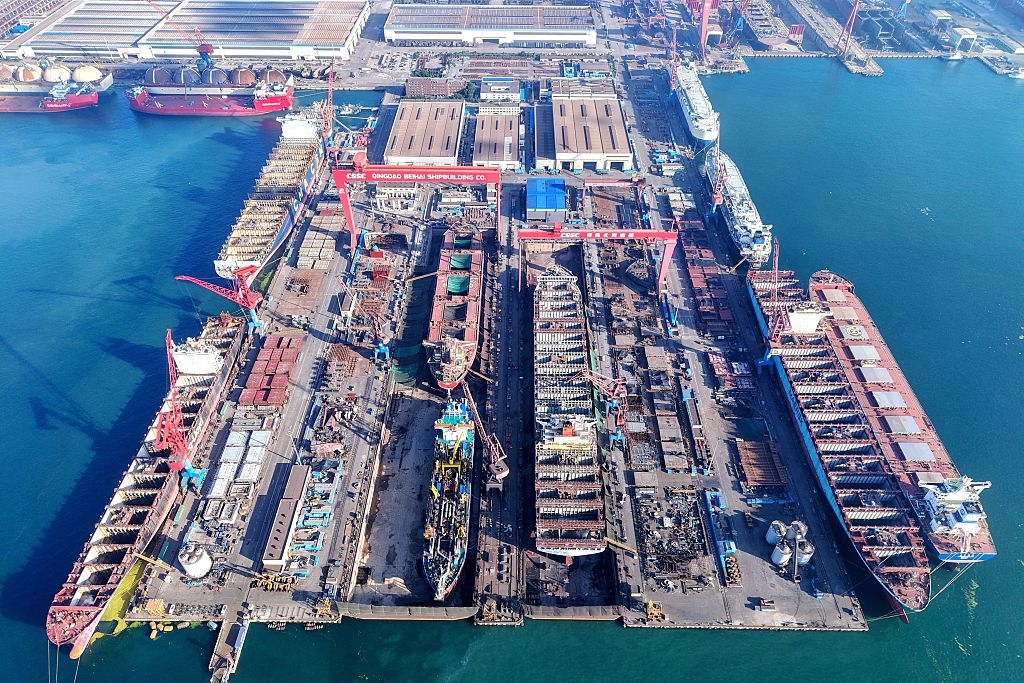
China also topped the world in new orders, ship completions, and total order backlogs last year, highlighting its state-backed shipbuilding system integrating industrial capacity, financing, and shipping demand.
However, South Korea maintains strength in high-value sectors like liquefied natural gas (LNG) carriers, leveraging decades of engineering expertise and operational reliability.
Yet, China is rapidly expanding into advanced vessel categories with domestic orders and state support, prompting Korean shipbuilders to reassess their strategies.
“China has largely caught up in shipbuilding technology,” stated Rhee Shin-hyung, a professor at Seoul National University. “The technological gap in traditional shipbuilding is minimal, giving Korea perhaps two to three years of advantage. Sustaining a lead requires genuinely new technologies.”
China’s rise is fueled by government efforts to establish itself as a maritime power. Since the mid-2000s, Beijing designated shipbuilding as a strategic industry, investing heavily in an ecosystem connecting shipyards, shipping companies, and financiers. The goal was to become the world’s leading shipbuilder by 2015.
State support has remained consistent, regardless of market fluctuations. China’s lower labor costs and logistics also helped weather economic downturns better compared to Japan and South Korea. During global downturns, Chinese yards continued to expand capacity with state-owned lender support and domestic orders.
China’s global shipbuilding output share increased dramatically from under 5% at the start of the 21st century to over 50% by the early 2020s. The post-2008 recovery was a turning point, with China becoming dominant in volume and capacity, particularly for bulkers, tankers, and container ships.
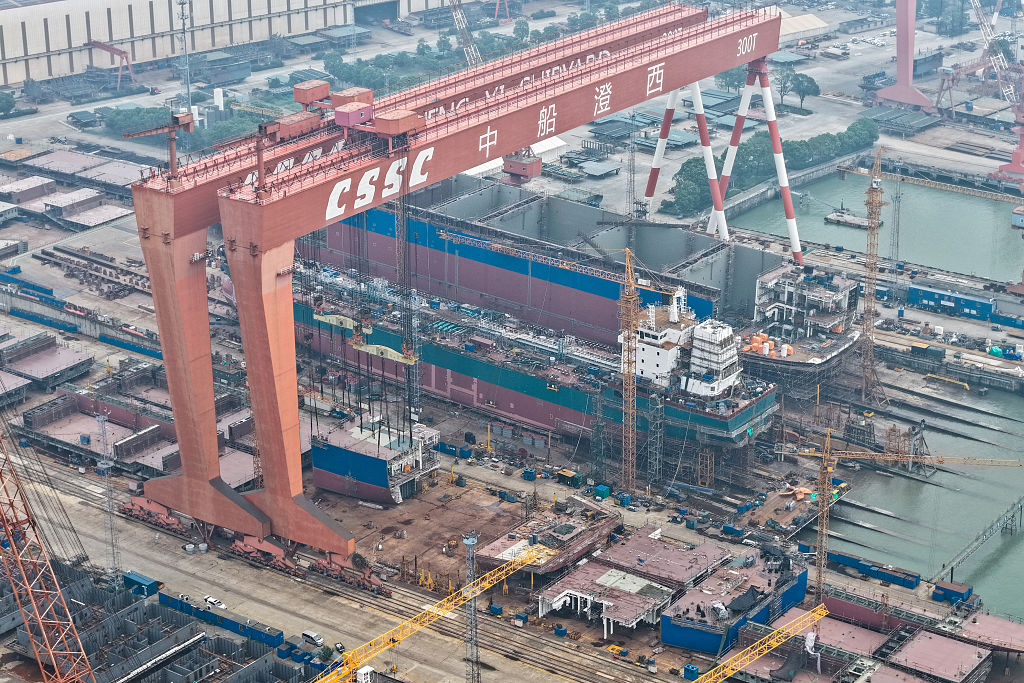
China State Shipbuilding Corp. (CSSC), formed by merging two state-owned companies, is central to this expansion. With government backing and policy advantages, CSSC and its subsidiaries can offer competitive pricing.
Industry data suggests that CSSC’s global market share is over 20%, exceeding the combined market share of South Korea’s top three shipbuilders.
“China’s output is unmatched,” said retired Capt. Moon Keun-sik, a professor at Hanyang University. “They merged the country’s largest yards into a single state-backed shipbuilder.”
Analysts note that China’s shipbuilding dominance is further reinforced by a dual-use approach, where commercial shipyards also produce warships. This has raised concerns as profits and technology from commercial ships contribute to China’s military development.
Korea’s Last Bastion: High-End Ships
Despite China’s strength in bulkers and standard containers, South Korea excels in high-value segments like LNG carriers, dual-fuel container ships, ultra-large container ships, and advanced offshore platforms.
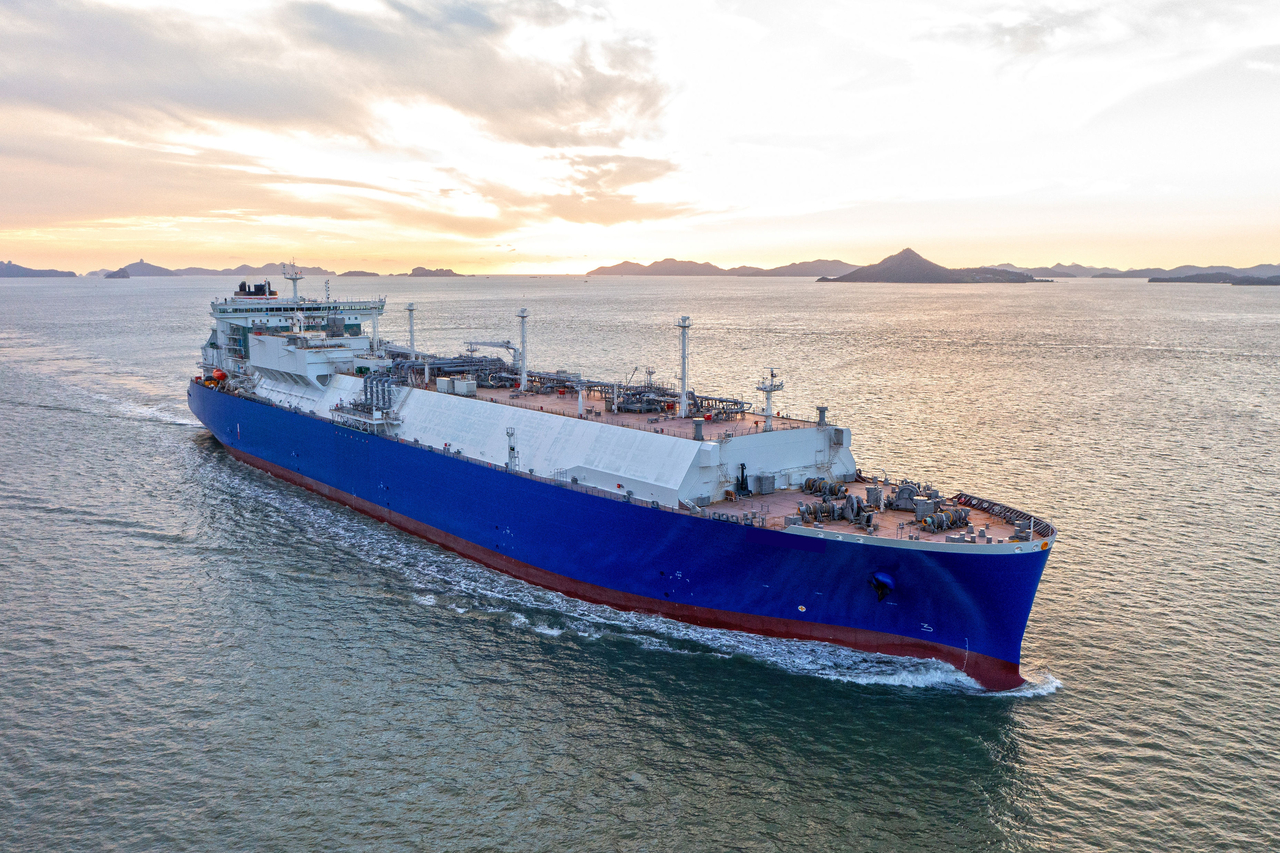
HD Hyundai Heavy Industries, Hanwha Ocean, and Samsung Heavy Industries, the top three Korean shipbuilders, control most of the global LNG carrier production, estimated at around 70% market share. Korea’s LNG order backlog exceeds 200 units as of early 2026, leading in this segment.
LNG carriers require advanced cargo containment systems to maintain LNG at -163 degrees Celsius while minimizing boil-off gas. Korean shipyards have developed expertise in membrane containment technology through decades of experience and high-volume orders. Competition among Korea’s “big 3” has also driven innovation and productivity.
LNG projects necessitate substantial capital investment and long-term operation, thus major oil companies value delivery reliability, proven dependability, warranty, and after-sales service more than price alone.
Korean shipyards have a strong track record with fewer quality or delay issues compared to newer competitors, industry sources say.
However, China is making progress in LNG carrier deliveries, raising concerns about the longevity of Korea’s advantage.
As of January, Chinese shipyards had secured orders for at least 13 LNG carriers this year, compared to eight for South Korean builders, with Hudong-Zhonghua and Jiangnan Shipyard leading the gains.
“Korea’s LNG market lead is finite,” said Rhee. “There are about 1,000 LNG vessels globally, with a limited number of countries and companies transporting LNG. The market’s structural limits are clear.”
Rhee explained that China accumulates operational experience and technical know-how by directing domestic LNG orders to state-owned yards. “Their technology will improve with continuous orders.”
Another area where China lags is in critical components for high-value vessels like cruise ships, LNG carriers, and aircraft carriers.
While Chinese shipbuilders excel in hull construction and producing components for conventional bulk carriers, they depend on foreign suppliers for advanced vessels requiring complex systems and equipment.
China’s most advanced vessels, like luxury cruise liners and specialized LNG carriers, contain an estimated 30-40% domestic components, sourcing the rest from South Korea, Europe, and Japan, according to industry sources.
A Global Times editorial acknowledged remaining challenges, stating that “some core equipment and key materials still rely on imports” and gaps exist in design optimization for large LNG carriers.
Specifically, Chinese shipyards rely on Korean engines, including dual-fuel engines for methanol and ammonia, used in container ships.
Korea International Trade Association data shows that South Korean exports of ship engines and related components to China totaled $1.29 billion last year, a 24% increase year-over-year.
“China has secured most eco-friendly vessel orders recently, but the core engine components are often from South Korea,” said a shipbuilding industry official. “However, China is accelerating engine production localization, so maintaining a technological lead is a key challenge for Korean manufacturers.”
Geopolitics: A New Shipbuilding Edge for Korea?
Geopolitical tensions between Washington and Beijing have opened opportunities for South Korean shipbuilders, observers say. Western shipping companies are diversifying orders away from China to reduce political risk, benefiting Korean yards.
In October 2025, the US imposed significant port fees on vessels made, owned, or operated by China, causing concern among companies with Chinese-built ships. China responded with reciprocal measures. Although the fees are currently paused for a year, they could return later this year.
Against this security backdrop, industry officials suggest that Korea can leverage closer cooperation with the US as a viable countermeasure to China’s dominance.
Under the “Make American Shipbuilding Great Again” initiative, Seoul and Washington have explored joint projects.
“Korea can provide infrastructure and operational know-how, while the US provides advanced technology,” said Rhee. “Combining these strengths can create a true win-win cooperation and may be the only way to surpass China.”
Moon echoed the need for a stronger US partnership in shipbuilding.
“If Korea and the US jointly standardize LNG vessels and related products, setting global benchmarks, it will be harder for China to enter the market,” said the professor. “This requires strong policy support.”
He added that Korea’s growing shipbuilding investment in the US has already attracted Beijing’s attention. “If they truly join forces, the impact will be significant, and China is aware of that.”
sahn