
South Korea is set to initiate preliminary assessments of potential investment ventures within the United States. This move comes as the National Assembly gears up to address legislation aimed at enacting Seoul’s investment commitments to the US, as stipulated under a bilateral trade agreement, according to the nation’s leading economic strategist on Tuesday.
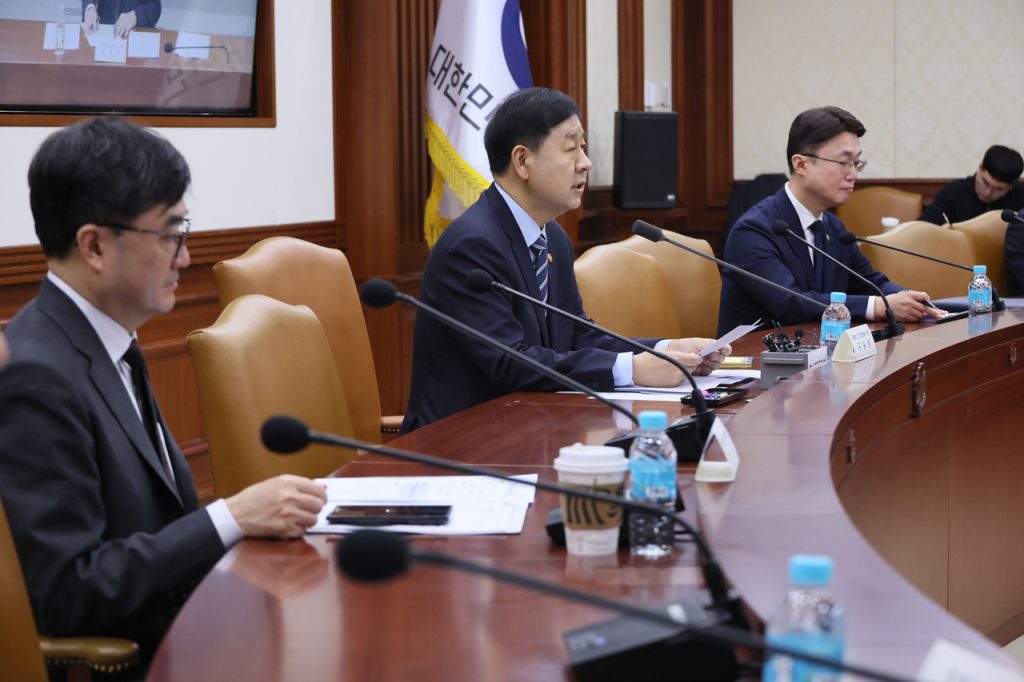
Finance Minister Koo Yun-cheol announced these plans during a meeting of economy-related ministers. This follows the National Assembly’s cross-party consensus to establish a committee tasked with overseeing the enactment of a special bill concerning investments in the US, amidst escalating tariff concerns.
“As the legislation progresses through the standard domestic legal framework, it is imperative to prevent any unnecessary misunderstandings or erosion of trust between South Korea and the US during the MOU’s implementation, as this would not serve our national interests,” Koo emphasized.
Even with the law’s passage, the implementation phase may necessitate additional preparations, such as the formulation of subsidiary regulations, potentially spanning approximately three months.
Consequently, the government intends to establish a framework for conducting preliminary evaluations of potential projects identified by both nations, within the confines of administrative feasibility, Koo stated.
To effectively manage this undertaking, the government will provisionally designate the regular economy-related ministers’ meeting as the central coordinating body, as per the minister’s announcement.
Furthermore, a pre-review team, comprising seasoned experts with extensive experience and specialized knowledge, will be assembled to meticulously assess the commercial viability and various other facets of candidate projects identified by both countries.
Last month, former US President Donald Trump threatened to impose “reciprocal” tariffs and duties on automobiles, lumber, and pharmaceuticals originating from South Korea, potentially raising them from 15 percent to 25 percent. This threat was attributed to perceived delays in the parliamentary process of enacting a special investment bill designed to facilitate the implementation of the trade agreement between the two nations.
The minister further stated that the government will continue to prioritize communication with Washington, ensuring a comprehensive explanation of the efforts undertaken by both the government and the National Assembly to fulfill the agreement.


